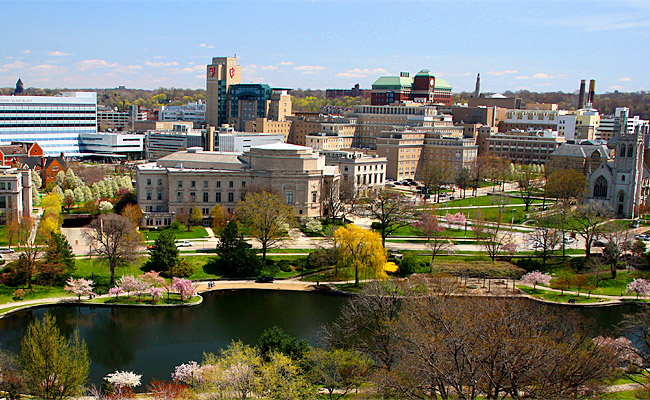
 Wade Lagoon, the tranquil heart of Cleveland’s cultural hub
  Participants in Parade the Circle, an annual celebration of creativity
  University Circle’s cultural institutions have long been renowned for their enriching educational activities.
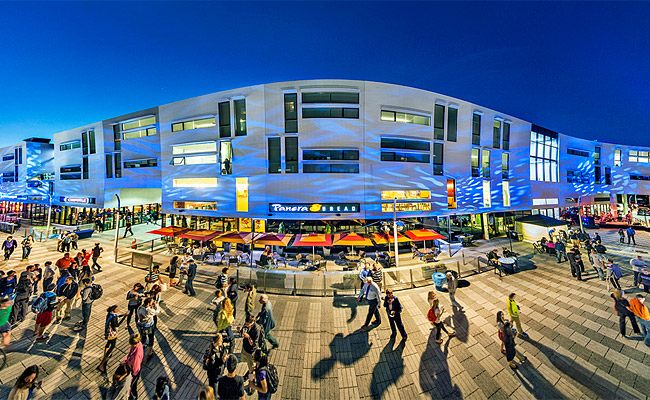 Uptown, the Circle’s exciting, new high-density neighborhood, has all the amenities associated with urban living.
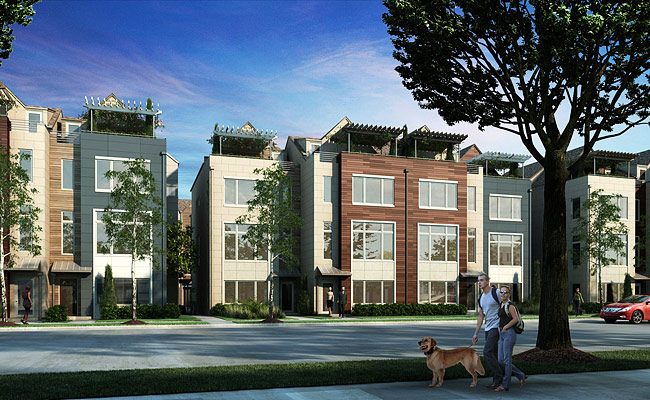 Proposed townhomes for East 118th Street
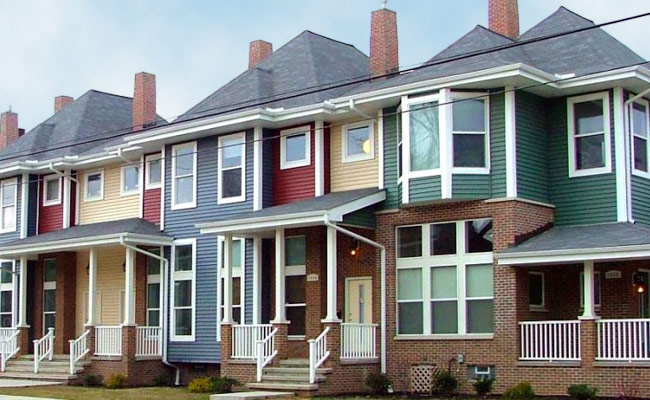 Sold out! Heritage Lane townhomes, built within walking distance of the Circle
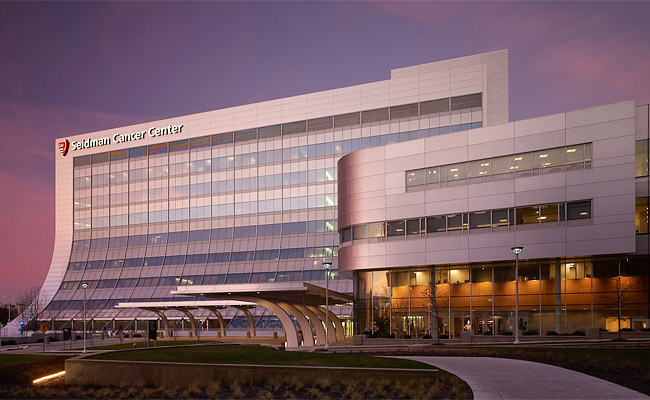 Circle institutions have invested or are planning to invest billions in capital improvements, such as University Hospitals of Cleveland’s new Seidman Cancer Center.
 Upper Chester, which abuts the Cleveland Clinic, is the next Circle neighborhood slated for redevelopment.
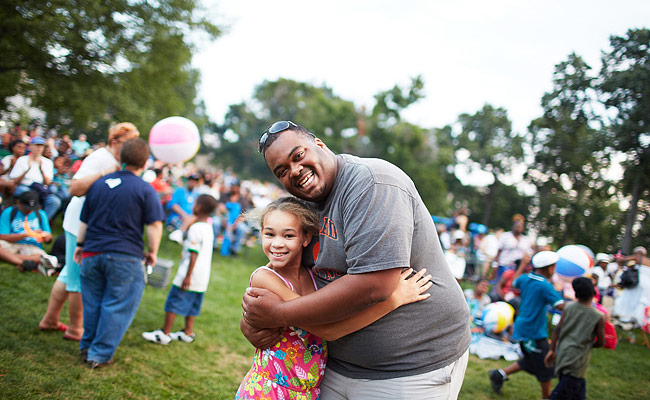 Wade Oval Wednesdays, summertime’s popular outdoor music series
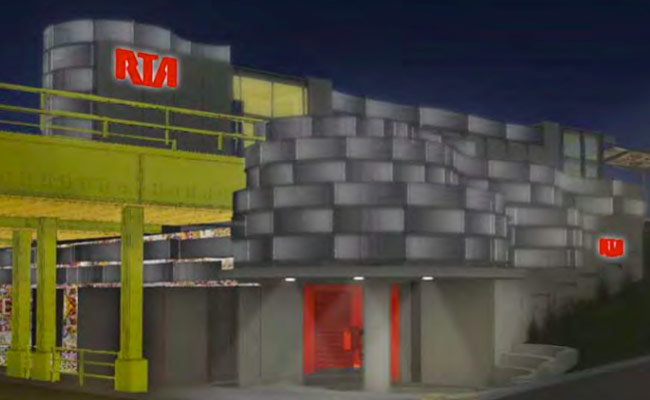 Artist’s conception of the new Regional Transit Authority station planned for Mayfield Road in Little Italy
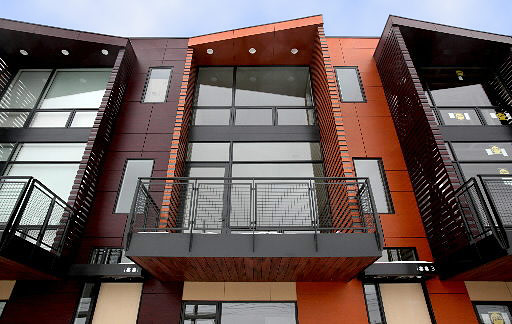 27 Coltman, a luxury townhome development on the eastern boundary of University Circle
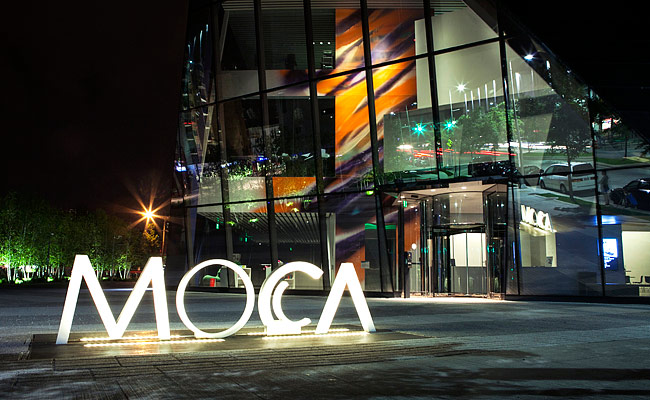 MOCA Cleveland’s faceted, mirrored, four-story art gallery anchors the Uptown development.
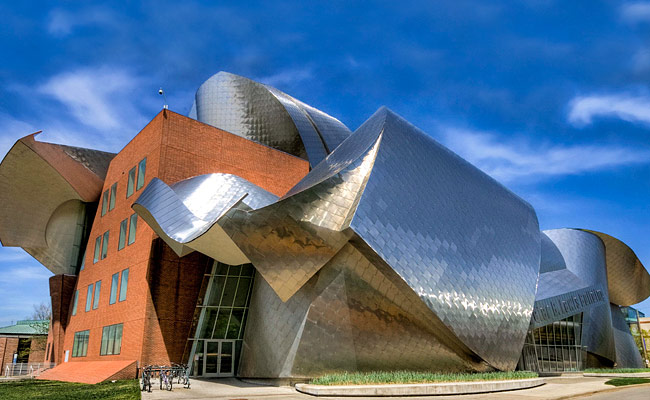 The Peter B. Lewis Building, designed by Frank Gehry, is the home of Case Western Reserve University’s Weatherhead School of Management.
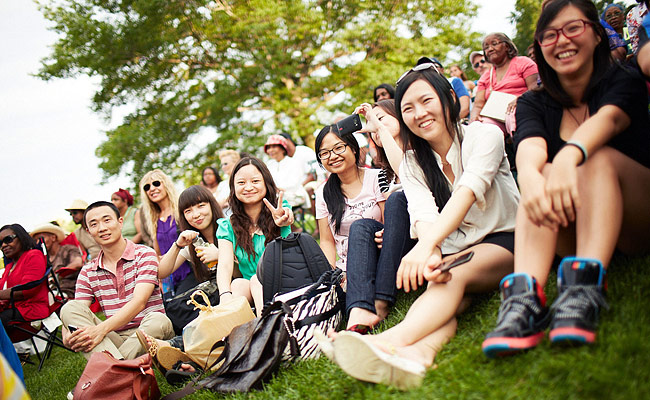 A new generation of Circle fans
For decades, the 35-plus educational, medical and arts institutions based in University Circle had worked collaboratively on improvements within the district. Despite making several attempts to combat blight in nearby Hough with small-scale housing construction projects, University Circle remained an island of vibrancy surrounded by areas of disinvestment. With $3 billion in new construction under way or planned by University Circle institutions in the early 2000s, the Cleveland Foundation seized a once-in-a-generation opportunity to extend anchor-institution investment into a half-dozen nearby neighborhoods, whose residents are predominantly low-income and working-class African Americans.
In 2003, the foundation’s CEO invited the CEOs of Case Western Reserve University (CWRU), University Hospitals of Cleveland and the Cleveland Clinic Foundation to come to the table and help identify new ways to collaborate on the improvement of Greater University Circle. Agreeing that the future of their institutions and the Circle was inextricably linked to the health of the surrounding communities, the four CEOs formed the core of a planning task force that grew to include public, private and grassroots representatives with a stake in attracting new investment, residents and visitors to the Circle and its immediate environs: Buckeye-Shaker, East Cleveland, Fairfax, Glenville, Little Italy and Hough.
Fueled by the Cleveland Foundation’s commitment of $1.6 million toward planning, the Greater University Circle Initiative, a multipronged strategy to transform the lives and environment of those who live, work and spend leisure time in or near the Circle, was launched in 2006. The deteriorated condition of the Circle’s transit infrastructure was the first project to be tackled. The Regional Transit Authority had set aside the monies to modernize RTA stations at Cedar Hill and at Euclid Avenue and East 120th Street, but had been unable to forge a consensus as to how best to improve the stations’ functioning and appearance.
With the support of a $1.6 million transportation fund raised by the initiative’s leadership group, RTA secured the design and engineering assistance needed to reconcile divergent opinions and move ahead with the projects. The Cedar Glen bus station and the tangled intersection at East 105th Street and Martin Luther King Jr. Drive were also slated for remodeling to relieve congestion. Representing $37 million in capital improvements, each of these projects will help to reduce the physical barriers that have long isolated University Circle from neighboring communities.
The desirability of those neighborhoods received a boost in 2007, when the Circle’s anchor institutions joined with a coalition of sympathetic private and philanthropic funders to unveil Greater Circle Living, a $4 million incentive program to stimulate investment in and rehabilitation of the adjoining neighborhoods’ housing stock. Full-time employees of 35 participating Circle institutions are now eligible to receive a forgivable, no-interest loan toward the purchase of an owner-occupied home in Greater University Circle. Subsidies for rental units and exterior repair are also available. More than 225 individuals, couples and families have taken advantage of these incentives to reside near their workplaces, bringing new life to the area.
Appreciating that home ownership requires a good-paying job, the Greater University Circle Initiative has taken the first steps toward creating a network of Evergreen Cooperatives, environmentally sustainable businesses established to employ residents of adjoining neighborhoods. Based on a Spanish model, the cooperatives give workers a chance to build wealth through an equity stake in the enterprise. Three Evergreen Cooperatives have opened since 2009. An industrial-scale laundry service, a hydroponic greenhouse and a company specializing in the installation of solar panels began operations with the support of a $1.15 million in grants from the Cleveland Foundation. The agreement of the Circle’s anchor institutions to redirect a portion of their combined $3 billion in annual procurement monies to buy goods and services from the Evergreen Cooperatives underpins the feasibility of this potentially revolutionary undertaking.
The initiative’s most visible accomplishment is Uptown, a high-density, mixed-use superblock at the eastern edge of the CWRU campus. The Cleveland Foundation set the redevelopment in motion with a $1 million grant for urban design services and made a series of loans totaling $4 million to support the initial phase of construction of the $150 million project, which has brought new apartments, shops, restaurants and services to the important but formerly lackluster intersection of Mayfield Road and Euclid. The foundation contributed another $1 million to the capital campaign for MOCA Cleveland, a contemporary art center whose faceted, black-mirrored four-story gallery now anchors Uptown.
Buoyed by the initiative’s progress and impact, its leaders agreed in October 2011 to continue the collaboration for at least three more years. Next project: planning for the redevelopment of Upper Chester, a prominent but long-blighted area of Hough that lies between the Cleveland Clinic and the western border of University Circle. CWRU’s decision to locate its new $50 million medical education building on the Cleveland Clinic campus could be transformative for the neighborhood to the north. One possible scenario envisions the redevelopment of the northern stretch of Chester Avenue into a “medical village” comprised of housing and services for medical students and health care professionals anchored by the medical school, which will be constructed at Euclid Avenue and East 93rd Street with the support of a $10 million grant from the Cleveland Foundation.