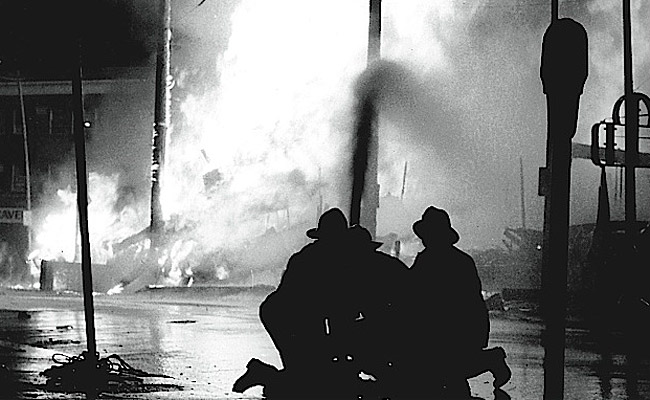
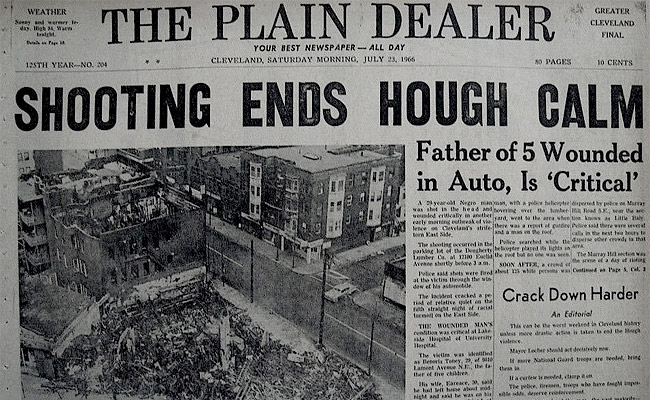
Between 1950 and 1960, the once-fashionable residential area on Cleveland’s east side known as Hough underwent a rapid demographic transformation, changing from 95 percent white to 74 percent African American. No longer a middle-class enclave, Hough suffered from rising unemployment, unacceptable poverty rates, a high incidence of crime and delinquency, and the decay and overcrowding of its housing stock.
In the 1960s, the Cleveland Foundation contributed $106,000 over five years to the Welfare Federation of Cleveland to support the development of a comprehensive social services plan to ameliorate the problems besetting the 80,000 residents of this two-square-mile central-city neighborhood. Living conditions still festered in Hough five years later, but the endeavor was a prescient attempt to address an impending social crisis that erupted into the full-blown Hough riots of 1966.