Endowment
$0
Grantmaking
$0
Gifts Received
$0
Interactive
Graph
Talk to Fred
1914
An Idea Whose Time Had Come
Introduction
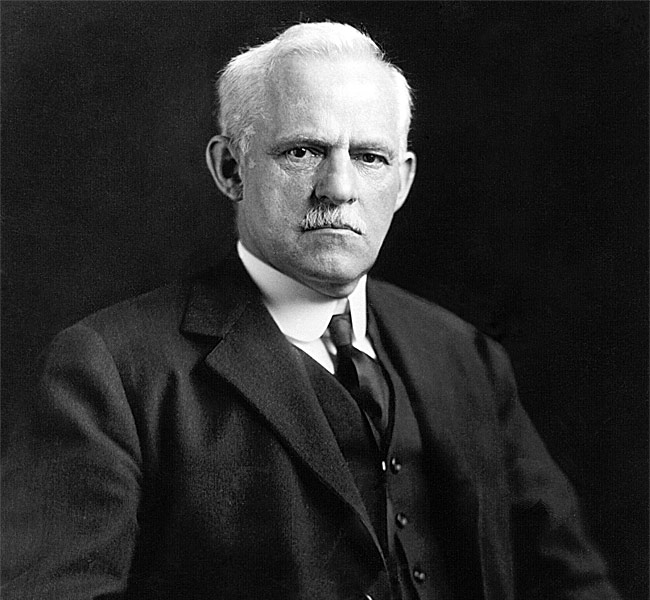
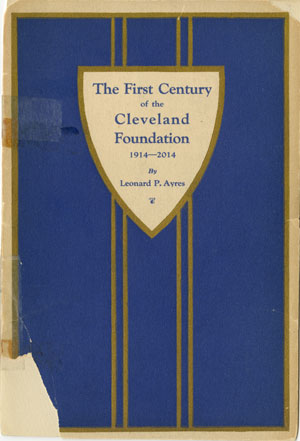
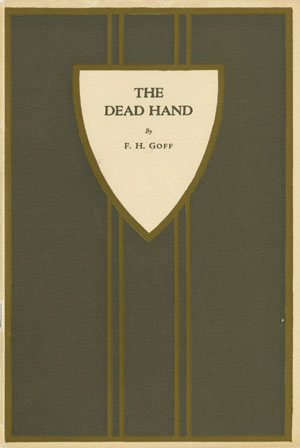
A wise person once said: “How fine it would be,” if an individual who was “about to make a will could go to a permanently established organization…and say, ‘Here is a large sum of money. I want to leave it to be used for the good of the community, but I have no way of knowing what will be the greatest need 50 years from now. Therefore, I place it in your hands to determine what should be done.’” That person was Frederick Harris Goff, lawyer, banker and founder of the Cleveland Foundation.
1914
Belle Sherwin
Social Services Champion on the First Foundation Board

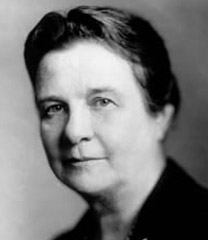
Belle Sherwin (see video) served on the foundation’s board from 1917 until 1924, and she and her sister, Prudence, added substantially to the foundation’s pool of unrestricted monies with testamentary gifts (worth $6.5 million at the time of Belle’s death in 1955) that created the Henry A. Sherwin and Frances M. Sherwin Memorial Fund at the foundation in honor of their parents. But Belle’s informal influence on the foundation’s work was just as significant. Acting in her capacity as president of the Cleveland Welfare Council, it was she who suggested the topic of the foundation’s first municipal survey: “poor relief,” a cause to which she was especially devoted. She also recommended that the foundation hire Raymond Moley as its first full-time director.
After assuming the welfare council’s presidency in April 1914, Miss Sherwin had convened community meetings to discuss the increasing demands being placed on the city’s private and public relief agencies by a severe recession that year. Faced in the fall of 1914 with the imminent prospect of the entire system running out of funds, Sherwin asked the Cleveland Foundation’s survey director Allen Burns, who was a member-at-large of the welfare council, to consider commissioning a study of how to strengthen the city’s relief effort. The foundation’s Survey Committee approved this request, and Burns hired Sherman C. Kingsley, director of the Elizabeth McCormick Memorial Fund of Chicago, and Amelia Sears, welfare director for Cook County, Illinois, to conduct the study.
The “Survey of Cleveland Agencies Which Are Giving Relief to Families in Their Homes” was released on December 1, 1914. It called for the complete reorganization of the City of Cleveland’s relief department. Issued almost 20 years before the New Deal transferred public responsibility for public welfare from the private sector to the state, this recommendation went unheeded. The survey did serve to establish an ongoing working relationship between the Cleveland Foundation and the city’s social coordinators. This bond tightened after Sherman Kingsley became the first executive secretary of the new Welfare Federation of Cleveland, formed in 1917 from the merger of the Welfare Council and the Federation for Charity and Philanthropy.
Most important, the investigation triggered by Belle Sherwin articulated a core challenge that would define the course of philanthropy here and nationally over the next century. “Poverty is a community responsibility,” averred the survey of Cleveland’s fragmented and embryonic welfare system, continuing, “the whole community must realize the extent of destitution, know its causes and remove them….”
1914
First of eight surveys of pressing urban problems commissioned
The surveys, which document problems and recommend solutions, establish a precedent for community foundations to lead as well as support.
1914
Frederick H. Goff
National Intellectual Treasure
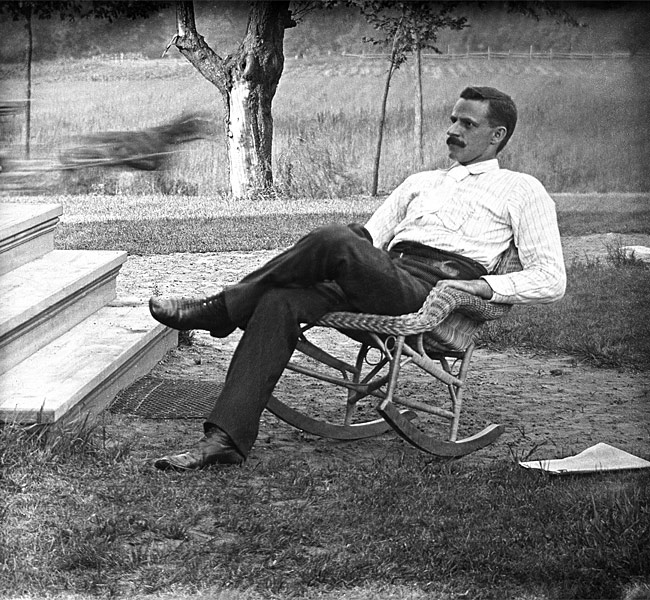
During the first few decades of the 20th century, Frederick Harris Goff was one of Cleveland’s most prominent and beloved citizens. He was also a national intellectual treasure but, sadly, his name is not well known among most 21st-century Americans or even among Clevelanders. This lack of recognition is unfortunate because Goff, like his better-known contemporaries Andrew Carnegie and John D. Rockefeller, changed philanthropy forever, here and around the world. As the American philosopher William James has stated, “The great use of a life is to spend it for something that outlives it.” As more and more citizens across the globe adopt and adapt Goff’s concept of pooling their charitable assets to create a permanent vehicle for addressing pressing local needs, his humanitarian legacy burns ever brighter. For this reason Goff’s life and career merit reconsideration here.
1914
Goff’s Vision
The World’s First Permanent but Flexible “Community Savings Account”
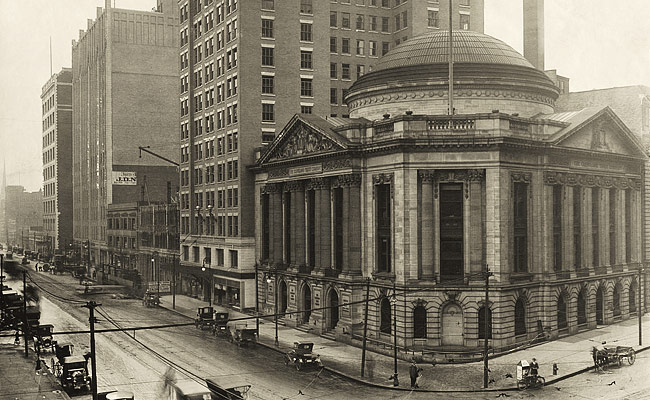
The Cleveland Foundation was an entirely new concept in philanthropy. Captains of business and industry such as John D. Rockefeller and Andrew Carnegie had conceived of creating private foundations to channel their immense wealth into philanthropic activities. Goff envisioned an alternative mechanism for ensuring the honorable and productive use of monies accumulated over and above one’s immediate needs. Endowing such a foundation was a simple and affordable way for individuals of modest to comfortable means to leave a charitable legacy.
1914
James R. Garfield
First Legal Adviser

James Rudolph Garfield, a Columbia University-educated lawyer who began practice in Cleveland in 1888, was the first legal counsel of the Cleveland Foundation. The son of Ohio-born President James A. Garfield, he handled the foundation’s legal affairs until 1946, the year he turned 81. Garfield died in 1950.
During his 32-year tenure as legal counsel, Garfield worked with the probate and trust attorneys whose clients had bequeathed funds to the foundation to make sure that donors’ wishes were clearly understood and scrupulously observed. Untangling knotty issues (often involving misunderstandings on the part of beneficiaries with lifetime interests in the donors’ estates), he was responsible for the smooth and timely transfer of the first $10 million in endowment monies to the foundation.
Garfield’s most shining hour came during heated public debate about the findings of the Cleveland Foundation’s criminal justice survey in 1921. In his damning report about the performance of municipal and county courts, attorney-investigator Reginald Heber Smith documented a host of abuses that conspired to protect Cleveland’s criminals from conviction. Of every 100 felony cases originating with city prosecutors, Smith had discovered, only 29 on average proceeded through to sentencing. Among the causes identified by Smith for the laxity of the system were the defense of habitual criminals by a ring of attorneys with powerful political ties, underpaid prosecutors with inexperienced assistants, and the shirking of jury duty by well-educated citizens.
Members of the judiciary mounted a fierce public counterattack, labeling Smith’s investigation “unjust” and a “criminal waste of money.” Cuyahoga County Common Pleas Court judge Homer G. Powell went so far as to threaten to jail the foundation’s board for contempt. The board members promptly huddled with Garfield, who courageously advised his clients to inform “Judge Powell that he could send the sheriff anytime he wanted to receive us.”
1914
Mary Coit Sanford
Donor of the Foundation’s First Bequest

On January 29, 1914, Mary Coit Sanford signed a last will and testament containing a bequest to establish five funds at the Cleveland Foundation. Her confidence in the new community trust, which was less than a month old, undoubtedly stemmed from the fact that Mary knew Fred Goff, if only by his sterling reputation. Mary grew up in Bratenahl, the Cleveland suburb where Goff had once served as mayor.
Descended from one of Cleveland’s founding families, Mary was notably civic-minded. She would help to found the Women’s City Club in 1916 and later chaired the Cleveland branch of the Women’s Committee of the Council of National Defense, a volunteer organization that sought to address local shortages of housing, fuel and food during World War I. Mary’s husband, surgeon Henry L. Sanford, would also participate in the war effort as a member of Cleveland’s famed Lakeside Hospital Unit, the first U.S. Army detachment to arrive in France in 1917.
Mary Coit Sanford died unexpectedly in 1926, less than a year into her tenure as a member of the board of the Cleveland public schools. Twelve years later, after the death of Mary’s husband, the Cleveland Foundation received her bequest of $40,000 (the equivalent of more than $650,000 today), to be divided among five designated funds. The beneficiaries of three of the funds were the Associated Charities, a philanthropic organization that provided direct relief to Cleveland families, and University Hospitals of Cleveland, the successor to Lakeside Hospital. Mary named the Harriet Fairfield Coit Fund and the William Henry Coit Fund in honor of her parents, who had nurtured her aspirations of earning a college degree. These latter funds provided scholarship monies in perpetuity to enable other young women to achieve their dreams by attending the College for Women of Western Reserve University.
1914
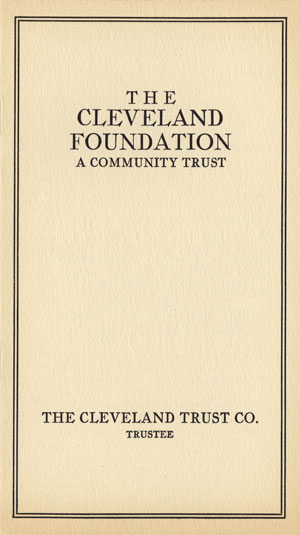
The Cleveland Foundation is established on January 2
Cleveland Trust bank directors approve a Resolution and Declaration of Trust appointing the bank as the foundation’s sole trustee.
1914
The Community Foundation Movement
How Goff’s Idea Has Enriched the World’s Social Capital
Cleveland banker Fred Goff did not rest on his laurels once his idea for a community trust had become a reality. He worked hard to spread the concept as broadly as possible. Even before the Cleveland Foundation was incorporated on January 2, 1914, the publicity department of Goff’s bank sent out a national press release describing the foundation’s structure, purpose and expectations of financial support. Before the month was out, articles announcing the birth of a new kind of philanthropy had appeared in the New York Times, Saturday Evening Post and two progressive journals, Outlook and The Survey. Goff also authored an article about the Cleveland Foundation for the January 1914 issue of Trust Companies magazine.
1915
Groundbreaking Strategy
“To Uncover the Causes of Poverty and Crime and Point Out the Cure”

Fred Goff obeyed the dictum of Cleveland civic architecture designer Daniel Burnham to “make no little plans” as they have “no magic to stir men’s blood.” Less than six weeks after the Cleveland Foundation’s creation, Goff publicly announced that the community trust would undertake as its first act “a great social and economic survey of Cleveland, to uncover the causes of poverty and crime and point out the cure.” The research project, which Goff expected would take two years to complete, would be a way for the foundation, which had no endowment as yet, to make an immediate contribution—by increasing public awareness of the problems facing a community in the throes of rapid urbanization. It would also be an indispensable blueprint to guide grantmaking at that future date when income would be available for distribution.
1915
Landmark Public Education Study
“Nobody else dares do it.”
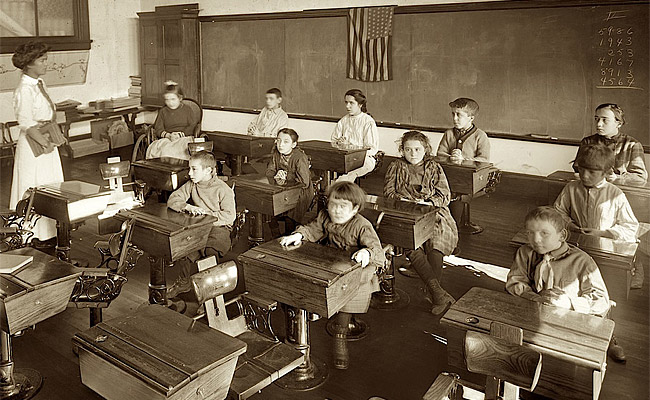
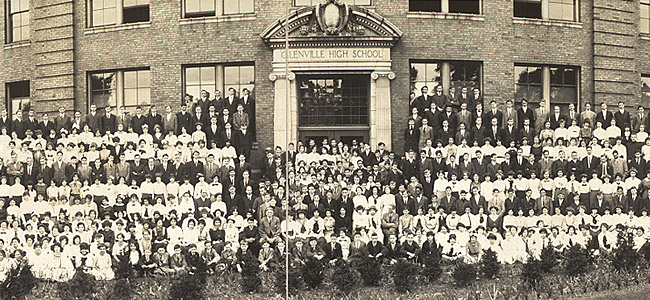
The Cleveland Foundation-commissioned survey of the city’s public schools provided a blueprint for sweeping reforms of an antiquated system unable to meet the educational needs of a flood of immigrant children. Two-thirds of the student population dropped out before the legally permissible age, the survey revealed. Interest in its recommendations for school improvement was intense. Members of the public packed a series of meetings at which overviews of the survey’s 25 reports were presented, and 90,000 copies of individual reports were sold here and internationally to persons concerned about public education reform.
Faced with an overwhelming consensus about the need for dramatic change, the school board hastened to recruit a new superintendent able to implement the survey’s proposals. As of 1923, when the foundation conducted a follow-up assessment of the survey’s impact, 74 of the 100 principal recommendations had been carried out or were in process. (See examples of these reforms.) The results justified the survey’s expense, which had been budgeted at $50,000. More important, the Cleveland Foundation’s qualification to provide bold civic leadership had been demonstrated. As foundation founder Fred Goff had said at the outset, “The schools are the very thing we ought to tackle. Nobody else dares do it.”
1917
James D. Williamson
Board Chairman, 1917–1922
James DeLong Williamson (1849–1935) was the son of Samuel Williamson Jr., a Cleveland lawyer and legislator, and Mary E. Tisdale, a prominent member of the Cleveland Ladies Temperance Union. The family was staunchly Presbyterian (James’s grandfather was a charter member of what would later be known as the Old Stone Church). After graduating from Western Reserve College (A.B., A.M.), Williamson enrolled in Union Theological Seminary and earned his B.D. degree in 1875. That same year he became pastor of First Presbyterian Church in Norwalk, Ohio.
In 1888, Williamson returned with his family to Cleveland, where he pastored Beckwith Memorial Church. He served as acting president (1912–15) and then executive vice president (1915–21, 1924–27) of Society for Savings. In between his terms as VP of the bank, he stepped in as acting president of Western Reserve University.
1919
First designated grant awarded
As per the donor’s wishes, the recipient is the Cleveland Protestant Orphans Asylum (now Beech Brook).
1919
First discretionary grants awarded
1919
Keeping City Playgrounds Open
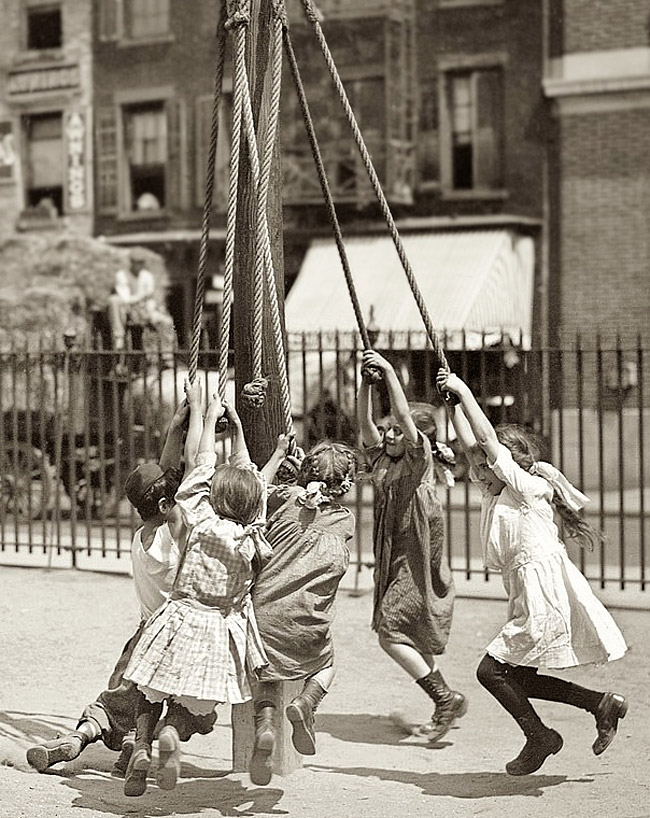
Awarding its first-ever discretionary grant in the amount of $17,070, the Cleveland Foundation helped the City of Cleveland and the Cleveland Board of Education keep open playgrounds that otherwise would have operated on limited summer hours because of lack of funds.
1919
Launch of the Cleveland Metroparks
The foundation’s call for an expansion in public recreational opportunities led to the first purchases of outlying parkland for what became the beloved “Emerald Necklace.”

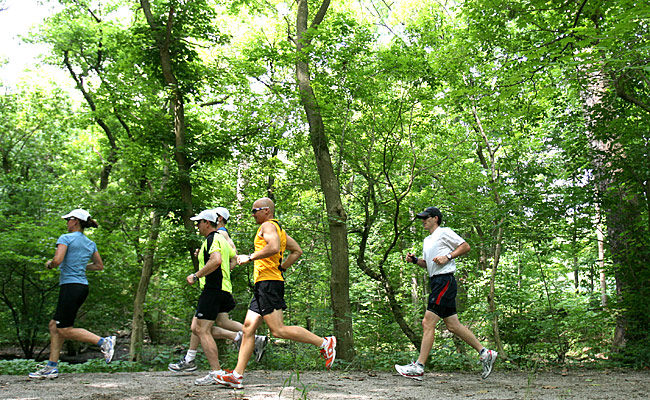
The “Emerald Necklace,” as the famed Cleveland Metroparks are known throughout the region and beyond, began to take concrete shape thanks to foundation research. A foundation-commissioned study of Clevelanders’ leisure activities, completed in late 1919, recommended the creation of a council to advocate for the expansion of opportunities to partake of wholesome recreation. The Cleveland Recreational Council immediately began pushing for the passage of a special tax levy to allow Cleveland’s Metropolitan Park Board to make its first purchases of parkland in outlying districts. The levy passed, and the park board set about assembling what has become one of America’s premier park systems.
Today, the Cleveland Metroparks, which recorded more than 16 million recreational visits in 2012, encompasses the Metroparks Zoo and more than 22,000 acres of interconnected green space in 18 reservations. In 2013, the City of Cleveland’s six lakefront parks joined the system, adding an important new strand to the Emerald Necklace. With a startup grant from the foundation, the Metroparks has launched an Urban Beach Ambassadors program, a team of volunteers who will be on hand at Edgewater and Euclid/Villa Angela parks to help improve visitors’ enjoyment of the lakefront.
1919
Raymond C. Moley
CEO, 1919–1923
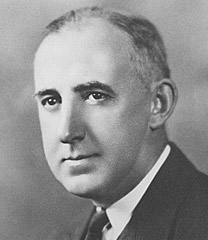
Raymond Moley, best known as a leading member of the “brain trust” that guided Franklin D. Roosevelt into the White House and as FDR’s first assistant secretary of state, became the first full-time director of the Cleveland Foundation on September 1, 1919. Born in the Cuyahoga County town of Berea, Ohio, in 1886, Moley graduated from his hometown college (now Baldwin Wallace University) in 1906 and taught at a country school in nearby Olmsted Falls before being elected “boy mayor” of that rural village in 1908.
He next decided to pursue a master’s degree (Oberlin College, 1913) and managed to earn a Ph.D. in political science from Columbia University in 1918 while teaching that subject at Western Reserve College in Cleveland and organizing citizenship classes for Cleveland’s foreign-born as the mayor’s Americanization chief during World War I. These varied experiences recommended Moley to the board of the Cleveland Foundation, which hired him in May 1919 to complete work on the foundation’s second major municipal survey, a recreation study. When Leonard Ayres (who had conducted the first major survey, on education) declined the offer of the foundation’s directorship, the board turned to Moley, awarding him a contract for a one-year term at a salary of $5,000.
During his four-year tenure as director, Moley shepherded two additional research efforts. The first turned out to be a minor inquiry into the causes of political disaffection among newly arrived immigrants, whose interests Moley continued to champion as the volunteer chair of the Citizens Bureau, a nonprofit organization that offered legal aid to the foreign-born. The dissection of the city’s dysfunctional and unfair criminal justice system, officially requested by the Cleveland Bar Association at Moley’s behest, was perhaps the most important of the eight surveys commissioned by foundation.
In 1922, Moley accepted an offer from Columbia University to become an associate professor of government at its sister Barnard College the following year. His work on behalf of Democrat Al Smith’s failed presidential campaigns in 1924 and 1928 introduced the political science professor to Smith’s successor as New York governor, Franklin D. Roosevelt. Their formal association began when Governor Roosevelt drafted Moley to design a model state parole plan.
Moley became one of FDR’s most trusted advisers and speechwriters during the governor’s campaign for the Democratic Party nomination for president in 1932. Fred Goff’s former protégé persuaded FDR and the Democrats to embrace a progressive economic and social agenda calling for such reforms as a massive federal public works program to assuage joblessness, Wall Street accountability and transparency, and the separation of commercial and investment banking. The term Moley coined to describe this agenda—the “New Deal”—would forever be associated with Roosevelt’s acuminous first term in the White House.
Moley’s service as assistant secretary of state was brief but consequential. Because his office was located in the West Wing, he acted as gatekeeper of Roosevelt’s time while continuing to draft presidential speeches and fireside chats. A difference of opinion with the secretary of state about foreign trade—Moley favored a certain degree of protectionism—prompted the assistant secretary’s resignation in September 1933. He soon found new bully pulpits as a syndicated political journalist and the editor of the weekly journal Today (which later merged with Newsweek).
When he left the Cleveland Foundation, Moley said that he regretted the move because he considered Cleveland “in many ways the most progressive city in America.” Later in life, he sized up his hometown legacy differently. He now believed that the most important contribution “by far” of the criminal justice survey was “what it did for the Cleveland Foundation.” The high-impact survey, he had come to recognize, “literally underlined the importance of the foundation as one of Cleveland’s great institutions.”
1922
Malcolm L. McBride
Board Chairman, 1922–1941
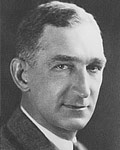
Malcolm Lee McBride (1878–1941) counted among his ancestors an Irish immigrant who in 1785, after losing a lawsuit to George Washington, was ejected from property owned by the general. McBride’s father was president of the Root & McBride Company, a wholesale dry-goods firm in Cleveland that had become one of the Midwest’s largest such concerns. After graduating from University School, McBride attended Yale (B.A., 1900; honorary M.A., 1920) where he captained the football team in 1899 and served as head coach of the 1900 team. He then joined Root & McBride, becoming vice president and treasurer upon his father’s death in 1909. Elected president in 1929, he held that position for the remainder of his life.
In 1905, McBride married Cleveland-born Lucia McCurdy, and they both played active roles in the city’s public and philanthropic life. She founded the Cleveland Woman Suffrage Party, helped to organize the city’s League of Women Voters, and served on the boards of the Visiting Nurse Association, Cleveland School of Art, and Cleveland Play House, among others. He also served on the boards and committees of various organizations, including the Cleveland Civic League, Cleveland Hospital Council, and Cleveland Association for Criminal Justice. But most notable was his 24-year service to the Cleveland Foundation (1917–41; chair, 1922–41). During his chairmanship the principal value of the foundation’s funds increased from an estimated $359,000 to over $6.7 million, with appropriations totaling more than $2.57 million.
1924
Carlton K. Matson
CEO, 1924–1928
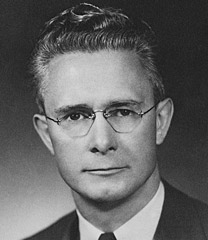
Carlton K. Matson assumed the directorship of the Cleveland Foundation in September 1924, after serving as interim director following the departure of Raymond Moley. Like his predecessor, Matson was a graduate (class of 1915) of Oberlin College. After earning a master’s degree in political science from Columbia University—his thesis examined the State of Ohio’s budget—he worked at New York City’s Bureau of Municipal Research and briefly for a newspaper. He then accepted a position as publicity director of the Welfare Federation of Cleveland and during his time there co-authored a report for the Cleveland Foundation’s recreation survey. Fred Goff subsequently hired Matson to head Cleveland Trust’s public relations department. Matson left Cleveland Trust to pursue a career in financial advertising in Cleveland and Grand Rapids, Michigan. In sum, the foundation’s second director was not “from the conventional uplifter genus,” as Oberlin’s alumni magazine put it shortly after his appointment. “Mr. Matson … has the inquiring mind—almost a restless, unquiet mind,” the magazine went on. “Yet his feet stay on the ground.”
Matson lived up to his advance billing as a realist. At the time of Goff’s death in 1923, the foundation’s endowment was generating less than $15,000 annually in unrestricted income. With its subsidy from Cleveland Trust reduced to $5,000 a year, there was little means to undertake exhaustive, expensive municipal studies. This may not have greatly concerned Matson, who perceived that too many Clevelanders thought that the foundation was a research organization. If the community trust was to fulfill its basic mission of disbursing grants annually for civic benefit, Matson realized that he would have to become actively involved in fund-raising.
In the summer of 1926, he began sending copies of a newspaper article on community trusts to various prominent Clevelanders, a means of introducing himself disguised as a solicitation of their comments. He also systematically sent to every attorney in Cleveland a copy of a speech recently given at the City Club of Cleveland by Ralph Hayes, the director of the New York Community Trust. In the address, Hayes, who had been Goff’s personal assistant at Cleveland Trust, stated his conviction that the invention of the community foundation would one day be ranked as Cleveland’s most important contribution to the world of ideas.
The feedback that Matson received from his mailings betrayed the ignorance, indifference or resistance of the very persons he hoped to convince to endow the foundation or persuade their wealthy clients to do so. Also resulting in disappointment was his attempt to effect a merger of the foundation and the Welfare Federation, whose annual Community Fund campaign consistently generated millions of dollars for its member social service agencies. In the process of pleading the case for the merger, however, Matson converted investment banker Warren S. Hayden, a member of the federation’s executive committee, into a dedicated advocate for the Cleveland Foundation.
Hayden sent a letter to the president of Cleveland Trust in early 1928 that urged the bank to establish a multiple trusteeship as a means of securing a broader base of support for the Cleveland Foundation. Although Hayden spoke solely as a public-spirited citizen, because of his position on the board of the Union Trust Company, Cleveland’s largest bank and, as such, second-ranked Cleveland Trust’s closest competitor, his words carried the promise of the financial community’s cooperation.
Sentiment slowly crystallized among Cleveland Trust officers in favor of multiple trusteeship, but Matson, who had helped to pave the way for this expansion of the foundation’s fund-raising powers, did not witness the Cleveland Foundation’s official affiliation with four additional Cleveland banks in 1931. He had resigned in March 1928 to accept a newspaper editorship. He later directed the Buffalo Foundation for two years.
Matson’s restless intellect eventually brought him back to Cleveland, where he became a greatly admired chief editorial writer for the Cleveland Press. He died in 1948.
1924
Frances Southworth Goff
Kept the Foundation Strong after the Death of Her Husband
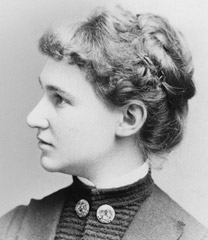
Frances Southworth Goff was in every respect the equal of her husband, Frederick Harris Goff. A woman of character and intelligence, she came from a family that helped to settle the portion of northeastern Ohio called the Western Reserve. Her father, William Palmer Southworth, a carpenter who arrived in Cleveland in 1836 and became a builder and small contractor, was credited with laying Cleveland’s first sidewalks and waterlines. After the Civil War, W. P. opened a general store near Public Square, the city’s downtown commons. Frances’s mother, Louisa (née Stark), was active in the suffrage movement and once headed an effort to secure signatures for women’s right to vote.
Sent by her parents to Vassar College (class of 1886), Frances Goff married Fred Goff in 1894, when she was 30 and he was 36. In addition to rearing three children, she fulfilled her role as the wife of a prominent citizen by engaging in good works. Frances was a founder of the Federation for Charity and Philanthropy, organized in January 1913 at the behest of the Cleveland Chamber of Commerce to coordinate funding of the city’s social service agencies. The federation had a 30-member board, one-third of whom had been selected by chamber officials to represent the city at large.
Mrs. Goff’s familiarity with the federation’s attempt to provide for public representation may account for her sympathetic response to an observation by a Cleveland Press editorial writer named Livy S. Richard that the Cleveland Trust board was not necessarily the best qualified judge of how to distribute the Cleveland Foundation’s funds. Fred Goff, who had sought feedback on his community trust concept from a wide range of sources, had initially dismissed Richard’s recommendation that money meant for the use of the people should be controlled by the people as “nut radicalism.” But when he showed his wife the letter he had received from the newspaperman, Frances responded, “Fred, I believe that fellow is right.” Goff revised his plan for the foundation’s governance accordingly.
The year after Fred Goff’s death in 1923, Frances Goff was appointed to the Cleveland Foundation board (then called the Foundation Committee) by the mayor of Cleveland, John D. Marshall. Reappointed by Marshall and his two successors, she served on the board for nearly two decades, during which time she responded capably and wholeheartedly to the call to transform her late husband’s dreams and hopes for the usefulness of the Cleveland Foundation into reality. In contemporary terms, you might say she “got it,” writing in 1926 that the role of a community foundation was not just to support “good work being done, but to blaze new highways of progress, to do things in educational, social and civic work which challenge the imagination and arouse the ambition of the community.”
In addition to performing the Foundation Committee’s customary grantmaking duties, to which she is said to have brought a deep understanding of human needs, independence of thought and sound judgment, Goff personally interviewed hundreds of young men and women who applied to the Cleveland Foundation for scholarship aid. She conscientiously helped to draft evaluations of each candidate to be considered by the Foundation Committee.
Frances Goff resigned from the committee in 1942 at the age of 78. She explained that she could not in good conscience serve beyond the time when her usefulness to the foundation was in any way impaired. Leonard P. Ayres, whose tenure on the board overlapped with that of Mrs. Goff, paid a heartfelt tribute to his esteemed colleague, stating, “In the 14 years during which Mrs. Goff and I served together on the Committee, the members were of two classes, and Mrs. Goff constituted the entire first class.”
Goff died on July 12, 1956, having mourned the loss of her daughter, Frances Goff Thoburn, two years earlier. She was survived by son William S. Goff and daughter Freda Goff Waterworth, five grandchildren and two great-grandchildren.
1924
In-kind services provided to important civic committees
The loan of its director and offices expands the foundation’s useful roles.
1927
Dorothy Ruth
Assistant to the Foundation’s First Four CEOs
Dorothy Ruth was, for many Clevelanders, the face of the Cleveland Foundation for more than 40 years. A graduate of Flora Stone Mather College of Western Reserve University, Miss Ruth, as she was respectfully called by generations of grantees, was hired in 1927 as an administrative aide to director Carlton K. Matson. She served in the same capacity under Matson’s three successors and, even after her retirement on December 31, 1967, at age 73, remained an invaluable consultant to the foundation for several years. While on staff, Ruth had a larger scope of responsibilities than her title might have indicated. She reviewed all grant proposals, made follow-up phone calls, sent out grant notification letters and processed each of the hundreds of scholarships given to deserving college students over four decades, personally double-checking that the students received their checks.
In 1972, Dorothy Ruth Graham—she married late in life—established the Dorothy and Helen Ruth Fund at the foundation with a gift of $1,000. In part to honor the memory of her mother, Ruth contributed from $700 to $1,000 saved from her modest pension every year thereafter until her death in 1984. When awarded a cost-of-living increase of $600 in 1983, she contributed that sum as well. The Cleveland Foundation, Ruth explained in a letter, had “better use of it” than she.
1927
First College Scholarships
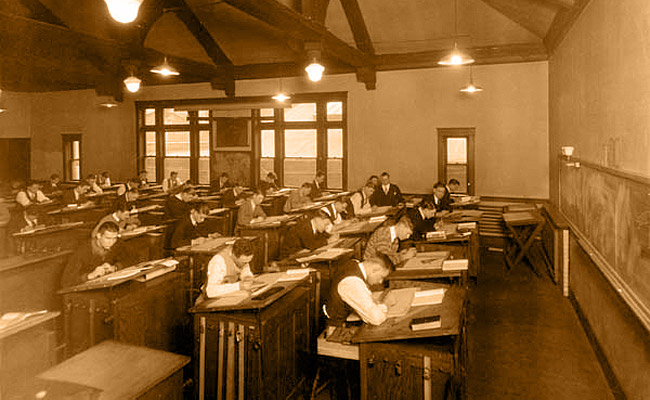

Eighteen students received college scholarships ranging from $100 to $725, thanks to the establishment of the first foundation fund designated to provide financial assistance to worthy undergraduates. The Cleveland Foundation presently administers about 140 scholarship funds and has awarded more than $40 million in scholarships in the last 25 years alone (see video).
1928
Leyton E. Carter
CEO, 1928–1953
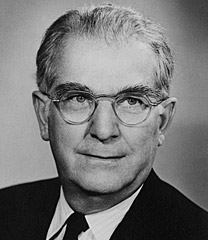
The Cleveland Foundation board set high leadership expectations for its third director, Leyton E. Carter (see video), recommending that the former political science professor and municipal researcher lend his personal expertise to civic endeavors to a much greater extent than had been the case with his predecessors.
Within a few years of his appointment as director in 1928, Carter had become involved as a trustee or officer with an impressive list of area organizations, including the Adult Education Association, Cleveland Chamber of Commerce, Cleveland Music School Settlement, Cuyahoga County Home Rule Association, Ohio School Survey Commission and the YMCA. He taught at the YMCA’s Cleveland School of Technology, a predecessor of today’s Cleveland State University, for 34 years, staying on to conduct evening courses in government, business and statistics at Fenn College, the result of the Y’s 1930 restructuring of its advanced education program.
In 1931, Carter accepted the call to become grand jury foreman (although his agreement came with the understandable qualifier that he would serve “as long as he could”). He played his most significant leadership role in directing an effort to redevelop Cleveland’s slums that led to the Depression-era construction of the first public housing in America.
Carter’s path to the Cleveland Foundation was similar to that of the foundation’s first director. Like Raymond Moley, who was six years his senior, Carter was born in rural, late 19th-century Cuyahoga County (the Carter family farm in North Royalton was settled by Leyton’s great-grandfather in 1814). He studied at Oberlin College and did graduate work in political science and constitutional law at Columbia University before returning to northeastern Ohio to teach political science at Western Reserve University. Prior to joining the foundation, Carter directed the City of Cleveland’s Municipal Research Bureau. His sudden death in 1953 left the Cleveland Foundation leaderless.
1930
Foster Home Demonstration Project

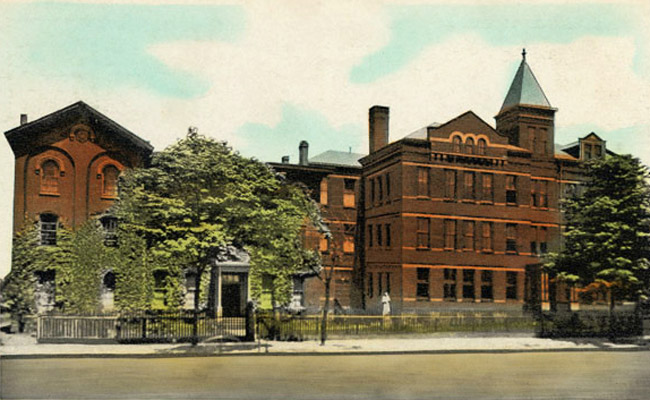
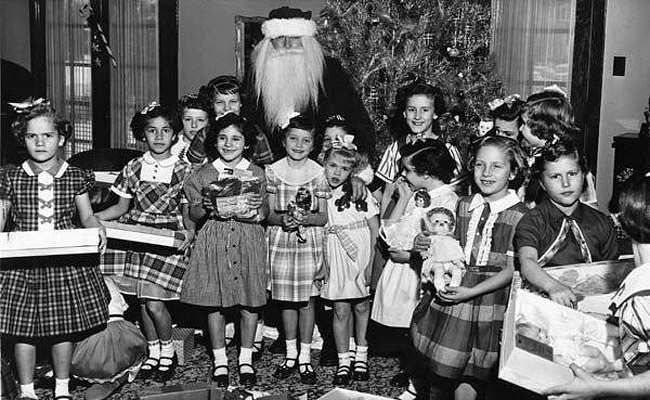
Seeking to reduce the number of orphaned or abandoned children required to live in institutions on a long-term basis, the foundation initiated a multiple-year demonstration project to be undertaken by two private welfare agencies, the Children’s Bureau and the Cleveland Humane Society, to test the feasibility of placing orphans in foster homes. The demonstration, which proved the benefits of foster family care, gradually reduced the reliance on institutional care here.
1931
74 community foundations have been established in North America
The Cleveland Foundation’s endowment ranks as fourth largest, trailing New York, Chicago and Boston.
1931
Decisive Response to the Great Depression
Annual emergency allocations from the foundation helped the Welfare Federation meet a desperate need for social services.
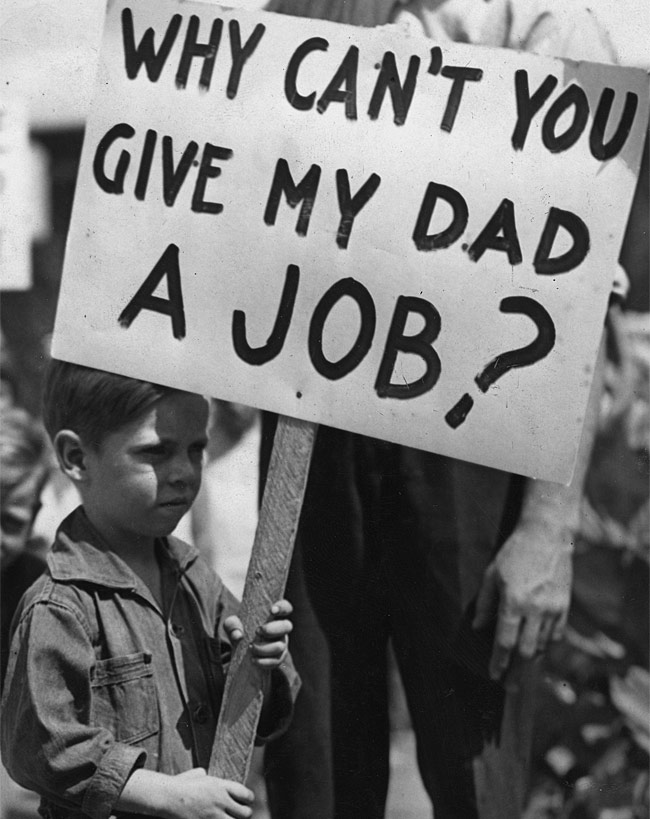

Until President Franklin Roosevelt’s New Deal programs began, the Welfare Federation of Cleveland (now the Center for Community Solutions) stood as a principal bulwark protecting Clevelanders from the worst dislocations of the Great Depression. In the boom years preceding the stock market crash, the federation had annually raised millions to support the city’s nonprofit welfare organizations and agencies. With more than 100,000 Clevelanders on the breadlines as of 1931, the need for social services of all kinds had never been more urgent, yet it had become painfully clear that the federation would be hard-pressed to meet that year’s Community Fund goal of $5.35 million.
“Don’t worry, Mr. President,” Cleveland industrialist Samuel L. Mather, the father of the community chest concept, told Herbert Hoover when the president had appointed Mather to a committee charged with mobilizing a national relief effort earlier in the year. “Cleveland will take care of its own.”
On the last day of the drive, the fate of the campaign remained uncertain. That evening, 8,000 campaign solicitors gathered downtown in Public Hall to learn the final tally. The audience groaned over the news that an 11th-hour contribution of $150,000 from the estate of Samuel Mather, who had died a few months before, had not pushed the campaign over the top. Then Carl W. Brand took the podium. A Cleveland Foundation trustee, he announced the foundation’s contribution of $75,000, arranged that very day. With the foundation’s timely intervention, the Community Fund surpassed its goal by $30,000, enabling the welfare federation to fully fund its agencies’ increased requests for operating support.
The deepening Depression forced the federation to call again on the Cleveland Foundation the following year to rescue the Community Fund. The foundation continued to make an emergency allocation to the Community Fund every year thereafter until socioeconomic conditions began to stabilize after World War II and private donations once again enabled the welfare federation to take care of Cleveland’s own.
1931
Four additional local banks become foundation trustees
The institution of a multiple trusteeship ensures a broader pool of potential donors, enhancing the foundation’s ability to weather the Depression.
1931
Harry Coulby Funds
Much-Needed Support for Core Grantmaking
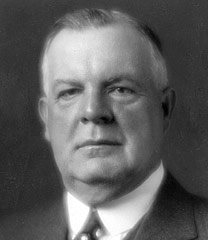
A $3 million bequest from Harry Coulby (see video), received in 1931, may have prevented the Cleveland Foundation’s demise during the Great Depression. There is no question that it gave the foundation the means to aggressively promote child welfare.
Having conceived a fascination for the Great Lakes as a boy growing up in Lincolnshire, England, Coulby stowed away to America as a young man of 19. He arrived in New York City in 1884 with experience as a railroad telegrapher under his belt, then made his way to Cleveland on foot, working odd jobs for his meals or a little cash. Finding it impossible to secure a job on a Great Lakes steamship, he became a stenographer for the Lake Shore and Michigan Railroad. An advertisement placed by John Hay, who had served as a private assistant to President Lincoln and U.S. Secretary of State under President McKinley, subsequently caught Coulby’s eye. Hay was looking for a secretarial assistant to help him complete work on a biography of Lincoln, and Coulby fit the bill.
With the 10-volume biography finished in 1886, Coulby accepted an offer from Hay’s brother-in-law, Samuel Mather, to become a clerk at Pickands, Mather & Company, a recently formed Cleveland-based partnership that supplied raw materials to the steel industry. Within a decade, Coulby had assumed command of the company’s fleet of lake freighters and been promoted to the position of partner, assembling a personal fortune in the process.
Upon his death in 1929 at the age of 64, the “Czar of the Great Lakes” left an estate of more than $4 million, the equivalent of about $62 million today. The Cleveland Foundation’s receipt of the bulk of the estate catapulted the foundation into the ranks of the country’s five largest community trusts. More important, it cushioned the foundation from the impact of the Depression, which put several modestly endowed counterparts in other cities out of business.
The Coulby bequest divided his gift equally between two named funds, which have a combined value of more than $90 million today. The first fund was designated for the support of a favored charity of Samuel Mather, Cleveland’s Lakeside Hospital (the predecessor of University Hospitals of Cleveland). The envisioned purposes of the second fund significantly influenced the direction of the foundation’s grantmaking. Perhaps motivated by his own childlessness, Coulby specified that half of the annual income from his gift should benefit “sick, crippled and needy children.” With these broadly restricted dollars, the Cleveland Foundation has commanded the resources to support innovative child welfare programs ever since.
1933
Experimental Polio Research
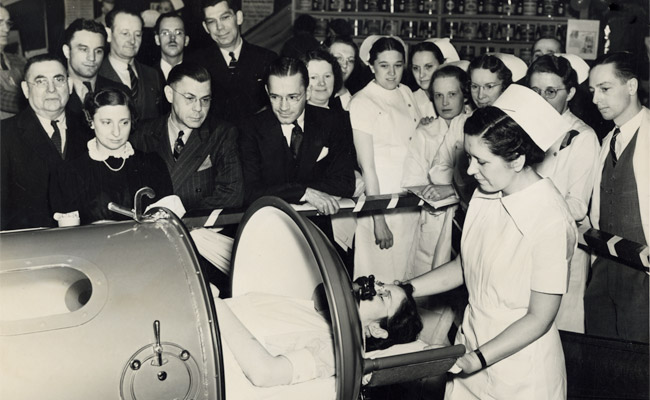
The foundation made what may be its first medical research grant, awarding $500 to support a City Hospital physician’s study of the causes of poliomyelitis. John A. Toomey, M.D., who was also a professor of clinical pediatrics and contagious diseases at the medical school of Western Reserve University, continued to receive foundation backing through the early 1940s. One of the leaders of the international search for a suspected polio virus, Toomey was unable to confirm in exhaustive clinical trials the hypothesis that polio could be passed from one individual to another. The pre-eminence of his medical practice—he was one of the first physicians in the country to prescribe physical therapy for polio patients—was a contributing factor in City Hospital’s designation by the National Foundation for Infantile Paralysis as national respiratory care center in the 1950s.
1933
Paving the Way for Public Housing
A master plan to replace 1,000 acres of delapidated housing with low-income garden apartments was prepared by a private redevelopment corporation chaired by the foundation’s director.
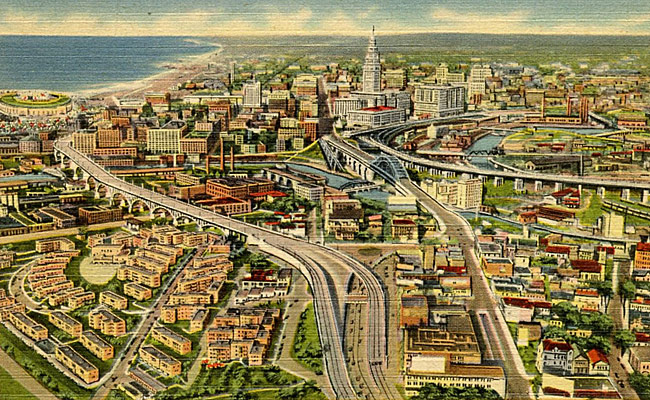
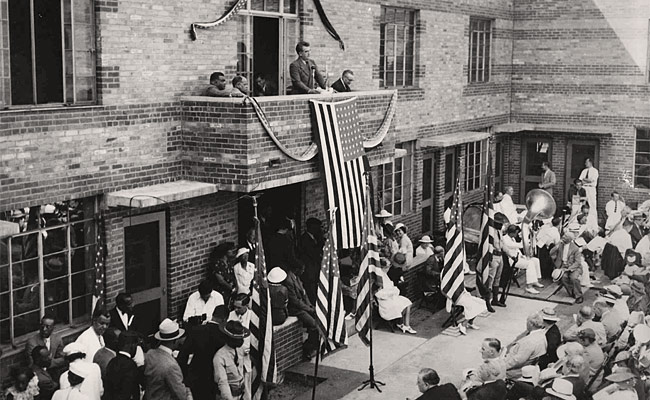

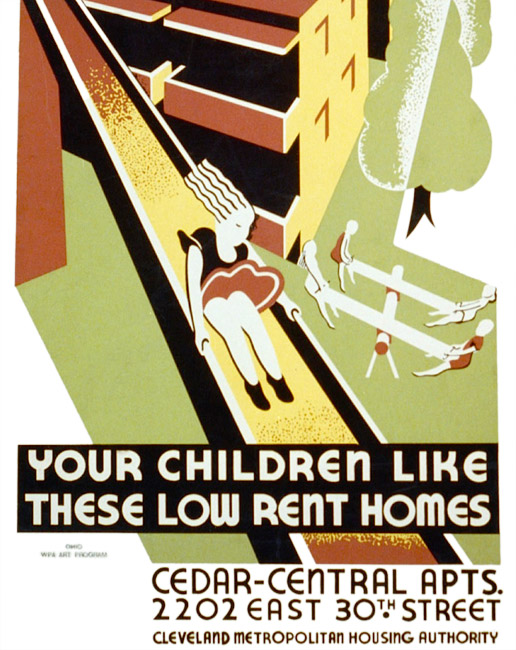
None of the many civic responsibilities that Leyton E. Carter shouldered as an expected complement to his position as the Cleveland Foundation’s director proved more significant than his chairmanship of Cleveland Homes, Incorporated. This private housing corporation was formed in 1933 to implement a program of slum clearance and low-cost housing construction to be financed by a $12 million allotment from the Federal Emergency Administration of Public Works (PWA).
With blight swallowing up fully one-fourth of Cleveland’s total acreage, Cleveland Homes prepared a master redevelopment plan that called for 1,000 acres of east-side slums to be replaced with new streets and speedways linking low-income garden apartments with stores, schools and other public buildings.
The plan was never fully realized because Cleveland Homes proved unable to raise an additional $2 million required by the federal government. Nevertheless, during his brief tenure as chair of the housing corporation, Carter helped to lay the groundwork for the construction of the first three public housing projects in America. Before PWA decided in early 1934 to assume full responsibility for the first 1,028 units Cleveland Homes had planned to build, the housing corporation had commissioned all the necessary architectural drawings and acquired the land.
Construction of the Cedar Apartments, Outhwaite Homes and Lakeview Terrace was completed in 1937, and three years later PWA placed the public housing complexes under the management of the Cleveland Metropolitan Housing Authority (CMHA). The founding director of CMHA, former Cleveland councilman Ernest J. Bohn, is usually given sole credit today for the concept of public housing, as it was he who persuaded city council to undertake a catalytic study of blight and influenced state legislation establishing municipal housing authorities. But Carter’s unpaid and time-consuming leadership of Cleveland Homes should also be acknowledged as part of the Cleveland Foundation’s record of accomplishment.
1934
Anisfield-Wolf Book Awards
Focusing Attention on Social Justice and Cultural Diversity
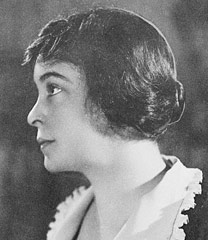
Those who knew Edith Anisfield Wolf (see video), the beloved only child of John and Daniela Anisfield, called her reserved and self-effacing. Yet this unassuming native Clevelander, born in 1889, left a unique mark on the world because of her quiet commitment to social justice. Years ahead of her era in promoting this cause, Edith was influenced by her father, an Austrian immigrant who earned an early fortune in real estate and the garment industry. He put his wealth toward health care for the disadvantaged and improved recreation and education in Cleveland.
In 1901, when Edith was 12, her father welcomed her into his philanthropic work, where she learned to help administer his charitable affairs. Edith studied at Flora Stone Mather College of Western Reserve University and at the Cleveland School of Art, becoming a published poet. She was one of the first women to be appointed a trustee of the Cleveland Public Library. When she determined to honor her father with a prize, she chose literature—a universally popular vehicle—to bring national attention to the causes they both embraced.
So in 1934, Edith established the Anisfield Prize to honor a scholarly work on race relations. The first prize of $1,000 went to a book published in 1935. Following the 1944 death of her husband, Eugene Everett Wolf, Edith established a second $1,000 prize to honor creative works focused on race and cultural diversity. Today, the Anisfield-Wolf Book Awards are presented annually to the authors of three or four distinguished books that address racism and foster appreciation of diversity. Since 1996, the awards also have honored a literary artist for a lifetime of achievement.
With each passing year the book awards have grown more prestigious. The jury—presently chaired by scholar, educator, writer and editor Henry Louis Gates Jr.—has worked hard to broaden the scope. In recent years, Edwidge Danticat, Chimananda Nogozi Adichie, Junot Diaz, Mohsin Hamid and Ayaan Hirsi Ali have joined the ranks of such past honorees as Zora Neale Hurston (1943), Langston Hughes (1954), Martin Luther King Jr. (1959), Toni Morrison (1988) and Ralph Ellison (1992).
Originally, the Saturday Review presented the Anisfield-Wolf Book Awards. Edith’s prescient decision to transfer stewardship to the Cleveland Foundation in 1963 ensured the prizes’ continuance. For the foundation, the awards have become an increasingly effective tool for championing racial tolerance, equality and diversity.
1937
The Retreat
Asset Transfer That Carried on the Work of a Shuttered Home for Young Unmarried Mothers
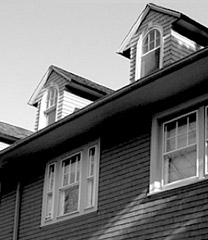
The Retreat, Cleveland’s oldest home for unmarried mothers, faced a difficult decision in 1936. Because parents whose daughters became pregnant out of wedlock were adopting a more tolerant attitude toward the predicament, the need for a residential facility to care for unwed mothers until they gave birth had dramatically declined. The occupancy rate had fallen below 50 percent at the 18-bed Retreat house at 2697 Woodhill Road, prompting The Retreat board’s reluctant decision to close the institution, which had been in operation at various locations since 1868. But what should be done with the organization’s real property and portfolio of stocks and bonds?
Board president Carlotta Creech undoubtedly influenced the transfer of The Retreat’s assets to the Cleveland Foundation. Her husband, Harris, was president of the Cleveland Trust bank and Fred Goff’s successor. In 1937, the foundation received nearly $70,000 from The Retreat, to be invested for the designated purpose of protecting the health and well-being of “unfortunate women and their children.” The Cleveland Foundation was now able to help promote maternal health—the broad cause to which Sarah Elizabeth Fitch, who could rightfully be considered the progenitor of the new endowment fund, was devoted. Coming upon an unwed mother who was about to leap into Lake Erie, Fitch had intervened to prevent the young woman’s suicide and went on to found The Retreat.
1938
Goldblatt’s Early Hypertension Research
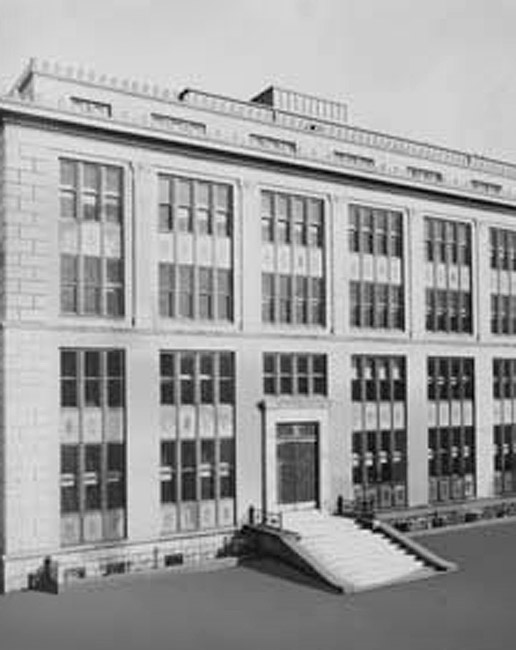
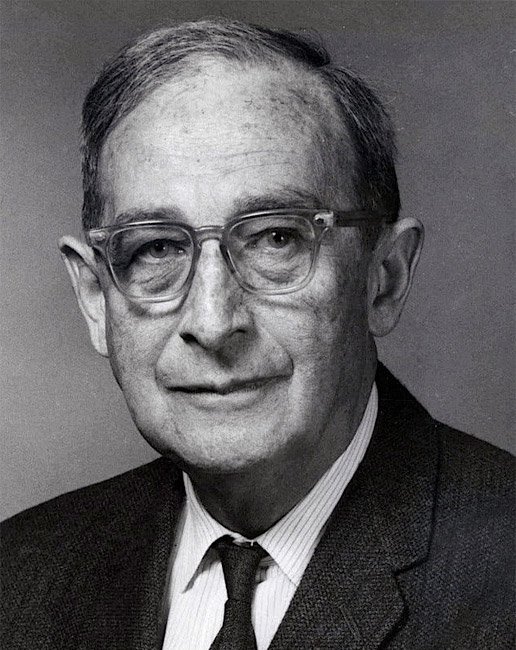
A $1,000 grant advanced the highly significant hypertension research of Harry Goldblatt, M.D., director of Western Reserve University’s Institute of Pathology. Goldblatt’s experiments in the 1930s provided a partial answer to clinicians’ bafflement about the causes of hypertension. He demonstrated that if a portion of the main arteries to the kidneys was clamped, blood pressure rose. Goldblatt won international acclaim for his subsequent research identifying elevated levels of renin, an enzyme that regulates arterial blood pressure, as a factor contributing to hypertension.
1938
Model Nursery School
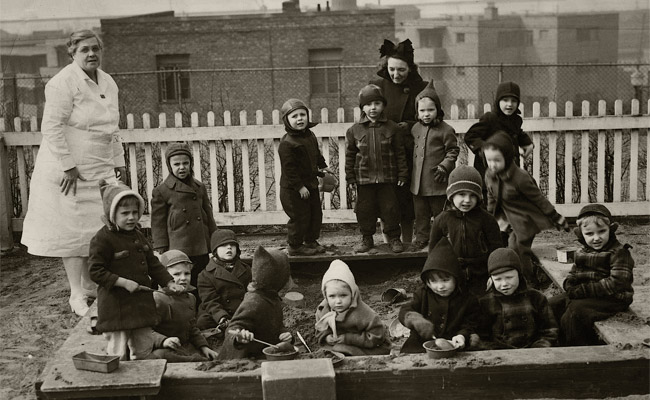

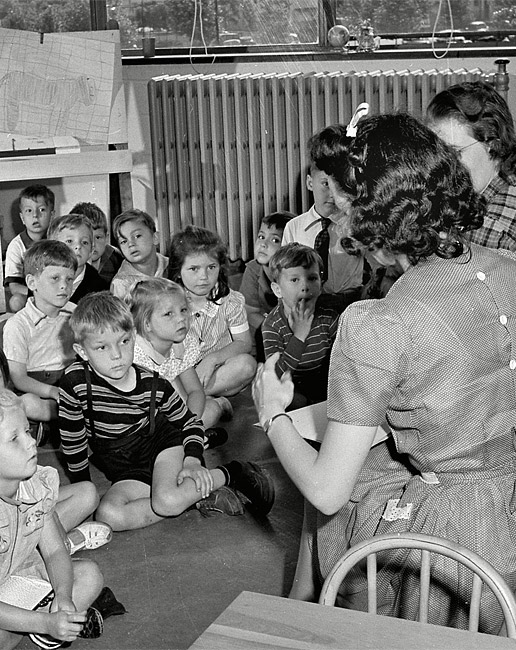
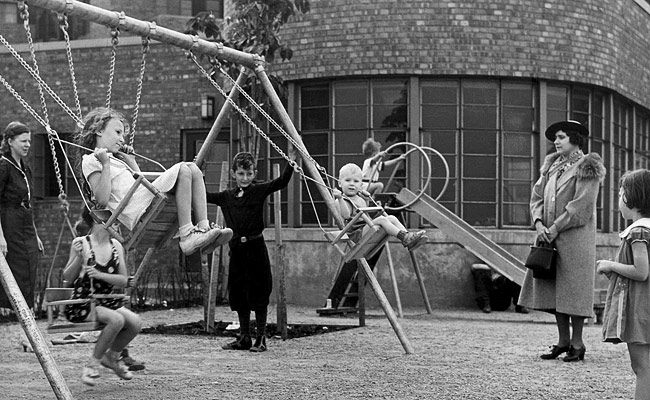
The foundation financed a demonstration project that created a model nursery school at Lakeview Terrace, a public housing project on Cleveland’s near west side. A pioneering early childhood development program, the nursery school was housed in a modern building with well-equipped indoor and outdoor play spaces supervised by an experienced staff. It also offered preschool-age children from tenant families a hot lunch daily and on-site medical services such as immunizations. Hundreds of visitors from other nursery schools and housing projects, social agencies, colleges, hospitals and public health departments came to observe and learn from the school before its operation was taken over by the Cleveland Metropolitan Housing Authority in 1940.
1941
Bellwether Support of African-American Girl Scout Troops
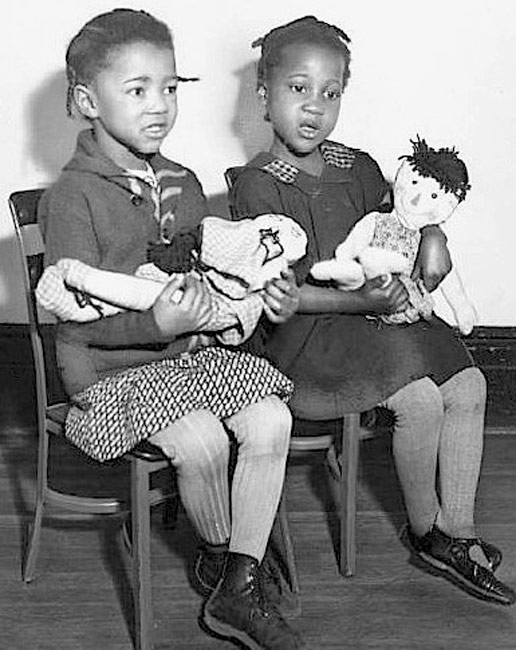
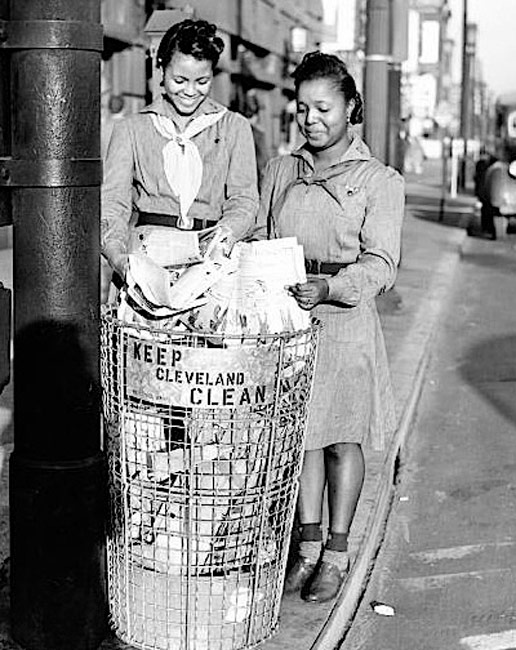
Acknowledging its obligation to confer grants “without discrimination [on the basis] of race, color or creed,” the foundation awarded $1,500 to the Cleveland Girl Scout Council for an expansion of its programming for “negro girls.” The grant, which was used to recruit leadership for new troops and to meet transportation and camping costs for troops requiring financial assistance, was a bellwether of the Cleveland Foundation’s much more substantial support of concerted efforts to serve new racial and ethnic constituencies undertaken by a variety of community organizations beginning in the 1950s.
1941
First Stand-Alone Adoption Service

The foundation supported the start-up and first year’s operation of the Adoption Service Bureau, the first stand-alone agency in the country to assist social service agencies, the courts and prospective parents with the placement of adoptees. Previously, such work was handled as part of a broader portfolio by the Cleveland Humane Society. The bureau’s specialized focus and its advisory board of physicians and lawyers were nationally influential innovations.
1941
Inaugurating Counseling at Divorce Court
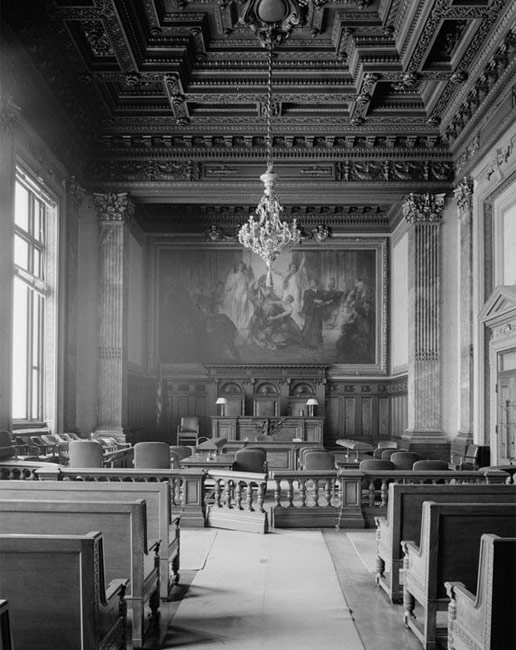
The presiding judge of the domestic relations division of the Cuyahoga County Common Pleas Court gained the support of the Cleveland Foundation for a demonstration program to slow the rapidly increasing number of divorce petitions. The program showed that provision of the services of a “competent psychiatrist” could bring about the reconciliation of some petitioners, to the benefit of the couple, their children and the community generally. Family counseling and conciliation remain important functions of the domestic relations court to this day.
1941
Innovative Library Program for Shut-ins

Carrying out the wishes of donor Frederick W. Judd, the foundation began to provide annual funds to the Cleveland Public Library (CPL) to enable it to serve those who were too ill, incapacitated or elderly to visit a library branch. CPL, which had been making books available to hospitals, other institutions and the blind with federal support, developed a first-of-its-kind program to deliver materials to shut-ins in their homes. The Judd Fund program is still in operation today.
1941
Katherine Bohm
A Laundress’s Generous Endowment Gift
Katherine Bohm was only 16 when she and her mother emigrated from Germany to the United States around 1872. Following in the footsteps of thousands of other Germans, mother and daughter settled in Cleveland, but the fact that the Bohms were members of the largest group of immigrants in the city gave them no special advantage. They eventually found work as a cook and a laundress in the homes of some of Cleveland’s most prominent industrialists: Fred Beckwith, Ralph King and Samuel Mather.
Fred Goff and Samuel Mather were neighbors, and, as the subject of philanthropy was of immense interest to both men—Mather helped to found the Welfare Federation of Cleveland’s Community Chest fund-raising campaign in 1919—it would have been natural for them to discuss the Cleveland Foundation whenever they visited each other’s homes in Bratenahl, Ohio. Clevelanders could not have been very surprised to learn after Mather’s death in 1931 that he had left a generous bequest to the foundation.
But no one was prepared for the touching news, reported in January 1941 in the city’s morning and afternoon dailies, that Goff’s vision had inspired Katherine Bohm to leave nearly her entire life savings (after providing for a number of distant relatives) to the Cleveland Foundation. During 60 years of unremitting toil—later in life she had cleaned offices in downtown Cleveland and washed laundry in her three rented rooms—she had accumulated well over $10,000. Prudently invested in blue-chip stocks, Bohm’s nest egg would be worth more than $150,000 today.
Bohm had been almost completely blind as a result of inoperable cataracts when she died, just a few days before her 80th birthday, in 1936. She had lost a leg to diabetes, but had retained her independent spirit. The gift of $6,500 that established the Katherine Bohm Fund was free of any restrictions; income from the fund was to be used, at the foundation’s discretion, to improve the quality of life in her adopted community. Fittingly, the first grant of Bohm Fund monies was awarded to the Cleveland Society for the Blind to pay for clients’ eyeglasses and prosthetic eyes.
1942
Carl W. Brand
Board Chairman, 1942
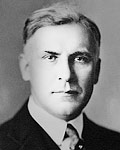
Carl Widlar Brand (1880–1942), educated in Cleveland’s public schools, was a resourceful young man. To earn money to attend Spencerian Business College, he organized a retail coffee route and made deliveries via bicycle, clerked at a soda-water fountain, collected bills for a plumber, sold scorecards at baseball games, and worked as a doorboy at the Roadside Club, an establishment frequented by patrons of the nearby Glenville Race Track. After graduating from business school he went to work as a clerk for a railway company and studied law at night.
In 1898, Brand was earning $25 a week as manager of the Hoffman Hinge Company when his maternal uncle, Francis Widlar, asked him to join his coffee and spice packing business as a billing clerk at $12 a week. Despite the hefty pay cut, Brand sensed an opportunity and worked his way to the position of manager. In 1910, after his uncle’s death, he became president of the Widlar Company. At the 1920 convention of the National Coffee Roasters Association he was elected to a third consecutive term as that organization’s president. Brand’s commitment to civic pursuits was equally energetic. He served as president of the Children’s Fresh Air Camp and Hospital, director of the Cleveland Community Fund, and trustee of the Welfare Federation.
1942
Day Care for War-Effort Mothers
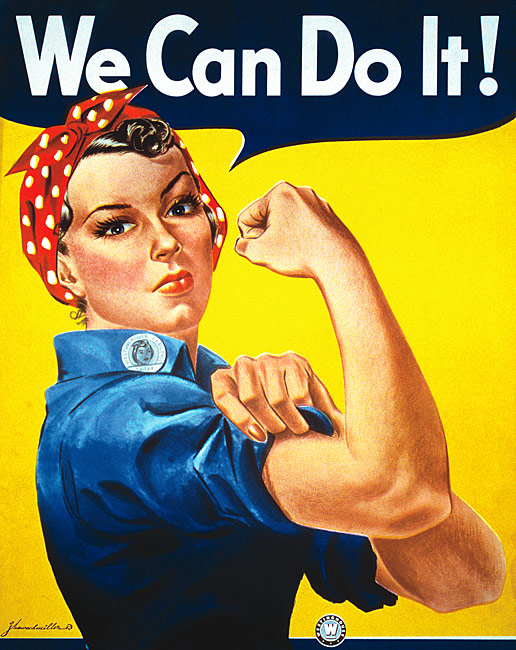
Anticipating that large numbers of mothers would go to work during wartime, the foundation and the Welfare Federation of Cleveland jointly met the expenses of an Emergency Child Care Committee that was set up to locate or develop day care for the preschool children of working mothers.
1942
Fred S. McConnell
Board Chairman, 1942–1955
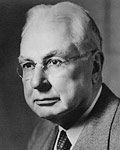
After graduating from Oberlin College in 1899, Fred S. McConnell (1876–1959) entered his father’s wool business in Mount Vernon, Ohio, and the following year married Grace Jenner. He succeeded to the presidency of the J. S. McConnell Wool Company upon his father’s death, but several years later decided to enter a different field: coal. In 1910, he became head of the Eastern Kentucky Coal Company, leaving seven years later for Cleveland at the behest of George Enos, founder and president of the Enos Coal Mining Company, which operated mines in Indiana. McConnell became president of Enos Coal after its founder’s death in 1940. He would also serve as president of the National Coal Association (1943–46) and the Bituminous Coal Institute (1943–51).
Grace had died in 1938, and in 1943 McConnell married the widowed Ann Bomberger Balkwill. She served on the St. Luke’s Hospital Women’s Board and on the senior board of Amasa Stone House. In addition to McConnell’s long service with the Cleveland Foundation, he was president of Karamu House during its early years and an elder of the Church of the Covenant.
1942
Lynn J. and Eva D. Hammond
Donors of the First Funds to Help the Aging

The first funds received by the Cleveland Foundation in the field of aging came from the nearly $1 million estate of Lynn J. and Eva D. Hammond in 1942. Lynn Hammond, who was predeceased by his wife, stipulated that the income from their estate should ultimately fund modest pensions for elderly men and women selected by the foundation as “worthy and deserving.” The monies were to be used first to provide annuities for 33 of the couple’s distant relatives, friends, servants and, most significantly, the retirees of Strong, Carlisle & Hammond, a maker of machine tools and steel mill supplies that Hammond had helped to build into a successful enterprise. Before the principal was transferred to the Cleveland Foundation, the estate also had to fulfill bequests of $5,000 to a number of charitable organizations, including the Masonic Home in Springfield, Ohio.
The source of the Hammonds’ concern for the dignity and comfort of the elderly is not precisely clear, but hints may be found in Lynn’s life story. Born in Cleveland in 1864, he was orphaned around the age of 10 upon the untimely death of his father, Horace, a paymaster at the Cleveland Rolling Mills. An uncle took the boy in. As a young man, Hammond clerked at the rolling mill before hiring on as a bookkeeper and the first employee of the predecessor firm to Strong, Carlisle & Hammond. At his death in 1940, Hammond was the company’s chairman. Did his appreciation of the misfortune that can befall even the meritorious and his gratitude for the hard work of his employees contribute to his keen desire to help seniors who had lived productive lives, but due to socioeconomic realities or unforeseen calamity had found themselves in need?
Whatever the motivation for its creation, the Lynn J. and Eva D. Hammond Memorial Fund helped to propel the Cleveland Foundation into the field of aging, where it would assemble a nationally recognized record of supporting innovation and excellence. (Click on the following links to learn more about model geriatric programs launched with foundation support, such as the Golden Age Centers, Judson Park and the Successful Aging Initiative.)
1943
First logo unveiled
The logo, a medallion engraved with a frontiersman carrying surveyor’s tools, bears the phrase, “Pioneer Community Trust.”
1943
The Combined Fund is created to enable small gifts to the endowment
This innovative vehicle offers individuals of modest means a simple, affordable way to leave a charitable legacy.
1945
Contributions received from a record-breaking 325 individuals
1945
The endowment now comprises 50 named funds
Education, social services and health are the chief beneficiaries.
1945
The foundation receives largest gift of flexible dollars to date
The bequest of $1.7 million from oil heiress Bertha Backus Hale would be equivalent to $12 million today.
1951
A. E. Convers Fund
Endowment Monies with Infinite Flexibility
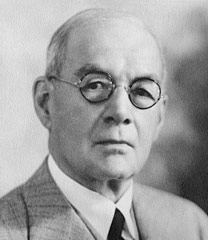
Albert E. Convers was the chairman of Dow Chemical Company and one of the company’s largest shareholders at the time of his death in 1935. The Massachusetts native had formed a lasting attachment to Cleveland, however, during the 30 years he operated a tack manufacturing company here. Believing that the community in which he laid the foundation for his fortune should share in his wealth, he bequeathed almost $4 million to the Cleveland Foundation—with no strings attached.
This was the largest gift received to that point for unrestricted purposes. Demonstrating rare humility in addition to admirable generosity, Convers wanted to provide the community with the means in perpetuity to launch important projects and address critical problems that he himself could never have imagined.
Ever since the first income from the A. E. Convers Fund was realized in 1951, it has generated millions of dollars for grants and supported projects in virtually every program area. Today, the Convers Fund is valued at more than $171 million. The fund’s annual income represents fully 20 percent of the foundation’s unrestricted dollars, allowing flexibility to meet the changing needs of Greater Cleveland.
1953
J. Kimball Johnson
CEO, 1953–1967
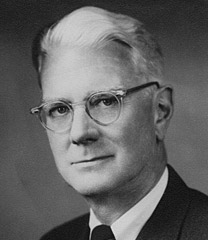
Chicago native J. Kimball Johnson enjoyed a pioneering career as the top Cleveland administrator for the federal government’s alphabet soup of new social service agencies before becoming the fourth director of the Cleveland Foundation. Having ultimately been transferred from Cleveland to the Chicago regional office of the newly created U.S. Department of Health, Education and Welfare, Johnson had sought the foundation’s directorship after Leyton Carter’s sudden death in 1953 in the hope of returning to his adopted city.
Johnson (known as Kim to his friends) had moved to Cleveland in 1911 at age 10. After graduating from Lakewood High School, he earned a bachelor’s degree in metallurgy at the Case School of Applied Science, followed by a master’s degree in civil engineering. His work as a civil engineer for a private contractor specializing in sanitary engineering projects eventually took him to Cuba, where he supervised the construction of a $5 million waterworks and treatment system for a Havana suburb.
Returning to Cleveland at the dawn of the Depression and faced with unemployment, he accepted a job as a caseworker, visiting needy families to determine if they qualified for direct relief from Cleveland’s Associated Charities. This social work experience, teamed with his civil engineering background, made him an obvious choice to help Cuyahoga County’s relief director launch a new federal employment program in 1933. The county’s Civil Works Administration would put 42,000 Clevelanders back to work, and Johnson’s managerial skills attracted attention in Washington, D.C. In 1937, he was recruited to become a field office manager for the Social Security Administration. During World War II, he served as regional chief of field operations for the country’s manpower mobilization effort. After the war, he was tapped to head a five-state regional office that administered all of the programs then operating under the auspices the Social Security Administration, including the Food and Drug Administration and the Office of Vocational Training.
The Cleveland Foundation recorded its greatest growth to date during the first decade of Johnson’s tenure as director. Between 1953 and 1963 the foundation’s endowment swelled from about $18 million to $65 million, an increase of more than 250 percent. Johnson had only his stalwart assistant, Dorothy Ruth, and a stenographer to help him process upward of 250 grants totaling in excess of $2 million annually. Buried under an ever-expanding mound of paperwork, he came to question the increasingly standardized nature of the foundation’s decision making about how best to distribute its undesignated income. With his extensive social service background, he grasped that the changing dimensions of the socioeconomic problems facing Cleveland required exceedingly innovative solutions.
Between 1953 and 1961, Cuyahoga County had lost a staggering 65,000 manufacturing jobs, and the hardest hit were those with the least seniority: African Americans, originally from the South, who had come north seeking factory jobs during and after each of the world wars. Cleveland’s welfare costs had skyrocketed 500 percent over the course of the 1950s, as the children of the idled workers themselves began to drift onto the relief rolls. As of 1961, two-thirds of the out-of-school youth between the ages of 16 and 21 living in the central city were unemployed. In the east-side neighborhood of Hough, the percent of unemployed youth stood at 79 percent.
Acting on Johnson’s recommendations, the Cleveland Foundation poured $400,000 on a project-by-project basis into programs for the residents of Hough alone between 1953 and 1961. Also to his credit, he recognized the need for new, coordinated approaches to solving the multitudinous and interrelated problems of the central city. Johnson regretted that the foundation’s astounding growth, although gratifying, gave him little time to think and act other than mechanically. He retired in 1967, the year after Hough erupted in violence, becoming a symbol, known around the world, for the anger of African Americans toward the inequities of opportunity their country afforded them. He graciously stepped down to allow a younger leader with a demonstrated record of success in fighting prejudice and inequality take the Cleveland Foundation in a bold new direction.
1954
Downtown Cleveland’s Resurgence
Starting with the Erieview urban renewal project of the 1960s, the foundation has been a steadfast supporter of initiatives to reverse postwar stagnation in the city’s core.
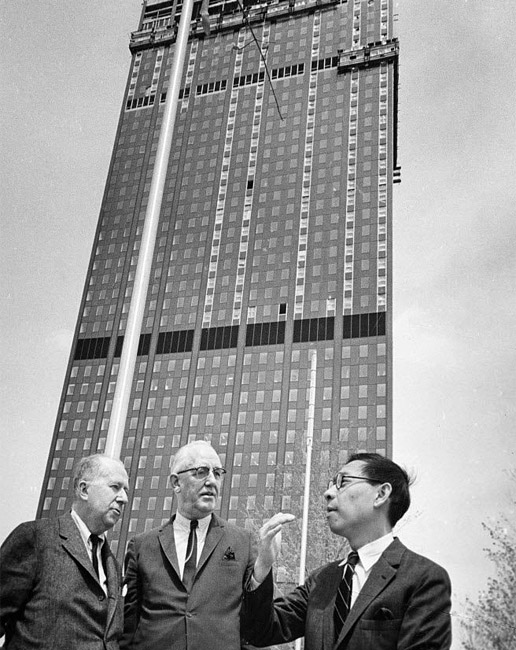
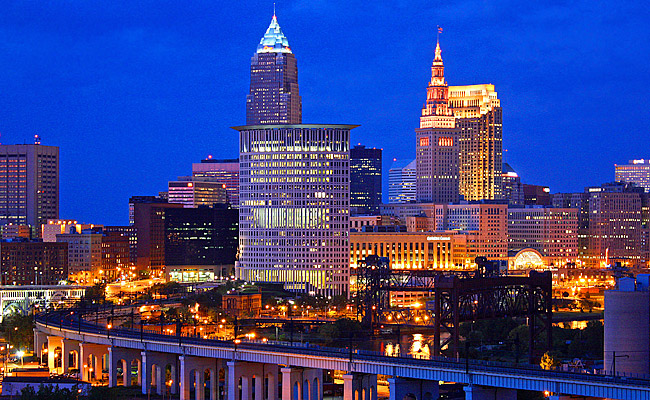
In 2013, Forbes ranked Cleveland as one of 15 cities with a resurgent downtown. The magazine’s appraisal was based on information provided by the Downtown Cleveland Alliance, the latest in a long series of endeavors undertaken with the support of the Cleveland Foundation to reverse the postwar stagnation of Cleveland’s core.
Today, the central city can boast of several impressive measures of good health, starting with the $1.7 billion invested within last decade in new downtown development. Millions more will be invested in proposed hotels, apartments, parks, landscaping and public art and even a full-service grocery. The nation’s eighth largest downtown workforce—nearly 150,000 people strong—pours into the central city each weekday. Roughly 10,000 people live downtown, and almost 16 million people patronize downtown events and attractions each year.
Many visitors might find it hard to believe that, not too long ago, downtown Cleveland emptied out after dark, and blight had overtaken entire quadrants of the city center.
Downtown renewal had stalled during the Depression and never recovered. As of the 1950s, only one or two major new office buildings had been built since the Terminal Tower went up on Public Square in 1929. The pressing need for urban renewal resulted in the creation in 1954 of the Cleveland Development Foundation (CDF), a nonprofit corporation that raised $2 million from the corporate community to invest in redevelopment projects. Supported with early-stage operating grants from the Cleveland Foundation and the Leonard C. Hanna Jr. estate, CDF focused first on building low-income housing, so that slum land could be cleared in preparation for redevelopment.
Then, in 1960, CDF unveiled a $500 million citywide master redevelopment plan underwritten in part by the foundation. The plan, which was formally adopted by the City of Cleveland, included a massive downtown renewal project called Erieview. Conceived by internationally known architects I. M. Pei & Associates, Erieview envisioned $100 million in new construction, including government, office and apartment buildings, retail spaces and even a hotel, for a blighted area immediately northeast of downtown overlooking the lake.
Except for the hotel, the downtown plan had been implemented by the mid-1970s, and Erieview’s scale influenced future redevelopment efforts, which focused on a series of big-time projects: indoor shopping malls, museums, stadiums, a convention center and a medical technology showplace. The Cleveland Foundation supported many of these endeavors, typically by providing planning, site analysis or design grants or supplementing construction budgets with funding for public amenities. The foundation also facilitated improvements in downtown infrastructure and downtown transportation, providing planning grants for a county-wide Regional Transit Authority in the 1970s and the Euclid Avenue Dual Hub Corridor, the predecessor of the HealthLine, in the 1980s and ’90s.
In the late 1990s, civic attention turned to the still-decaying sections of downtown lying beyond or in between the bustling big-development clusters. A new nonprofit economic development corporation called the Downtown Cleveland Partnership (DCP), comprised of a cross-section of downtown business interests, had recently been established, and the Cleveland Foundation provided a $250,000 grant that allowed DCP to study the feasibility of innovative redevelopment projects that might not otherwise be considered by small property owners. In 2001, the foundation contributed $1 million to establish a second catalytic fund at DCP. Providing low-interest loans to property owners willing to undertake exterior renovations, the fund particularly aimed to improve the rundown appearance of lower Euclid Avenue.
Seeking a steady and significant source of funding for its economic development activities, the Downtown Cleveland Partnership began to push in 2005 for a special tax assessment called a business improvement district (BID). Property owners controlling 60 percent of downtown’s sidewalk frontage had to approve the BID’s establishment, as they would be assessed additional taxes to pay for improved maintenance, safety and marketing services. Actively championed by the Cleveland and George Gund Foundations, the BID went into effect in 2006, raising a first-year budget of $3 million for the Downtown Cleveland Partnership’s successor organization, the Downtown Cleveland Alliance. A $450,000 grant awarded by the Cleveland Foundation in 2008 further strengthened the alliance’s work to make downtown more welcoming for visitors, new and existing residents, and business development.
1954
Innovative Senior Services

Before the foundation provided start-up funds to the Golden Age Centers of Cleveland (GAC), few if any local social service programs specifically addressed the needs of senior citizens. GAC’s first project—a recreational center for tenants 60 and older at the Cedar-Central public housing complex—was a popular success. The innovative organization went on to open 15 additional centers offering a wide spectrum of services to the elderly.
1955
John L. McChord
Board Chairman, 1955–1956
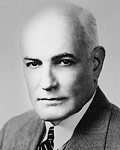
Born in Lebanon, Kentucky, John Lisle McChord (1897–1956) graduated from Washington & Lee University (1918) and Harvard Law School (1922), serving in the military during World War I. He worked in the legal department of the Cleveland Automobile Club before joining the firm of Calfee, Fogg & White as a partner in 1927. For many years he was a member of the probate and trust committee of the Ohio State Bar Association, and in 1949–50 served as president of the Cleveland Bar Association. He was a director of Union Savings & Loan, vice president of the Family Service Association of Cleveland, and trustee of the Welfare Federation of Greater Cleveland. At age 58, he succumbed to a heart attack.
1956
Ellwood H. Fisher
Board Chairman, 1956–1962
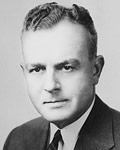
In the late 19th century, Manning Fisher worked for a grocer who owned 150 stores throughout New York City. Inspired by his boss’s success, in 1907 Fisher set out for Cleveland and opened his first grocery store on Lorain Avenue. His brother Charles soon joined him, and by 1916 the Fisher Brothers Company had 48 stores operating under the cash-and-carry system. Manning’s Dartmouth-educated son, Elwood Huff Fisher (1899–1975), would enter the family business as an assistant buyer.
By the time of his father’s death in 1931, Elwood Fisher had assumed the presidency of the supermarket chain. When the company celebrated its 40th anniversary in 1947, it was operating 211 stores. Fisher had married Marion Shupe, who served on the boards of Amasa Stone House, the YWCA and Camp Ho Mita Koda. He helped to found Bluecoats Inc., which provides aid to families of police and firefighters killed in the line of duty. He was also on the board of the Cleveland Zoological Society and was the first chairman of Fenn College, predecessor of Cleveland State University.
1956
Information Services for Cleveland-Hopkins Air Travelers
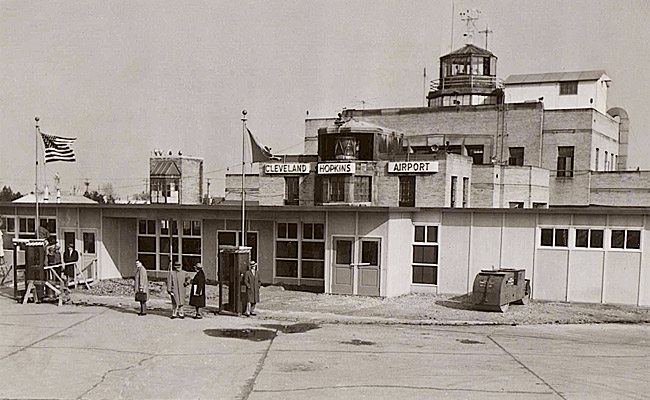
With increasing numbers of persons traveling by air, the Cleveland Foundation supported the plans of the Travelers Aid Society to expand its services to Cleveland-Hopkins Airport. Backed by a two-year grant, the society set up an office at the airport to provide information, assistance or crisis intervention to the traveling public.
1957
Early Study of Metropolitan Government
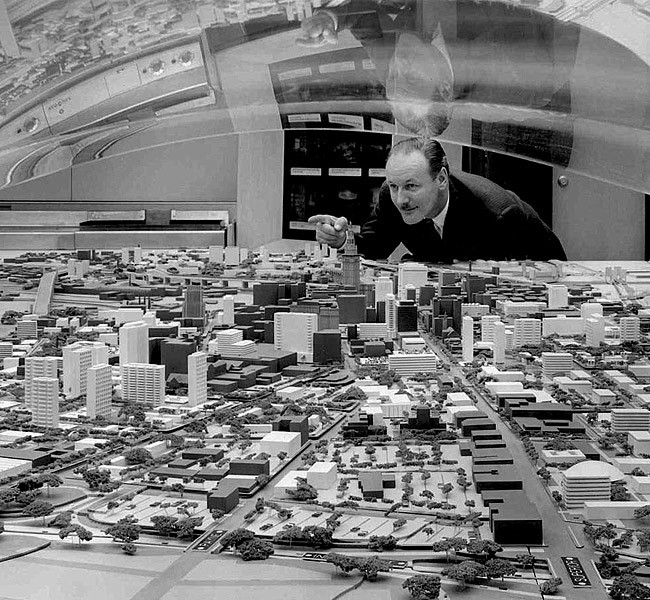
The Metropolitan Study Commission (METRO)—an investigation of the advisability of converting Greater Cleveland to a metropolitan form of government—got under way with the help of Cleveland and Ford foundation grants. METRO's findings about the benefits of consolidation failed to convince voters when the issue came to the ballot in 1958, but study director James A. Norton went on to become the fifth director of the Cleveland Foundation.
1957
Poison Information Center

Recognizing the dangers posed by the thousands of new household products coming into routine use, the Academy of Medicine of Cleveland established a Poison Information Center with a start-up grant from the foundation. The center offered physicians detailed information about the chemical composition of all types of toxic substances and first aid advice to members of the public who called in seeking help in treating cases of accidental poisoning.
1958
Emergency Aid to African-American-Run Hospital
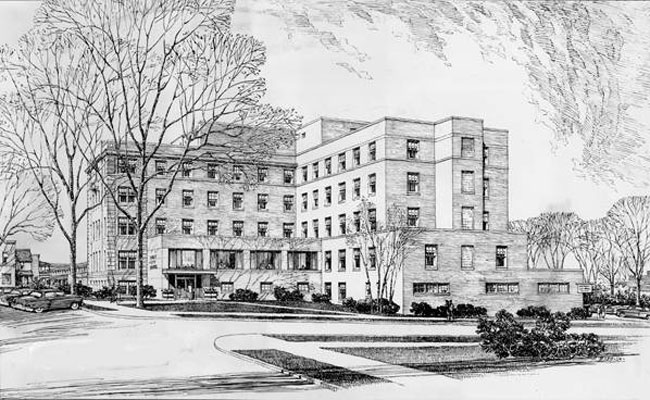
Forest City Hospital, a 100-bed general medical center built by a group of African-American physicians who wanted to practice in a hospital free of race restrictions, survived its difficult first year of operation with the help of the foundation’s $35,000 emergency grant. Its financial footing regained, Forest City served the residents of Cleveland’s far east side for 20 years. When the hospital closed, its assets were transferred to the new Forest City Hospital Fund at the Cleveland Foundation. In 1981, fund monies helped to launch a capital campaign to replace the antiquated mansion housing the Eliza Bryant Center for the frail elderly in Hough with a new $4.5 million facility that doubled the nursing home’s capacity.
1959
Experimentation with TV Broadcasts in the Classroom

Case Institute of Technology received a grant to broadcast astronomical events as seen at the school’s observatory to students in campus classrooms, a pioneering use of television in educational instruction.
1960
Attempt to Address Desperate Conditions in Hough
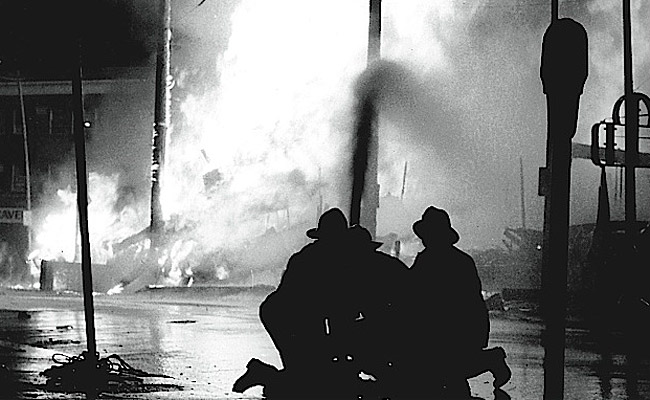
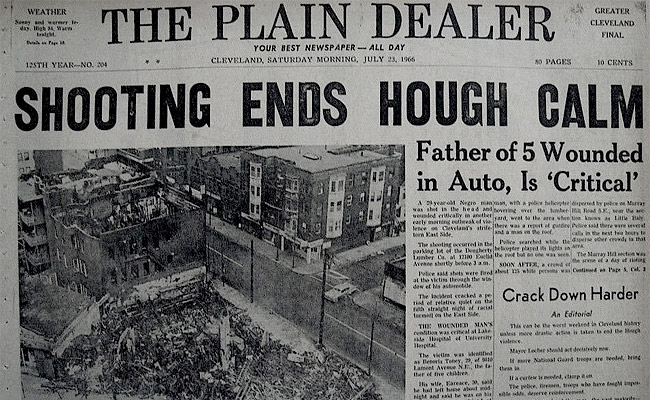
Between 1950 and 1960, the once-fashionable residential area on Cleveland’s east side known as Hough underwent a rapid demographic transformation, changing from 95 percent white to 74 percent African American. No longer a middle-class enclave, Hough suffered from rising unemployment, unacceptable poverty rates, a high incidence of crime and delinquency, and the decay and overcrowding of its housing stock.
In the 1960s, the Cleveland Foundation contributed $106,000 over five years to the Welfare Federation of Cleveland to support the development of a comprehensive social services plan to ameliorate the problems besetting the 80,000 residents of this two-square-mile central-city neighborhood. Living conditions still festered in Hough five years later, but the endeavor was a prescient attempt to address an impending social crisis that erupted into the full-blown Hough riots of 1966.
1960
Legal Representation for Indigent Defendants
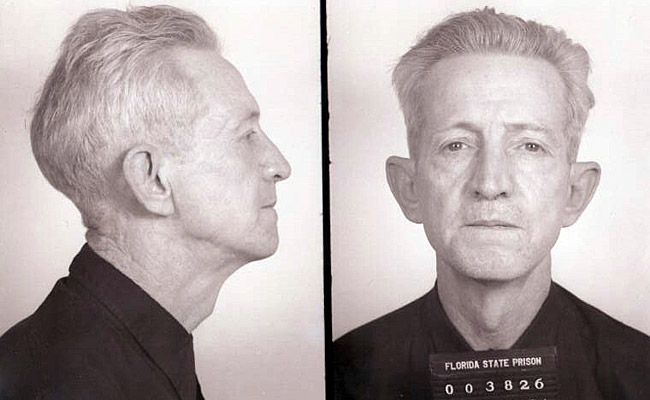
The public defender’s office of Cleveland’s Legal Aid Society was established with a $100,000 grant two years before the U.S. Supreme Court unanimously ruled in Gideon v. Wainwright that state courts must provide counsel to represent indigent defendants in criminal cases.
1960
Promoting Fair Housing and Integration
The foundation displayed considerable courage in supporting a variety of programs aimed at overturning entrenched patterns of segregation.
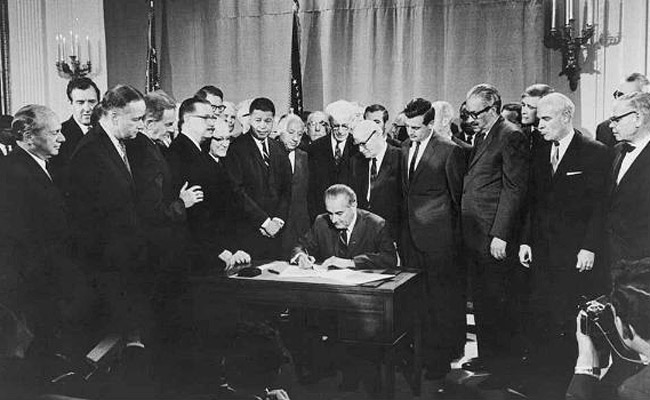 Title VIII (the “Federal Fair Housing Act”) of the Civil Rights Act of 1968, signed by President Johnson a week after the assassination of Martin Luther King Jr., advanced the struggle for integration taking place in Cleveland’s eastern suburbs and elsewhere across the nation.
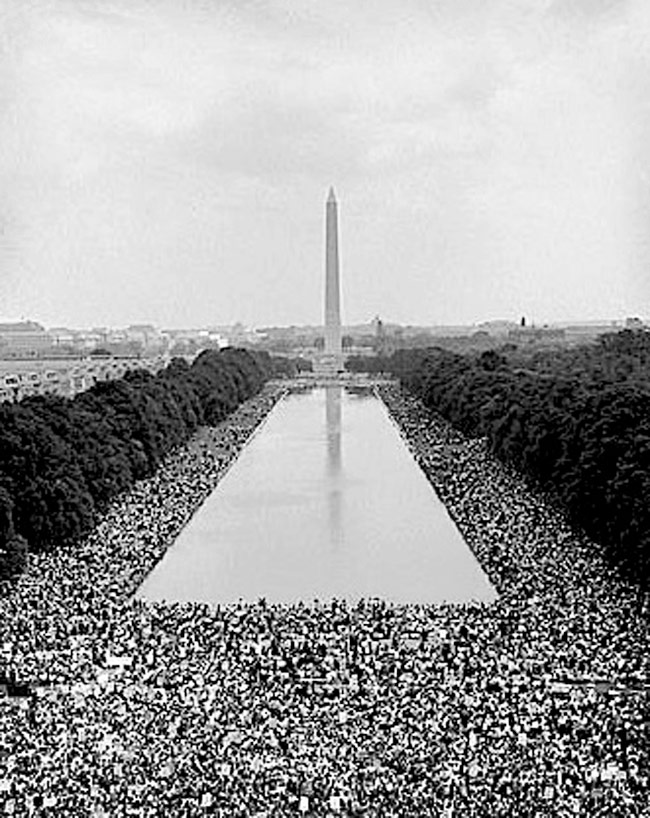 The March on Washington, August 28, 1963, at which Martin Luther King Jr. called upon the nation to make good on democracy’s promise of social and economic freedom for all citizens
 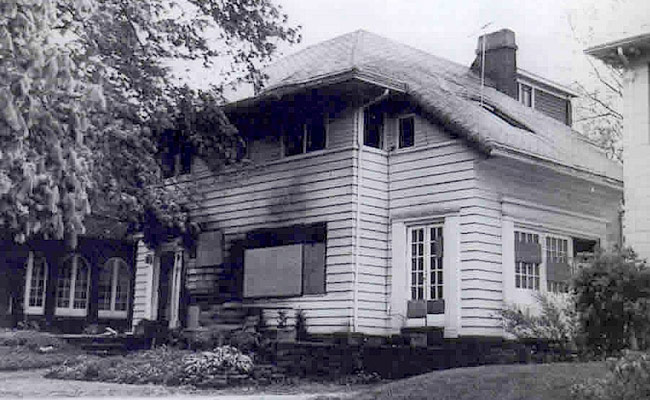 In 1967, this Cleveland Heights home, owned by an African American, was bombed in a senseless and vain attempt to halt the suburb’s integration.
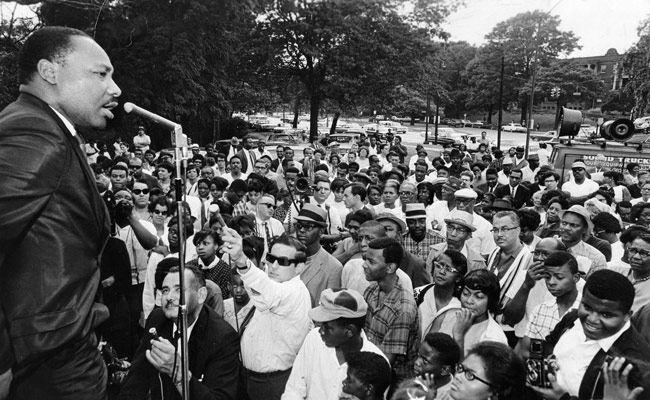 Dr. King speaking in Rockefeller Park on a visit to Cleveland in 1967. The previous year he had dramatized the issue of housing discrimination by moving his family into a grimy apartment on the segregated west side of Chicago and joining in protest marches into that city’s all-white neighborhoods.
The Cleveland Foundation began to address the issue of housing segregation in the early 1960s, making grants to support the Ludlow and Moreland neighborhood associations that sprang up to encourage the integration of neighborhoods straddling the boundaries of Cleveland and the inner-ring eastern suburb of Shaker Heights. Thus began the foundation’s longstanding commitment to promoting fair housing and integration.
In 1960, only one of every 40 minority families in Cuyahoga County lived outside the City of Cleveland. Most people accepted the status quo. It required courage on the foundation’s part to lend moral and financial support to a wide range of groups working to overturn entrenched patterns of housing segregation. In addition to neighborhood associations, grantees included the Fair Housing Council, which successfully lobbied municipalities across the county to pass fair housing resolutions in the mid-1960s, and the Heights Community Congress (HCC), a broad-based coalition of organizations and individuals that monitored the progress of integration in the inner-ring eastern suburb of Cleveland Heights. When warranted, HCC took remedial action to maintain racial balance and harmony, filing lawsuits against local realtors, for example, that set standards for nondiscriminatory treatment of African-American home buyers.
Cleveland also participated in Operation Equality, a Ford Foundation demonstration project to improve minority housing opportunities in eight test cities. The willingness of the Cleveland Foundation and its affiliated Greater Cleveland Associated Foundation to match a Ford grant of $180,000 allowed Operation Equality to open four field offices in Cleveland in 1966–67. Field workers provided assistance to African-American families willing to risk buying homes in white neighborhoods. Having helped to relocate 200 African-American households during its first two years, Operation Equality-Cleveland decided to shift its focus from providing services to individual clients to attempting to bring the real estate industry into compliance with federal fair housing provisions passed as part of the 1968 Civil Rights Acts. The Cleveland office joined with the U.S. Department of Justice to file fair housing suits against several area apartment management firms in the early 1970s that resulted in consent agreements governing more than 10,000 units.
Progress toward integrating the city’s eastern suburbs became noticeable. By 1970, one of eight African-American households lived outside Cleveland’s boundaries. As outward migration continued, Shaker Heights, Cleveland Heights and University Heights were faced with the prospect of resegregation—that is, they were well on their way to making the transition from all-white to all-minority. Rather than ignoring these demographic trends, municipal and public school officials formed the East Suburban Council for Open Communities (ESCOC) in 1983 with the support of the Cleveland Foundation.
ESCOC offered low-interest loans from special-purpose funds established in Shaker and Cleveland Heights to home buyers willing to settle in neighborhoods where their race was underrepresented. In 1988, the integration maintenance program received an Innovations in State and Local Government Award, one of 10 presented by the John F. Kennedy School of Government at Harvard University that year. Funded by the Ford Foundation, the award recognized ESCOC as the “nation’s first public-private inter-jurisdictional approach to integration, targeting affirmative marketing to all home seekers on a sub-regional rather than local basis.” Equally important, the organization had helped to slow resegregation in the Heights and maintain the racial diversity that is a prized attribute of the area today.
1961
A Central Planning Agency for University Circle
A 1957 master plan for University Circle identified the immense land-use challenges facing Cleveland’s civic mecca, then home to 34 education, arts and culture and healthcare institutions. Affirming the importance of maintaining the Circle’s viability, the Cleveland Foundation made a three-year grant of $180,000 in 1961 to support the operation of the University Circle Development Foundation (UCDF), a central planning agency whose establishment had been recommended by the master planners as essential to the Circle’s orderly growth.
UCDF took responsibility for providing collectively needed services, such as public safety, shuttle transportation and parking. It also assembled a land bank upon which Circle institutions could draw to meet future expansion needs. In 1970, UCDF was reorganized as University Circle Inc. and given the added responsibility of building relationships with the residents of surrounding neighborhoods.
1961
A course-changing philanthropic demonstration project is launched with foundation support
The Greater Cleveland Associated Foundation is created specifically to stimulate fresh approaches to solving Cleveland’s increasingly grave socioeconomic problems.
1961
Harold T. Clark
Visionary Philanthropist Behind the Risk-Taking Greater Cleveland Associated Foundation

In the early 1960s, when he was in his mid-70s, attorney Harold Terry Clark set about to reinvigorate the grantmaking of the Cleveland Foundation. Clark had been a foundation board member during the 1940s and ’50s, but his reputation as the city’s most influential philanthropist came from another involvement. When Leonard C. Hanna Jr. died on October 5, 1957, he left Clark in charge of his trust fund. Hanna, scion of a Great Lakes iron ore- and coal-shipping fortune, had instructed that the fund be liquidated within five years of his death, with $33 million to be given immediately to the Cleveland Museum of Art. That left Clark, who had been Hanna’s personal attorney, with more than $40 million to distribute.
A member of the prominent Cleveland law firm of Squire, Sanders & Dempsey (which he had joined in 1906 after graduating from Harvard Law School and left in 1938 to start his own practice in order to have more time to devote to community pursuits), Clark had interested a group of civic leaders in helping him organize a natural sciences museum for Cleveland in 1920. He later became president of the Cleveland Museum of Natural History, and of the art museum. With both museums located in University Circle, the home of the city’s most prestigious cultural, educational and medical institutions, it is not surprising that a first-time federation of Circle institutions aimed at turning the area into a veritable Acropolis was the beneficiary of one of the first Hanna grants made by Clark.
Clark’s interest in urban redevelopment was further spurred by a speech given in the early 1960s by Adolph W. Schmidt, president of the A. W. Mellon Educational and Charitable Trust in Pittsburgh. Schmidt had described the role of the Allegheny Conference on Community Development in rebuilding an area of downtown Pittsburgh known as the Golden Triangle. The Allegheny Conference’s “full mobilization of philanthropy,” according to Schmidt, had been one of its outstanding accomplishments. Harold Clark decided that he would try to engineer a similar miracle in Cleveland.
And so it was that, on November 8, 1961, the board of the Cleveland Foundation, in conjunction with the Hanna trust and four other area foundations, submitted to the Ford Foundation a formal grant request entitled “A Proposal for the Greater Cleveland Association of Foundations.” The document outlined four distinct roles for the proposed association, whose operating expenses were to be paid for by income from the Leonard C. Hanna, Jr. Special Purpose Fund that Clark had established earlier that year at the Cleveland Foundation with a $1 million gift. The purpose of the new fund—to help the community develop a “sound, efficient and forward-looking charitable program”—was couched in the broadest possible language so as to avoid raising alarm.
In the interim, Clark had persuaded the leaders of the city’s largest philanthropies to support his vision of creating a new foundation whose mission would be “to encourage research on and solutions of community social welfare problems of Cleveland, Ohio and its vicinity; to establish priorities for community action thereon; to make grants for research, pilot, experimental and other projects toward the solutions of such problems; and to encourage wise use of private philanthropic funds.”
Like everyone connected with the creation of the Greater Cleveland Associated Foundation (GCAF)—a name change made to eliminate the presumption that the four smaller foundations that had endorsed GCAF were prepared to carry out the above-mentioned mission—Clark harbored large ambitions for the new philanthropy. In the end, no one’s expectations were to be fully met. Yet the demonstration project he initiated must be judged a success in that it re-established a tradition for philanthropic leadership of metropolitan affairs that today inspires not only the work of the Cleveland Foundation (with which the Greater Cleveland Associated Foundation eventually merged), but also that of most other big-city community foundations. Learn more about GCAF’s impact.
1961
Kent H. Smith
Indispensable Chairman of the Greater Cleveland Associated Foundation
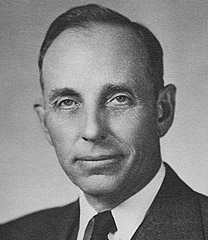
The willingness to tackle intractable problems head-on exhibited in the early 1960s by the Greater Cleveland Associated Foundation (GCAF), whose merger with the Cleveland Foundation in 1967 reinvigorated the staid, 53-year-old philanthropy, was in keeping with the spirit of Fred Goff’s surveys. But GCAF would have found it difficult to carry out its research-action agenda had it not been for the support of its chairman, Kent H. Smith, whose leadership of GCAF’s reformist mission lent it instant credibility with the Cleveland establishment. The city’s “men of money”—as GCAF’s inventor Harold Clark termed the white-male CEOs who constituted Cleveland’s most powerful civic leadership group—were not going to be dictated to by GCAF director James (Dolph) Norton, a 30ish former academician with horn-rimmed glasses, a lanky build and a country-boy manner that masked Norton’s shrewdness and creativity.
Kent Smith seemed an improbable supporter of the socioeconomic reforms that GCAF initiated. He was the eldest of three sons of Dr. Albert W. Smith, a founder and director of the Dow Chemical Company and longtime chairman of the chemical engineering and mining engineering departments at the Case School of Applied Science. (The elder Smith had roomed with Herbert Dow as a Case undergraduate.) Kent himself was a Case-trained chemical engineer. In 1928, he and his brothers helped to found the Cleveland Graphite Oil Products Company, a lubricant manufacturer that the brothers built into the Lubrizol Corporation, a diversified chemical concern listed today among the Fortune 500. Smith was president of the firm—which had mushroomed during World War II after developing a lubricant that could be added to oil to prevent truck breakdowns—until the early 1950s, and chairman until 1959, when he retired and devoted himself full-time to civic affairs.
A Cleveland Foundation board member, Smith accepted a leadership role at the Greater Cleveland Associated Foundation at the recommendation of the Ford Foundation, which had helped to launch GCAF in 1961 to model for the field a “forward-looking” urban agenda. Smith came into the office that GCAF shared with the Cleveland Foundation from his home in suburban Gates Mills nearly every day. He immersed himself in the details of GCAF’s administration, even taking appointments with grant seekers and writing evaluations of their proposals. Scarcely a Sunday would pass without GCAF associate director Barbara Rawson’s fielding a telephone call from Smith, who wanted to check on new developments.
Although a staunch Republican at the ballot box, Smith (who died in 1980 at age 85) embraced no political philosophy more fervently than pragmatism. “If there was an organized way of doing something better, rather than shooting fish in a barrel, Kent would try to do it,” said Joseph D. Pigott, a member of the Case Institute of Technology’s administrative staff during Smith’s tenure as acting president. Smith regarded the GCAF as the most efficacious way to solve the city’s bewildering array of problems. In fact, Smith’s willingness to go to bat for Dolph Norton’s ideas may have saved the Greater Cleveland Associated Foundation from ending up as merely an interesting footnote in the annals of philanthropy.
1962
Mass Polio Immunizations
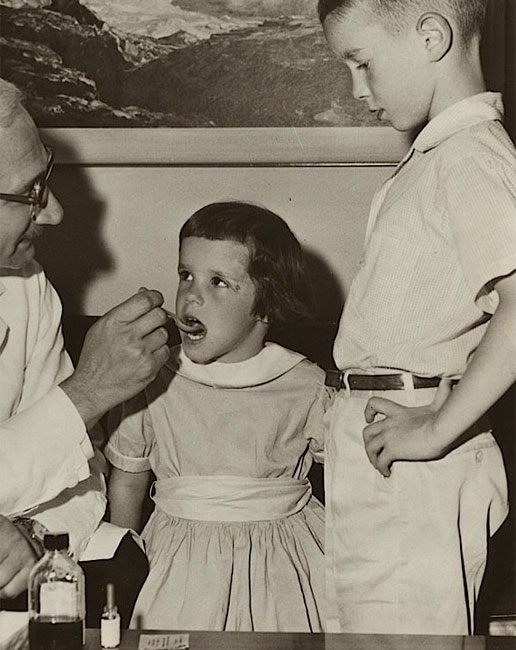
A grant of less than $2,500 helped Cleveland’s Academy of Medicine launch what was at the time the largest mass polio immunization program ever undertaken in the world. Approximately 1.5 million Greater Clevelanders received the Sabin oral vaccine during the immunization campaign, preventing untold suffering and medical expenditures.
1962
PACE’s School Library Campaign
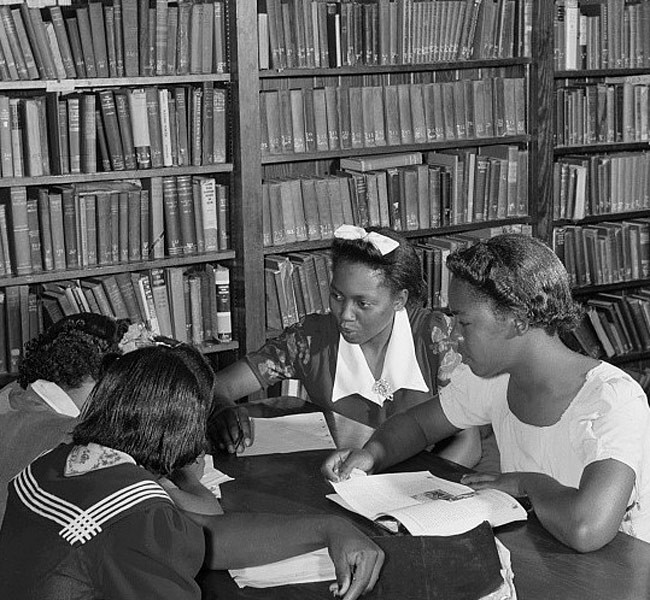
PACE (Plan for Action by Citizens in Education), a broad-based school improvement campaign that aimed to make Cleveland’s public schools “second to none in the country by 1970,” was organized with the support of the Cleveland Foundation’s affiliated philanthropy, the Greater Cleveland Associated Foundation. Among PACE’s most important accomplishments was to raise the monies to establish and outfit libraries in all of the city’s public elementary schools, which did not have these essential learning resources.
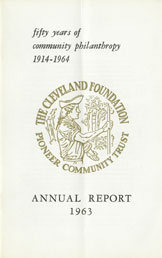
1963
John Sherwin
Board Chairman, 1963–1971
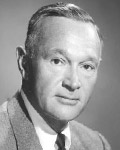
Like his father, John Sherwin (1901–1991) started out in the banking business. After graduating from Yale (B.S., 1923), the native Clevelander joined the Union Trust Company and was elected vice president in 1927. The following year, he left to become president of Midland Bank; when Cleveland Trust absorbed Midland, he was appointed executive vice president. In 1941, Sherwin left banking to become a partner of the iron-ore producer Pickands Mather; in 1960, he was named president of that company (later becoming chairman of the board) and its affiliated Interlake Steamship Company. He served on the boards of numerous commercial and industrial concerns and was a director of the American Iron and Steel Institute and the Lake Carriers Association.
During his rise at Pickands Mather, John Sherwin had found time to be a member of the board of organizations as diverse as the Horace Kelly Art Foundation, Cleveland Museum of Natural History, Cleveland Chamber of Commerce and Cleveland Clinic Foundation (he would ultimately serve as a trustee of the internationally known medical center for a record 57 years). He was preceded on the Cleveland Foundation board by his first cousin once removed, Belle Sherwin, a member of the first distribution committee (1917–24). In 1973, he and his wife, Frances Wick Sherwick, established the Sherwick Fund. Their son, John Jr., was appointed to the Cleveland Foundation’s distribution committee in 1996 and later served as its chairman.
1963
Start-up of Cuyahoga Community College
The foundation bridged a critical gap in state funding for advanced technical and vocational education for working-class and minority students.
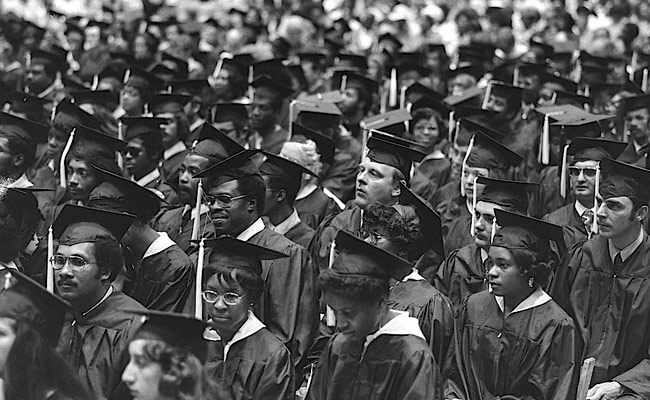
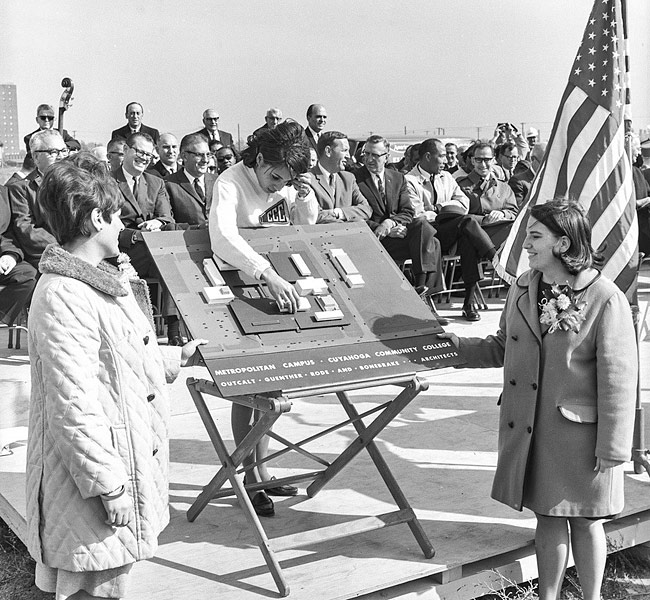


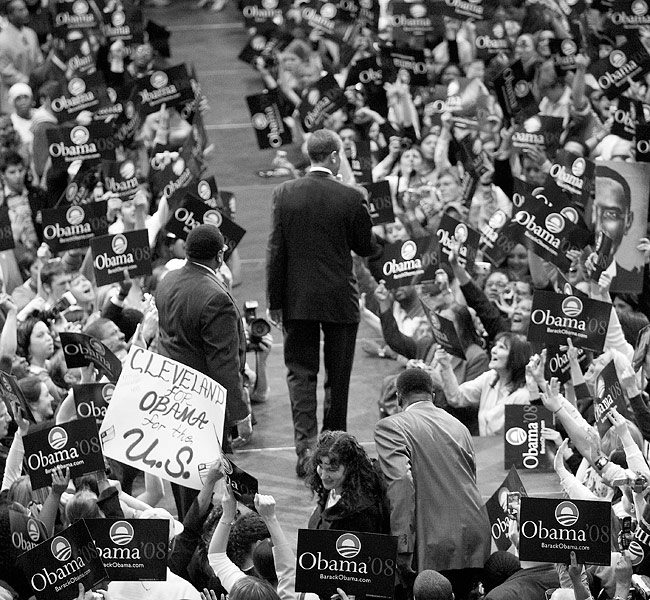
Cuyahoga Community College (Tri-C), Ohio’s first publicly supported two-year college offering associate degrees in the liberal arts and sciences as well as vocational training, has opened the doors of opportunity for more than 900,000 students since its establishment in 1963. The legislation that enabled the creation of state community colleges neglected to provide funding for predevelopment. The Cleveland Foundation and its affiliated Greater Cleveland Associated Foundation (GCAF) helped Tri-C’s founders bridge this otherwise impassable funding gap by providing grants for planning purposes.
The grants represented acts of courageous leadership, given that the new school had been viewed as competition by Cleveland’s private colleges and universities. After much lobbying by GCAF’s program staff, GCAF chairman Kent Smith, a Case Institute of Technology loyalist, had been convinced of the need to open up the possibility of advanced technical and vocational education for Cleveland’s working-class and minority students. Smith convened a meeting of his peers in the business world at which he solicited contributions to the college so fiercely, Ohio’s then governor, James A. Rhodes, would be prompted to call Smith a “one-man gang” on Tri-C’s behalf.
The pent-up desire for high-quality, low-cost higher education was so intense that the line of Clevelanders who wished to enroll in Tri-C stretched around the block on the first day applications were accepted. From that moment on, Cuyahoga Community College has been an indispensable part of the region’s workforce development infrastructure.
1963
The Cleveland Foundation ranks as the country’s largest community trust
During the foundation’s first 50 years, more than 1,600 generous donors have swelled the size of the endowment to $84 million.
1964
Establishing a Groundbreaking Interracial Forum
The conduct of civic affairs was reshaped around the value of inclusion as a result of a problem-solving collaboration between black and white business leaders.
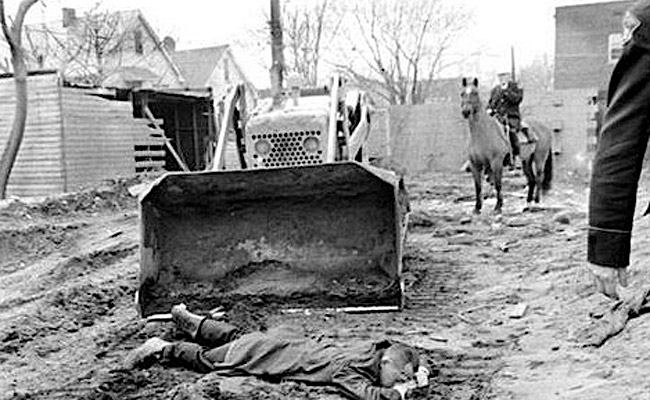 Presbyterian minister Bruce W. Klunder died while protesting the construction of three public elementary schools that Cleveland’s civil rights community believed would perpetuate a system of segregated and inferior education for African-American students.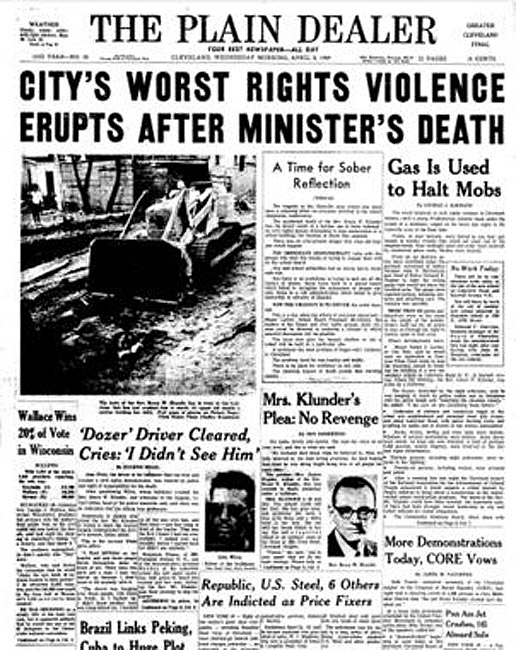
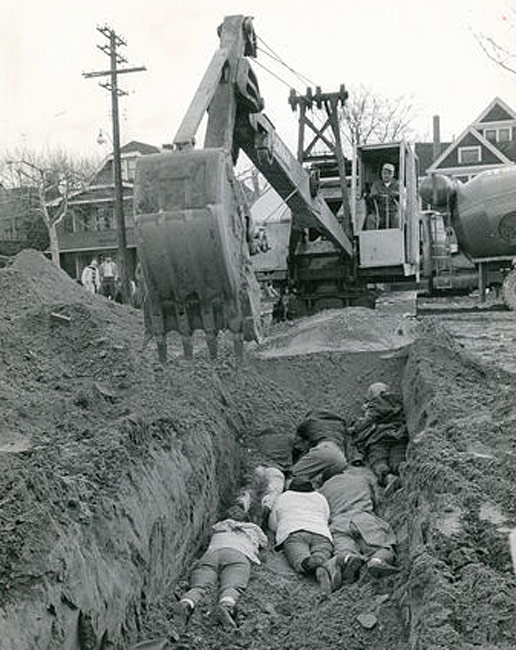 The bulldozer operator accidentally backed over Rev. Klunder in order to avoid hurting the protestors lying in front of him.
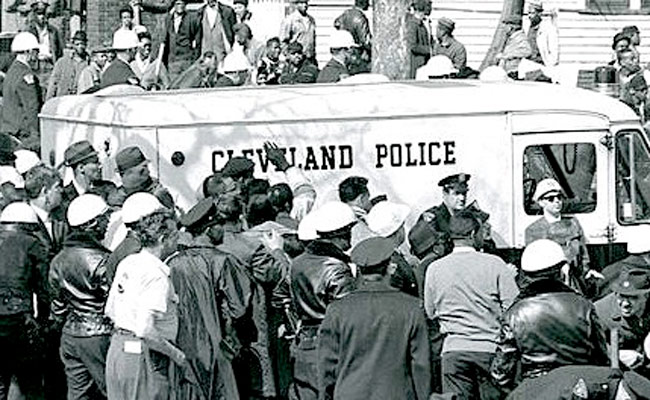 Dispersed by police, the protesters did not succeed in halting construction, but Klunder’s martyrdom inspired the civil rights community to continue what was ultimately a victorious fight against segregation of the Cleveland public schools.
On April 7, 1964, a bulldozer clearing land for one of three new public elementary schools to be built in predominately African-American neighborhoods on Cleveland’s east side backed up and accidentally crushed to death a Presbyterian minister who had joined an on-site demonstration organized by a coalition of civil rights groups to protest the construction project’s reinforcement of school segregation.
The news of the Reverend Bruce W. Klunder’s demise horrified James A. Norton, the director of the Cleveland Foundation’s affiliated philanthropy, Greater Cleveland Associated Foundation (GCAF), who had for months been trying to persuade the chamber of commerce to organize a meeting of its members with their African-American counterparts to discuss the city’s disintegrating race relations. Norton and GCAF’s chairman, retired industrialist Kent H. Smith (who also sat on the board of the Cleveland Foundation), feared the tragic accident might ignite greater unrest. They prevailed upon John W. (Jack) Reavis, the managing partner of a pre-eminent corporate law firm, Jones, Day, Reavis & Pogue, to convene an emergency meeting of all concerned.
The meeting that took place at 3 p.m. on Sunday, April 19, 1964, in the Sheraton-Cleveland Hotel was as historic as it was dramatic. Never before had the ranking leadership of Cleveland’s black and white communities been assembled in one room. The white captains of business and industry listened quietly as the self-styled Negro Leadership Committee, whose members included such prominent African-American businessmen as newspaper publisher W.O. Walker and bank executive Bertram E. Gardner, laid out the political, economic and social inequalities afflicting the African-American community.
The parties agreed to form ad hoc committees to examine the problems facing African-American residents in the areas of employment, housing and education, but parted company on whether the issue of police brutality should be tackled. After months of frank and intense discussions, subcommittee members decided at summer’s end to institutionalize their newfound working relationship by creating the Businessmen’s Interracial Committee on Community Affairs (BICCA). GCAF gave BICCA space in its offices, and the committee’s full-time director and administrative expenses were paid in part by annual grants.
Operating under Jack Reavis’s leadership for the next seven years, the Businessmen’s Interracial Committee produced mixed results. The education subcommittee decided the schools’ new superintendent, Paul W. Briggs, should be given time to investigate charges of segregation, a reasonable approach that even the protestors accepted. With a crisis averted and a peaceful opening of the school year assured, master politician Briggs was able to refocus BICCA’s and the community’s attention on passing bond issues to pay for renewing the school system’s physical plant. More than 40 new neighborhood schools were subsequently built, cementing into place the emerging patterns of segregation that had provoked the protests.
BICCA’s housing subcommittee decided to focus on the issue of fair housing and set about organizing and funding the Fair Housing Council, a professionally staffed coordinating agency for the more than 40 community and neighborhood groups the subcommittee had discovered were working on the issue, largely independently of one another. The council met with some success, conducting a campaign that saw 45 of Cuyahoga County’s 60 municipalities pass fair housing resolutions. It also helped to implement Operation Equality, a Ford Foundation initiative to improve minority housing opportunities in eight demonstration cities.
BICCA’s most successful program to improve economic opportunities for African Americans—an intensive effort to train and find jobs for 2,000 chronically unemployed African-American youths—began in June 1967 with federal support. This campaign against central-city joblessness, which stood at 15.5 percent among African Americans, also received a large Ford Foundation grant. BICCA’s most lasting contribution, however, was in demonstrating to the city’s black and white leadership the imperative and benefits of collaboration and inclusion—a lesson that reshaped Greater Clevelanders’ conduct of civic affairs going forward.
1964
First significant bequest for arts and culture received
Mechanical engineer and industrialist George C. Gordon and his wife Marion are the donors.
1965
Bringing Public Television to Cleveland
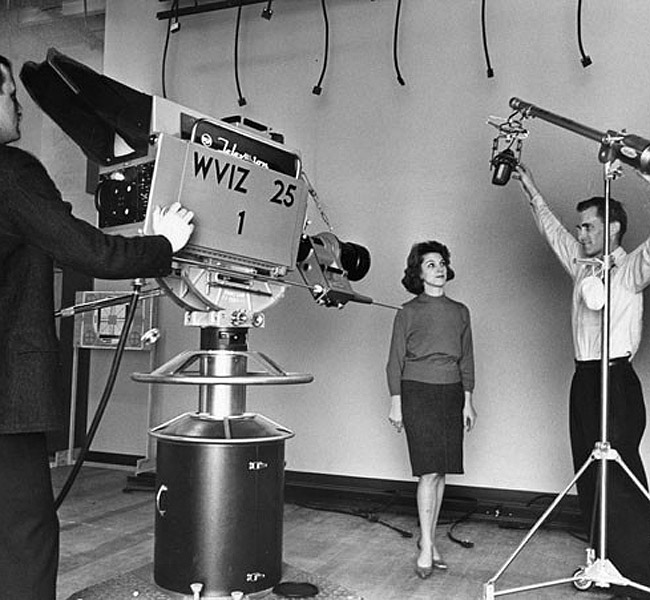
Educational television finally came to Cleveland, the last major city in America to create a public broadcasting station, WVIZ Channel 25. The Cleveland Foundation was a major backer of the endeavor, providing $280,000 over two years to the Educational Television Association of Metropolitan Cleveland for planning purposes and operating support.
1965
Police and Tax Base Reform

Following the defeat of a proposed municipal income tax at the polls, business leaders prevailed upon Mayor Ralph S. Locher to create a commission to study the City of Cleveland’s operations and recommend improvements and financial savings. Financed in part by the corporate and philanthropic communities (including the Cleveland Foundation and its affiliated philanthropy, the Greater Cleveland Associated Foundation), the Little Hoover Commission issued 21 reports by professional analysts covering every aspect of the municipal governance—from purchasing to the judiciary.
Although fewer than half of the commission’s 500-plus recommendations were implemented, its findings highlighted the need for improved procedures, professional training and community relations practices in the city police department, many of which were put into place following the Hough riots with additional support from the abovementioned foundations. The Little Hoover Commission’s findings also prompted Cleveland City Council to enact a 0.5 percent city income tax that provided much-needed new funding for local government services.
1965
Preserving Mentor Marsh

The Cleveland Foundation contributed $18,000 to a successful five-year campaign led by the Ohio chapter of the Nature Conservancy and the Cleveland Museum of Natural History to acquire all the acreage constituting the threatened Mentor Marsh in Lake County. One of the largest natural wetlands remaining along the Lake Erie shoreline, Mentor Marsh became the first state nature preserve in 1971.
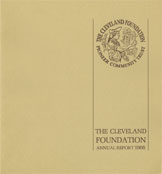
1966
Kenneth W. Clement, M.D.
Rewarding Community Service with a College Scholarship
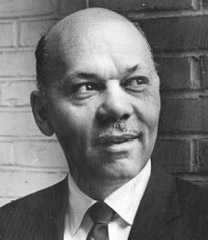
Kenneth W. Clement, a pioneering African-American physician, returned the hand-up that he himself had received by establishing a college scholarship fund at the Cleveland Foundation in 1966, a year before he became the first African American appointed to serve on the foundation’s board.
Having graduated from Cleveland’s Central High School in 1938 as class valedictorian, Clement earned a full scholarship to Oberlin College. He attended medical school at Howard University on a W. K. Kellogg Scholarship. Setting up a private practice in Cleveland in 1951, he had to fight to gain staff privileges at area hospitals. The physician refused to give in to racial discrimination and ultimately gained admitting powers at four institutions.
Dr. Clement, who died in 1974, was a devoted volunteer leader of numerous nonprofit organizations in Cleveland. He also served on two presidentially appointed federal councils that helped to create and implement Medicare legislation. After being honored for his record of public service by the Cleveland chapter of the Urban League in 1966, he and his wife, Ruth, decided to partner with the Cleveland Foundation to award a college scholarship annually to a graduating Cleveland Municipal School District student who had performed laudable community service.
Since its establishment with the Clements’ initial gift of $10,000, the Inez and Harry Clement Award Fund (named in honor of the doctor’s parents) has provided scholarship awards to more than 50 Cleveland public school students, enabling them to study at colleges and universities in Ohio and beyond.
1966
Outreach to the Near West Side’s Growing Hispanic Population
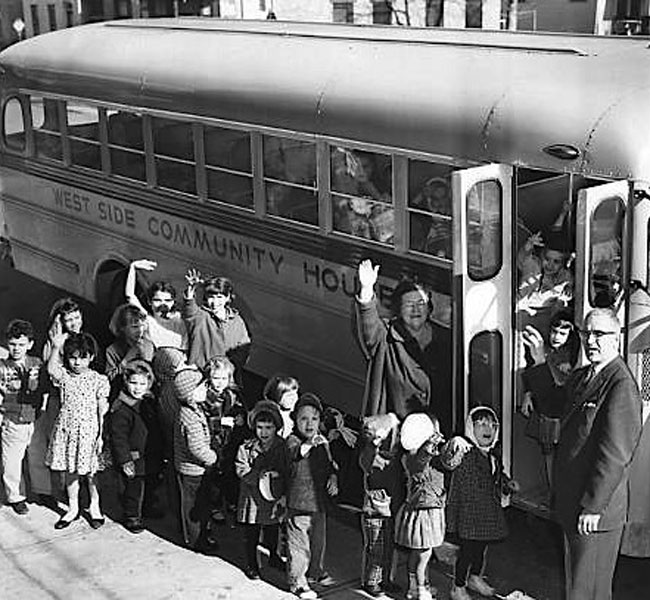
The West Side Community House, an Ohio City-based social service agency whose origins date back to 1890, launched one of the city’s earliest bilingual outreach efforts with foundation support. The agency wanted to better serve the growing number of Spanish-speaking families who were relocating from the east side to Ohio City in order to be closer to jobs in the nearby industrial “Flats.” In collaboration with the Spanish American Committee for a Better Community, it started a social service and recreational center exclusively for Hispanics families. Still working today to promote the socioeconomic success of Spanish-speaking Clevelanders, the Spanish American Committee is the city’s oldest Hispanic human services organization.
1967
Access to Decent, Affordable Housing

With an estimated 50,000 substandard homes in Cleveland, the foundation’s affiliated philanthropy, the Greater Cleveland Associated Foundation, organized a citizens’ action committee to tackle the challenge of providing decent, affordable housing for every Cleveland family. PATH (Plan of Action for Tomorrow’s Housing) produced an eponymous report detailing how production of affordable housing for low- and moderate-income families could be stimulated by offering technical and financial assistance to neighborhood development groups and minority-owned contracting firms.
Even after receiving these services, the city’s embryonic affordable housing production system turned in a mediocre performance, attributed to lack of coordination and cooperation that would be overcome by subsequent foundation initiatives that built on this learning experience. PATH experienced greater success in helping the city leverage federal Housing and Urban Development monies to purchase or build high-rise apartments for the elderly and begin construction of new multifamily public housing projects, such as the King-Kennedy Estates in Cleveland’s Central neighborhood.
During the brief two-and-a-half-year tenure of PATH’s first executive director, Irving Kriegsfeld, 5,000 units were added to the holdings of the Cleveland Metropolitan Housing Authority (CMHA). Given the fact that CMHA had built only 7,000 units during its previous 35 years of operation, Kriegsfeld’s influence was particularly salutary.
1967
Board expanded from five to 11 to accommodate GCAF trustees
1967
Malvin E. Bank
Outside Counsel and National Philanthropic Leader
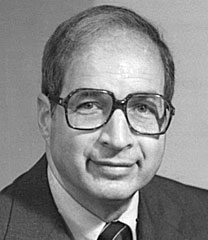
Thompson Hine LLP, a business law firm established in Cleveland in 1911, celebrated its centenary by presenting the first Malvin E. Bank Award for Exemplary Client Service, named in honor of Thompson Hine’s distinguished specialist in federal income and estate tax matters, whose continuing service to the firm spans more than half its history. Bank’s tenure as general counsel for the Cleveland Foundation from 1967 to 2003 certainly reflects the utmost standards of loyalty and commitment to the client’s best interests, as does his service over the years as a director of more than 50 nonprofit businesses. Bank has also provided wise counsel and gentle guidance to the more than 30 charitable and educational institutions of which he has been a trustee.
Mal Bank grew up in a poor and tough neighborhood in Allentown, Pennsylvania. He graduated with highest honors from Pennsylvania State University and earned his LL.B. at Yale Law School. Entering the Army as a first lieutenant, Bank capably performed the duties of brevetted major during the Korean War and was awarded a Bronze Star. He knew no one when he arrived in Cleveland in 1957 to join Thompson, Hine & Flory. Today he is revered as one of the city’s most outstanding humanists and among the nation’s finest lawyers.
Bank played a major role in the evolving design of the Cleveland Foundation’s governance structure and corporations, starting with his behind-the-scenes work to enable the foundation’s merger with the Greater Cleveland Associated Foundation in 1968. In 1982, he helped to facilitate the foundation’s first program-related investment, used to buy the $3.8 million Bulkley complex critical to the future of Cleveland’s Playhouse Square theaters—and Cleveland’s revival. Bank’s quiet backing of $5 million commitments to both neighborhood revitalization and public education improvement in the late 1980s was instrumental in winning board approval of these landmark “Special Initiatives.”
Bank has shaped the field of philanthropy in countless ways. Most notably, as a representative for the Council on Foundations, he negotiated with the U.S. Treasury Department and Congress about proposed 1976 revisions to rules and regulations related to charities. He authored an amicae brief for the Council on Foundations in the late 1990s that constituted a definitive history of the community foundation movement.
1967
The Greater Cleveland Associated Foundation merges with the Cleveland Foundation
The union reinvigorates the older foundation’s grantmaking, swelling the philanthropic resources available locally for proactive problem-solving.
1968
A New Justice Center
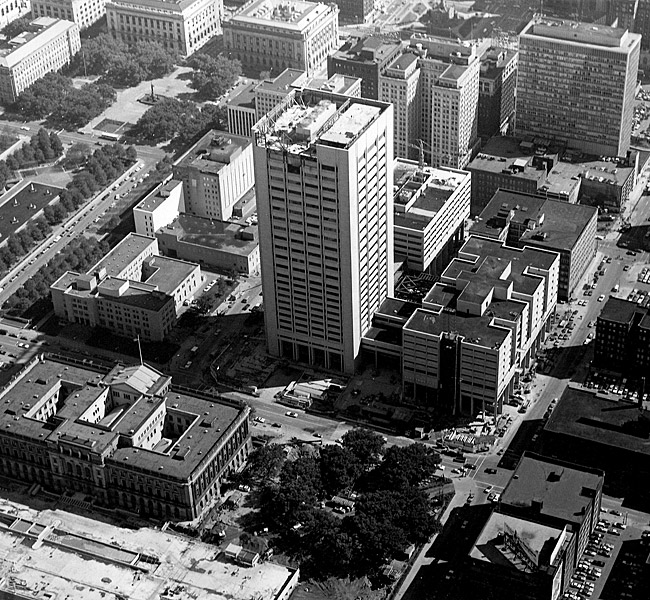
Since the end of World War II, Cuyahoga County voters had declined 16 times to approve a bond issue to build a new corrections center to replace the county’s aging jail. The issue’s 1968 defeat came shortly after the Cleveland Foundation and its affiliated philanthropy, the Greater Cleveland Associated Foundation, convened and staffed an Administration of Justice Committee (AJAC) to promote community support for reform of the criminal justice system. AJAC worked behind the scenes to convince the Greater Cleveland Growth Association and the mayoral administration of Carl Stokes to create a Greater Cleveland Criminal Justice Coordinating Council, intended to oversee the expenditure of new federal law enforcement monies that the Nixon administration proposed to make available to state and local governments.
The council obtained nearly $50 million in federal funding for such improvements as a police training academy, computerization of the county common pleas court dockets, a public awareness campaign that successfully reduced auto theft, the creation of a safe haven for teenage drug users called the Free Clinic, and a multimedia campaign that helped to persuade voters to pass a bond issue for a new “justice center.” To ensure the excellence of the facilities, staffing, programming and management of the corrections center that would be housed, along with the county courts, in a new tower complex to the south of the federal courthouse, the Greater Cleveland Associated Foundation assembled a panel of five national corrections experts to advise the county on the jail’s design.
1968
James A. Norton
CEO, 1968–1973
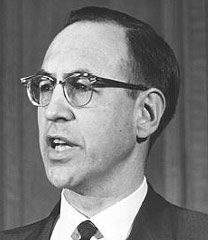
James A. Norton (see video), the Cleveland Foundation’s fifth director, came to the position on January 1, 1968, after leading an affiliated philanthropy, the Greater Cleveland Associated Foundation (GCAF). As GCAF’s director for its intentionally brief, six-year lifespan, Norton pursued a grantmaking program aimed at solving the city’s toughest problems, in part to set an example of risk-taking innovation for the more conservative “parent” foundation.
In an era when racial tensions ran high in Cleveland, he was particularly effective in building productive coalitions between blacks and whites to address festering inequalities and inadequacies in education and housing. His courage, creativity and diplomacy persuaded the Cleveland Foundation’s board to absorb the staff and trustees of GCAF and install Norton at the foundation’s helm when his predecessor retired at the end of 1967.
During his five-year tenure as the Cleveland Foundation’s director, Norton institutionalized a commitment to carry on GCAF’s proactive problem-solving. Norton’s successor, Homer Wadsworth, had nothing but admiration for how the former academician with the Southern accent and his GCAF chairperson, retired industrialist Kent H. Smith, had smoothly arranged for the transfer of responsibility to build on the lessons learned from the GCAF demonstration project to the better-resourced older philanthropy. “After all,” as Wadsworth once noted, “they captured the Cleveland Foundation in the process.”
James Adolphus Norton, universally known by his nickname, Dolph, had traveled a long way from his roots in the small town of Haynesville (pop. 2,500) in northern Louisiana where he was born in 1922. Norton’s mother, Sue Annie, was a former schoolteacher. His father, George Norton, a salesman of farm implements, had started a hardware store in Haynesville after World War I, and the business had soon expanded into furniture and through that sideline (as is typical in many small towns) into undertaking.
Although Norton remembered hearing about lynchings and witnessing cross burnings as a boy, he also remembered his father more than once announcing that he, George Norton, would never join anything that required him to hide his face. Norton Sr. admirably put his money where his mouth was. When the Depression hit and his neighbors could no longer afford to pay for even a plain pine casket, George Norton came up with the idea of starting a cooperative insurance plan called the Claiborne-Webster (after the parishes involved) Christian Burial Association. At its height, 75,000 white families were enrolled, offsetting the losses Norton sustained in operating the Haynesville Burial Association, a perennially unprofitable service he ran for the benefit of the parish’s African Americans.
Dolph Norton emerged from childhood a liberal on the issue of race. His experience working as a page in the Louisiana House of Representatives one summer fueled his interest in good government. Norton earned undergraduate and master’s degrees from Louisiana State University and, despite a passion for politics, ultimately decided to go into teaching. He studied for his second master’s at Harvard University’s Littauer School of Public Administration.
During World War II, Norton served as a radio operator in the U.S. Army Air Force. After the war ended, he became an instructor at the University of Texas and, in 1949, an assistant professor in the school of public administration at Florida State University. By 1952, Norton had completed his Ph.D. and become chairman of the division of instruction within the school, a position he held until 1956, when Case Institute of Technology president Keith Glennan persuaded him to move to Cleveland to head the nonprofit Metropolitan Service Commission (METRO), which Glennan chaired.
Although Norton had frequently consulted with municipalities and states on matters of public administration, METRO would be a bittersweet learning experience for him. While it provided a unique perspective on community affairs that would prove invaluable in his leadership of the Greater Cleveland Associated Foundation and later the Cleveland Foundation, METRO itself was not a success.
The commission had been established in the mid-1950s by Cleveland’s business and professional leaders, who saw metropolitan government as one key to the city’s revitalization. By conducting and disseminating expert studies on a variety of governmental services ranging from mass transportation to public health, METRO was expected to persuade county voters of the wisdom and efficiency of a form of governance that they had rejected at the polls three times before. The proposition went down to defeat once again in 1958, largely because African-American voters feared that they would lose the political clout they had slowly gained in Cleveland’s city council.
Norton accepted a position with Case as a professor of area development before convincing visionary civic leader Harold T. Clark, the originator of the Greater Cleveland Associated Foundation, that he was the right person to carry out the philanthropic demonstration project. Norton brought to that task a sophisticated understanding of the multitudinous problems facing Cleveland, a hard-won appreciation for the intricacies of Cleveland politics, and a network of business, government and civic contacts in both the white and black communities.
The Ford Foundation of New York, which had helped to fund GCAF with two grants totaling $2.5 million, later conducted an evaluation of GCAF’s work that found mixed results. But the evaluator implicitly praised Norton’s courageous leadership, observing: “Most of GCAF’s grants were at the cutting edge of contact with major social problems plaguing Cleveland and all cities. At the very least, GCAF has been in the forefront of concern and action, and it is possible that Cleveland would be even more enmeshed in social disarray were it not for GCAF.”
Norton resigned from the foundation in 1973 to accept Governor John J. Gilligan’s invitation to serve as chancellor of the Ohio Board of Regents. Having gone on to serve as interim president or chancellor at a number of colleges and universities, James A. Norton passed away in 2012 at the age of 87 in his retirement home of Charlottesville, Virginia. Three years before his death, Norton won an exceptional service award from the National Academy of Public Administration. U.S. senator and former Cleveland mayor George V. Voinovich affirmed the deserved nature of the award, saying on the Senate floor: “Dr. Norton’s career in public service stands as a shining example and testament to the high ideals of public administration.”
Norton’s pioneering philanthropic contributions are less well known. For a full account of Dolph Norton’s influence on the field, and on the Cleveland Foundation and Greater Cleveland, see pages 94–145, 147–156 and 160–205 of Rebuilding Cleveland, the Cleveland Foundation’s 75th anniversary history.
1968
Support of Carl Stokes’s Historic Mayoralty
Whatever extra help the country’s first African-American mayor thought he needed to ameliorate Cleveland’s social and economic wounds, the foundation stood ready to provide.

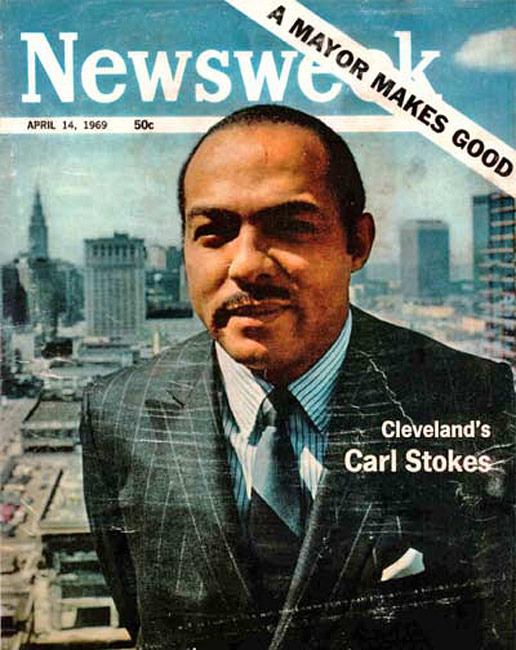

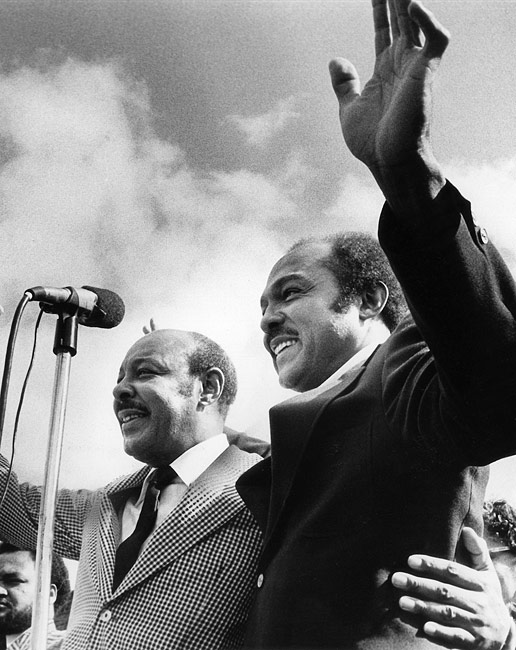

All eyes were focused on Cleveland throughout the summer leading up to the mayoral elections of 1967. The political contest between Seth Taft, the grandson of a U.S. president, and Carl B. Stokes, the grandson of a slave, seemed destined to make international headlines. For the first time in history it looked as if a major American city might elect an African-American mayor.
Realizing that the future of the city depended on inspired, perhaps even heroic, political leadership, the leaders of the Cleveland Foundation were not content merely to watch the drama unfold. Many of them had played active if behind-the-scenes roles to ensure that whoever emerged victorious would not be simply another caretaker mayor. Once the outcome of the race had been decided in Carl B. Stokes’s favor, they laid the full resources of the foundation at the disposal of the winning administration. Whatever the new mayor needed in the way of supplementary personnel, discretionary funds, advice or connections to heal the social and economic wounds of the city, the Cleveland Foundation stood ready to help provide.
Carl Stokes called on all these proffered resources in conceiving and attempting to implement his civic vision, a $1.5 billion redevelopment plan called Cleveland: NOW! that was conceived in the wake of the assassination of Martin Luther King Jr. In a 30-minute speech broadcast on all three local television stations on May 1, 1968, Stokes proposed to turn the city around in 10 years through new programs in the areas of employment, neighborhood rehabilitation, youth development, health and welfare and downtown revitalization.
In its first phase, Cleveland: NOW! called for the expenditure of $177 million on training 11,000 of the city’s hard-core unemployed; rehabilitating or building 4,600 low-income housing units; creating 10 new multiservice health centers, 10 new daycare centers and a variety of summer youth programs; and pushing the completion of the city’s stalled urban renewal projects. While Stokes envisioned that the federal government would pick up most of the tab, he explained to the television audience that he expected Greater Clevelanders to contribute $11.25 million in seed money to “stop the downhill slide, to start the city moving forward, to create a climate in which our city can become someday a great one….”
The response to the challenge was immediate and overwhelmingly positive. Propelled by a lead gift of $1 million from the Schubert Foundation, $5.2 million had been pledged in support of Cleveland: NOW! by that fall. Had not a street activist by the name of Ahmed Evans used monies he earned in running a NOW!-sponsored youth program to buy guns, the public-private partnership that the foundation helped to assemble around NOW! might have indeed jump-started Cleveland’s physical and socioeconomic revival. But the community’s hopes for a better day were brutally and quickly dashed when Evans and his followers engaged in a gun battle with police, during which three officers were slain. The so-called Glenville shootout in July 1968 also seriously wounded prospects for the success of Cleveland: NOW!
The Cleveland Foundation had broken with longstanding philanthropic tradition by working arm-in-arm with a political leader on the delivery of summer programs to Cleveland’s most severely alienated African-American youth. Fortunately, the experience did not sour the board on the concept of public-private partnerships. In fact, the foundation’s aborted attempt to improve municipal governance served to renew the Goff precedent for involvement in public affairs. Successive generations of foundation leaders, operating in a less volatile atmosphere, would offer support to public officials to more lasting effect.
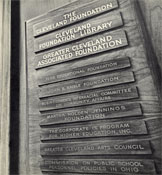
1970
Backing the Free Clinic
The federally funded community health center began operations with foundation support as a safe medical haven for young drug users.
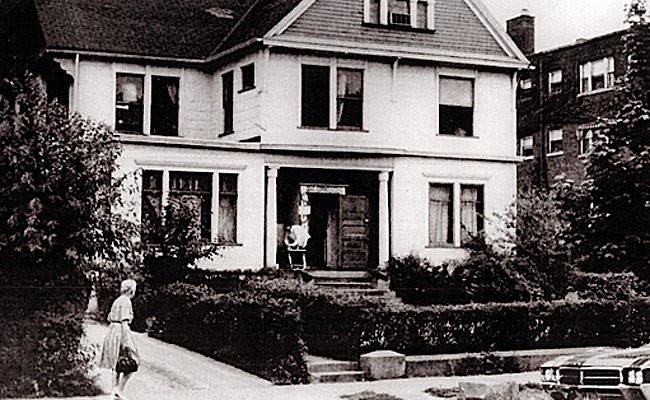
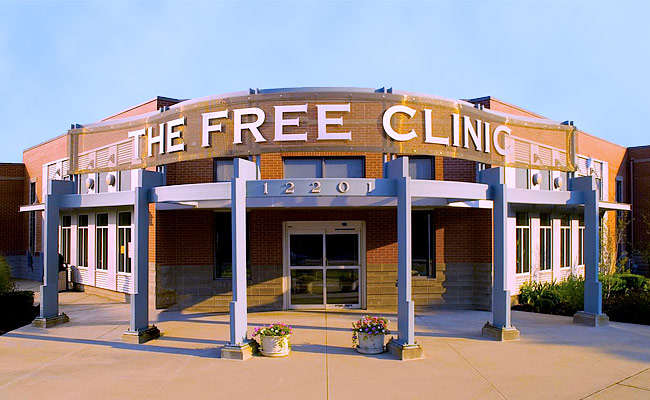
The Cleveland Foundation was an early champion and financial supporter of the Free Medical Clinic of Greater Cleveland, which annually provides quality health care and related services free of charge to more than 10,000 people who lack appropriate alternatives. The Free Clinic was established in 1970 in a old frame house on Cornell Road in University Circle as a treatment center for young people with drug-related problems. The foundation backed the creation of this safe haven, where medical care was provided with no questions asked.
The need for indigent health care on the east side of Cleveland was so great that the Free Clinic soon began treating anyone who walked in. In less than a decade, it had evolved into a comprehensive health center offering medical, dental, mental health, social, legal, educational and counseling services to underserved populations ranging from victims of domestic violence and runaways to neighborhood residents. When the clinic faced closure due to mounting debt in the early 1980s, the foundation stepped forward with emergency operating grants and organizational development assistance.
Today, this bright, modern facility on the outskirts of University Circle is one of the few free clinics started in the turbulent Vietnam War era to survive. Having recently been designated a community health center, one of only 33 in Ohio, the Free Clinic now qualifies for federal support.
1971
Federation of Case Institute of Technology and Western Reserve University
The foundation’s first-ever $1 million grant enabled Case Western Reserve University to complete its transition into a modern research university.

The foundation’s 1924 survey of higher education, undertaken at the behest of Cleveland’s premier liberal arts institution, Western Reserve University, and its outstanding engineering school, the Case School of Applied Science, concluded that the two institutions should be merged into a municipal university to rival those in New York, Boston and Chicago. Because of alumni pride in the independence of their alma maters, the two schools deferred federation until 1967.
To signal its continuing strong support for the union, the Cleveland Foundation awarded its first-ever $1 million grant in 1971 to Case Western Reserve University (CWRU). Teamed with a matching grant from an anonymous donor, these critical discretionary funds enabled CWRU to complete its transition into a modern research university. No city can be globally competitive without one.
1971
The first $1 million grant is awarded
The grant advances the prospects that the federation of Case Institute of Technology and Western Reserve University will create a great research university.
1972
Cleveland’s First Arts Council

The Cleveland Area Arts Council (CAAC) opened for business in the Old Arcade in 1972 with Cleveland Foundation funding. It was the first local attempt to enhance public enjoyment of the arts and strengthen their financial base. With ongoing operating support from the foundation, the council demonstrated considerable creativity in bringing culture to the people, sponsoring noon-hour concerts and opera performances in the Old Arcade, holding poetry readings in libraries and coffeehouses, and initiating a popular mural painting program called “City Canvases” to beautify downtown. Although CAAC’s failure to build a broad base of financial support for its activities forced its closure in 1979, the council did raise awareness of the need to secure a solid base of public and corporate support for arts and culture upon which subsequent foundation initiatives were built.
1972
Raymond Q. Armington
Board Chairman, 1972–1973
“A knowledge of men is a great asset to anyone—engineer, executive or one in any profession.... In my estimation this is fifty per cent of a man’s education.” These sage words of advice were penned by the 21-year-old Raymond Q. Armington for an article that appeared in The Ohio State Engineer in 1928. “A cheerful word now and then will win friends and may help to win promotion,” he added. He graduated from OSU that same year with a degree in industrial engineering, and would later obtain a law degree from Pepperdine University. A native of Wickliffe, Ohio, Armington (1907–1993) joined his brothers in 1931 at the Armington Engineering Company, an offshoot of the horse-drawn dump wagon business that their father had founded in 1899. Euclid Road Machinery soon took over the company, and Armington served as vice president and general manager (1937–51) and then as president (1951–53). When General Motors acquired the company in 1953, Armington remained as general manager of the Euclid Division, a maker of massive earth-moving equipment used in mining and construction projects around the world. He left in 1960 to establish Triax Company, which eventually became Webb-Triax, a maker of automated storage and handling equipment.
Armington served on the boards of Case Western Reserve University, University Circle Inc., Greater Cleveland Association Foundation, Holden Arboretum, Hiram House, Hawken School and Lakeland Community College.
1972
Women’s Empowerment Programs
Spurred by 39-year-old Gwill York, a former president of the Junior League of Cleveland who in 1971 had replaced Pamela Firman Humphrey as the sole woman on the foundation board, the Cleveland Foundation began to champion local women’s initiatives. The first empowerment grant was awarded in 1972 to the Women’s Law Fund, a team of female attorneys helping women litigate cases of sex discrimination. The Rape Crisis Center, which counseled victims and monitored police response to rape reports, was the most prominent of a host of new women’s organizations that received foundation support in the 1970s.
The foundation also contributed more than $50,000 in 1975 to the Greater Cleveland Congress of the International Women’s Year (IWY), the largest such convocation of women’s rights activists in the country. A follow-up grant of $47,700 launched WomenSpace, a central gathering place for women working to advance the U.S. Women’s Agenda ratified at IWY Congresses around the country.
1973
Barbara Haas Rawson
Interim CEO, 1973‒1974
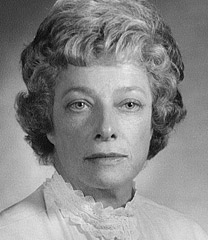
Barbara Haas Rawson was a well-known volunteer active in Cleveland’s League of Women Voters, Citizens League and the PTA in her home suburb of Shaker Heights before she joined the staff of the Greater Cleveland Associated Foundation (GCAF) in 1962. Although her title was administrative assistant to GCAF’s director James A. Norton (a relative newcomer to the community), Rawson also functioned as Norton’s sounding board and local historian. When GCAF, which had focused on devising new solutions to addressing intractable urban problems, merged with the Cleveland Foundation in 1967, and Norton became director of the latter organization, he encouraged Rawson to come with him to help revive the half-century-old community trust.
As assistant director of the Cleveland Foundation, Barbara Rawson continued to serve as Norton’s closest confidante and indispensable right hand. She also took pains to make the foundation more accessible to new, small or grassroots organizations. She wanted to ensure that, as she once put it, “no good idea or person escaped.” If a community group lacked the skills to put together a credible grant proposal, Rawson helped draft it. “Okay, let’s assume you get the money. Now what are you going to do Monday morning?” she would prompt.
The question became celebrated around the office for its directness and simplicity. Indeed, Rawson took it upon herself to mentor the growing staff of program associates and played a significant role in sharpening their analytical abilities. Three of these young talents—Bruce L. Newman, Roland H. Johnson and Timothy D. Armbruster—went on to head foundations.
When Norton resigned to take on new challenges at the Ohio Board of Regents in mid-1973, Rawson stepped into the role of interim director and served in that capacity until the arrival of Homer Wadsworth the following summer. The first woman in the country to hold the top executive position at a community foundation, Rawson became a national role model.
Though her time at the helm of the Cleveland Foundation was brief, she left a lasting legacy in recognizing early on the potential of the decaying vaudeville and movie theaters located in downtown Cleveland’s Playhouse Square. Unlike the hard-headed pragmatists heading up the city’s corporate and political sectors who had written off the theaters as useless, she supported an 11th-hour campaign led by public school administrator Ray Shepardson and Junior League of Cleveland president Elaine G. Hadden to save these still-ornate representatives of the city’s grand architectural heritage.
Once the bulldozers had been called off, it was Rawson who convinced the foundation’s board to fund a master redevelopment plan for Playhouse Square, another important step in the rebirth of this key downtown district. Long before the restored Playhouse Square theaters helped to bring about a cultural renaissance in Cleveland and contribute to the city’s economic revitalization, she understood the value of public incentives in spurring private redevelopment. Barbara Rawson died in 1990, having demonstrated that her vision, courage and determination were second to none.
1973
Model Home for the Aged
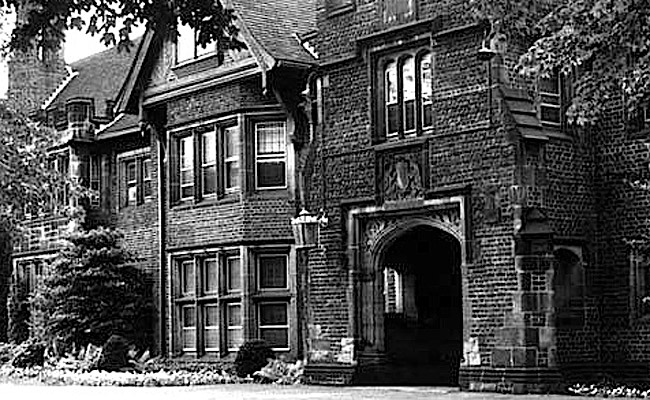
Carrying out the terms of a bequest from Grace Jordan Gardner, the Cleveland Foundation elevated Gardner’s wish to fund a home for the aged into an opportunity to create a model residential center. A citizens’ committee, advised by highly qualified consultants in gerontology and design, developed criteria for the home, which was to offer comprehensive social and health services and financial assistance to the needy elderly. Twenty-two licensed nonprofit nursing home operators entered the competition for a $1 million grant. The Baptist Home of Ohio (now the Judson Retirement Community) submitted the winning proposal for an expansion of its Judson Park facility on Cleveland’s east side. The new Jordan-Gardner Tower, offering independent living facilities, opened in 1974.
1973
Rebirth of Playhouse Square
The foundation’s rock-solid support has been key to the success of the four-decade-long effort to transform downtown’s historic but decayed theater district into a desirable place to work, play and live.
 Playhouse Square, c. 1969
 Ralph J. Perk lends a hand to the theater restoration project, which began during his tenure as Cleveland mayor.
  The Palace, the flagship of the Keith chain of vaudeville theaters, reinvented itself as a wide-screen movie house in the 1950s.
 The Allen Theatre, originally an opulent silent movie house, c. 1938
 Palace Theatre lobby
 The 2011 renovation of the Allen Theatre's main auditorium
 The State Theatre
The Cleveland Foundation’s commitment to the revitalization of Cleveland’s Jazz Age theater district dates to 1973, a year after the Junior League of Cleveland, a women’s service organization, inspired by a visionary educator named Ray Shepardson, mounted a campaign to prevent two boarded-up theaters from being demolished to create parking lots. A series of grants awarded during the 1970s supported the operation of PlayhouseSquare Foundation (PSF), the public charity formed to secure the Playhouse Square theaters, and also subsidized live performances (notably, Jacques Brel Is Alive and Well and Living in Paris) intended to draw people downtown and deepen support for the theaters’ reuse.
In 1980, the foundation made a lead grant to PSF’s first major capital campaign, a vote of confidence that helped to spur an outpouring of other contributions and funding needed to restore the Ohio, Palace and State Theatres to their former grandeur. The foundation simultaneously encouraged the city’s new ballet and opera companies and a summer Shakespeare festival to relocate to Playhouse Square.
Cleveland won an unprecedented three consecutive All-American City awards in 1986, 1987 and 1988 (when the last of the three theaters reopened), in part because of the rebirth of Playhouse Square, which by then ranked as the most ambitious theater restoration project ever undertaken in America. Having created the largest performing arts complex outside New York City, PlayhouseSquare Foundation is now able to present each year about 1,000 arts and entertainment events that draw a combined audience of one million.
In the 1990s, the Cleveland Foundation helped PSF save a fourth theater, the Allen, from demolition and contributed $750,000 in 2011 toward the theater’s remodeling into a state-of-the-art home for the Cleveland Play House. Marshaling broad-based community support, Great Lakes Theater successfully completed a $19 million campaign that renovated the last of Playhouse Square’s five historic theaters. Doors to the excitingly updated Hanna Theatre (the recipient of a significant capital grant from the Cleveland Foundation) opened in 2008.
The foundation has also been a steadfast supporter of the effort, now in its fourth decade, to redevelop the theater district itself. Its first grant to the PlayhouseSquare Foundation in 1973 underwrote a master plan for the “superblock” stretching from Carnegie and Chester Avenues between East 14th and East 18th Streets. Prepared by Cleveland architect Peter van Dijk, the plan continues to provide inspiration to this day. (The “museum of light” that van Dijk envisioned at East 14th and Euclid Avenue, for example, will soon be realized in the form of a 20-foot-tall glittering chandelier suspended over the intersection.) In addition to recognizing the intrinsic value of PSF’s dreams of attracting restaurants, hotels and shops to Playhouse Square, the foundation appreciated that a thriving theater district might spur the redevelopment of other parts of downtown. Owning and developing property would also give the PlayhouseSquare Foundation a reliable income stream.
In stretching to help PSF realize its outsized ambitions, the Cleveland Foundation built a new capacity to stimulate redevelopment efforts throughout the community. In 1977, PSF had acquired the right to purchase several key parcels in the district, including the Bulkley Building containing the Allen Theatre. With the option days away from expiring in 1982, it had become clear that a syndicate of PSF supporters would not be able to raise the purchase price. The foundation stepped forward to acquire the properties as a program-related investment. (Learn how this daring investment benefited PSF’s facilities and financial stability.)
This was only the second time the foundation had deployed principal to advance a significant redevelopment project that promised also to provide a good return on investment, but it would not be the last. When the Bulkley complex was sold in 1987, the foundation used the proceeds to create a revolving program-related investment (PRI) fund. PRI monies have since been lent at below-market rates to an array of neighborhood and downtown redevelopment projects.
Take the revival of the Hanna Building at 14th and Euclid. The office building’s proposed sale in 1999 presented PSF with the opportunity to control another potentially valuable property in the theater district. The Cleveland Foundation assembled a creative package of gap financing to help the undercapitalized PSF purchase the office building, whose occupancy had been slowly declining. Wishing to help PSF find new tenants, the foundation affirmed its satisfaction with its decision to relocate to the Hanna Building in 1984 by signing a new long-term lease. As evidenced today by the building’s busy Starbucks, market forces have been restored to the district. Indeed, a private developer is now converting the Hanna Building annex into rental apartments, realizing the last component of the vision of Playhouse Square as a desirable place to work, play and live.
1973
Sherwick Fund
Philanthropy’s Pioneering Supporting Organization
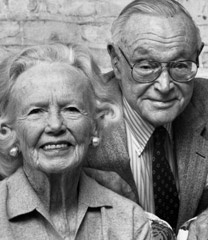
John Sherwin Sr. and his wife, Frances Wick Sherwin, came from long family traditions of philanthropy and community service. John’s cousin, Belle Sherwin, was a member of the young Cleveland Foundation’s first governing committee. The Wicks were early settlers of Youngstown, and Frances’s maternal uncle, Dr. Frank E. Bunts, was a founder of the Cleveland Clinic. With their 1953 establishment of the Sherwick Fund to serve the general charitable needs of metropolitan Cleveland, John, a banker like his father, and Frances became philanthropists in their own right.
Recognized for his active commitment to the community’s betterment, Sherwin was appointed to the board of the Cleveland Foundation in 1961. As the foundation’s chairman from 1963 to 1971, he was open to new ideas and willing to experiment. “I’ve always felt that the unique role of the foundation is to provide risk capital,” he once explained. “If somebody has an idea worth backing, then we ought to back it until it gets on its feet and can carry itself.”
In response to the new provisions of the Tax Reform Act of 1969, the Sherwins advanced a bold idea of their own. In 1973, after 20 years of operation as a family foundation, the Sherwick Fund became a supporting organization of the Cleveland Foundation. Under this precedent-setting arrangement, the Sherwick Fund maintained both a separate corporate identity and the direct participation of its donors in determining policy, while gaining the assistance of the foundation’s professional staff in identifying programs and institutions whose efforts were likely to result in the greatest civic benefit. The Cleveland Foundation gained the ability to help target additional financial resources to the more pressing needs of the community.
As the first private foundation in the country to form such a partnership with a community trust, the Sherwick Fund inspired the creation of a host of supporting organizations. Today, with assets of about $20 million, the Sherwick Fund is the largest of the Cleveland Foundation’s 10 supporting organizations. In 2012, the Sherwick Fund awarded more than $1 million in grants. Helping to perpetuate his family’s distinguished philanthropic heritage, John (Jack) Sherwin Jr. has chaired the fund’s five-person board since 1987. (From 2003 to 2006 Jack Sherwin also chaired the Cleveland Foundation.) His eldest daughter, Heather, was the first female family appointee to the Sherwick board. Heather’s sister, Laura, succeeded her.
1974
Comprehensive Health Care for the Indigent

After being turned away by several other philanthropies, the Glenville Health Association received an award of several hundred thousand dollars from the Cleveland Foundation to start a model health clinic for the indigent. The vote of confidence enabled the clinic’s organizers to raise the $2 million needed to launch, equip and subsidize the operation of the clinic until it became self-supporting. The foundation recognized that the clinic was a less costly expenditure than the long-term societal costs of failing to provide the residents of the central-city neighborhood of Glenville with preventive medical care. Opened in 1974, the clinic provided comprehensive medical, dental and mental health care to Glenville residents, regardless of their ability to pay, for more than 15 years.
1974
Homer C. Wadsworth
CEO, 1974–1983
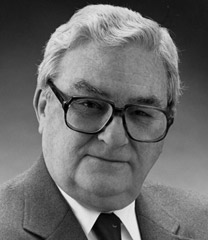
Determining the doable was an early priority of the individual chosen after a national search to succeed Barbara Haas Rawson as the seventh director of the Cleveland Foundation. At age 60, Homer Clark Wadsworth (see video) was one of philanthropy’s most respected and progressive veterans. He devoted his first few years on the job to sizing up options before he “kicked up any dirt” by recommending major new programs to the foundation’s board. As president of the Kansas City (Missouri) Association of Trusts and Foundations from 1949 to 1974 (and for most of his 25 years there its sole program officer), Wadsworth maneuvered quietly and patiently behind the scenes to create opportunities to leverage positive change. He saw no reason to abandon this approach when he took up the reins of leadership at the Cleveland Foundation in January 1974.
Wadsworth went on to win board support for many of the initiatives that underpinned what Clevelanders came to think of as the city’s renaissance in the 1990s. During his decade-long tenure, the Cleveland Foundation helped the community peacefully prepare for desegregation of the public schools, return from municipal default, revitalize Playhouse Square, reclaim its industrialized waterfront as a recreational asset, strengthen and expand its arts institutions, and develop the capacity to analyze and act on regional and national socioeconomic trends. As had been the case in Kansas City, the ingredients of Wadsworth’s success as a change agent here were hard data and research, strategically planted suggestions, deftly timed seed grants, keen instincts for negotiation and his personal charm. He credited his accomplishments to “two-pants suits—because you have to out-sit people.”
Born in Pittsburgh in 1913, Wadsworth was at heart a hard-eyed realist whose world view had been shaped by tragedy. When Homer was eight, his father, a tugboat captain, died from the lingering effects of an accident that had crushed his leg. Homer and his sister grew up in a tough Pittsburgh neighborhood populated by low-income African Americans and whites. This experience contributed to his forward-looking social views, as did his awareness of his mother’s daily struggle to raise two children on limited resources, the calamitous effects of the Depression on average families, the woeful inadequacies of the public healthcare system to which his father had fallen victim, and the existence of racial and class prejudices against residents of poor neighborhoods such as his.
Graduating in 1935 from the University of Pittsburgh, Wadsworth pursued doctoral studies in philosophy and history at the University of Chicago and the University of Minnesota, respectively. In 1937, he took a summer job as an administrative assistant to Pittsburgh’s reform-minded mayor, Cornelius D. Scully. Wadsworth never returned to his graduate studies. He worked as executive secretary for the city planning commission before serving as a naval officer World War II. After the war, he worked for the City of Pittsburgh for eight years, most notably as head of the department of parks and recreation. In the late 1940s, he briefly served as vice president and dean of the New School of Social Research in New York before moving on to Kansas City, whose postwar revitalization he helped to bring about.
Wadsworth also influenced philanthropic policy and professional standards at the national level, especially in his promotion of the principles of accountability and full reporting. He helped to create the Council on Foundations, Independent Sector, and the Foundation Center’s network of regional libraries and later served as either a board member of, or a trusted adviser to, these influential advocacy and support organizations. Even after retiring from the Cleveland Foundation in 1983, he extended philanthropy’s reach, as a consultant on the creation or development of community foundations in Puerto Rico and St. Croix in the Virgin Islands.
Recognizing his pioneering contributions to the field, his peers deemed Wadsworth “the senior statesman in American philanthropy,” “one of the giants of the foundation field,” and “probably the most widely loved and respected figure in American philanthropy today.” “Ask anyone to name the top 10 most significant leaders in the field,” Brian O’Connell, the founding president of Independent Sector, once observed. “The lists would all be different, but Homer would be on them all.”
Read an extended profile of Homer C. Wadsworth, who died in 1994 after losing a heroic battle with lung cancer at the age of 81.
1974
H. Stuart Harrison
Board Chairman, 1974–1978
In 1977, H. Stuart Harrison (1909–1980) retired as chairman of the Cleveland-Cliffs Iron Company, which under his leadership had grown from a moderate-size firm to one of the largest independent ore producers. After graduating from Yale University with a degree in finance and economics during the depths of the Depression, Harrison took a job as a steelworker in the Corrigan-McKinney Steel plant where his father was an executive. He switched to the banking profession and landed a job as a steel industry analyst for an investment firm in New York. One of Harrison’s reports so impressed the president of Cleveland-Cliffs that he hired him to manage the company’s investments. From 1937 to 1960 Harrison rose through the ranks to president, then to chief executive officer in 1961 and board chairman in 1974.
Harrison’s civic activities were legion. He served as chairman of the Cleveland Metropolitan Housing Authority, president of the Children’s Aid Society, president of University School and the Yale Scholarship Committee and vice chair of the Cleveland Council on World Affairs. He co-founded and chaired the Businessmen’s Interracial Committee, sat on the finance committee of the Cleveland Institute of Art, and served as chair of University Circle Inc., vice chair of University Hospitals, and trustee of the Federation for Community Planning, United Way Services and Great Lakes Shakespeare Festival.
1975
Cultural affairs becomes a full-fledged program area
1975
Expanding the Artistic Horizons of the Predecessor to MOCA Cleveland

From its beginnings in 1968 as a struggling commercial art dealership located in a Euclid Avenue storefront, the New Gallery had been on the cutting edge of Cleveland’s art scene, exhibiting (often for the first time locally) the works of serious contemporary artists such as Andy Warhol, Jasper Johns and Roy Lichtenstein. In 1974, the gallery’s co-founder, Marjorie Talalay, decided to turn the gallery into a nonprofit organization with the added mission of contemporary art education. The following year, the New Gallery received the first of a series of Cleveland Foundation grants that supported the venture’s evolution over 30 years into MOCA Cleveland, recognized nationally and internationally for its vital exhibitions and public programs. MOCA’s dynamic new University Circle building is the first in America to be designed by acclaimed Iranian architect Farshid Moussavi.
1975
Lifting Civic Spirits and Sights
City planner Lawrence Halprin, brought to Cleveland by the foundation to conduct an “urban diagnosis,” gave the community a “sense that we could be a great city again.”
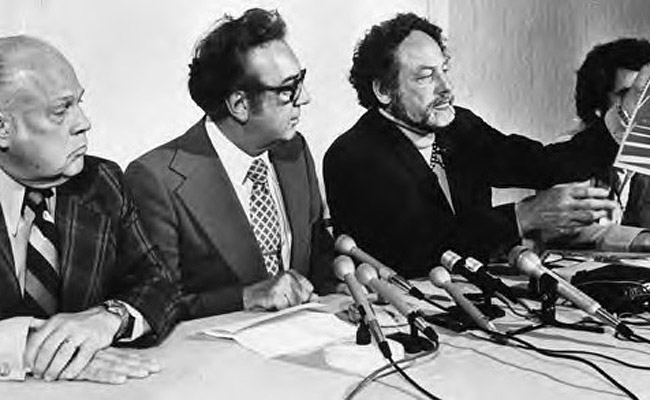 Famed urban planner Lawrence Halprin (right) presented his ideas for downtown Cleveland’s redevelopment at a public forum in 1975 attended by Cleveland mayor Ralph J. Perk (center) and May Company department store president Francis Coy (left).
 Halprin worksheet
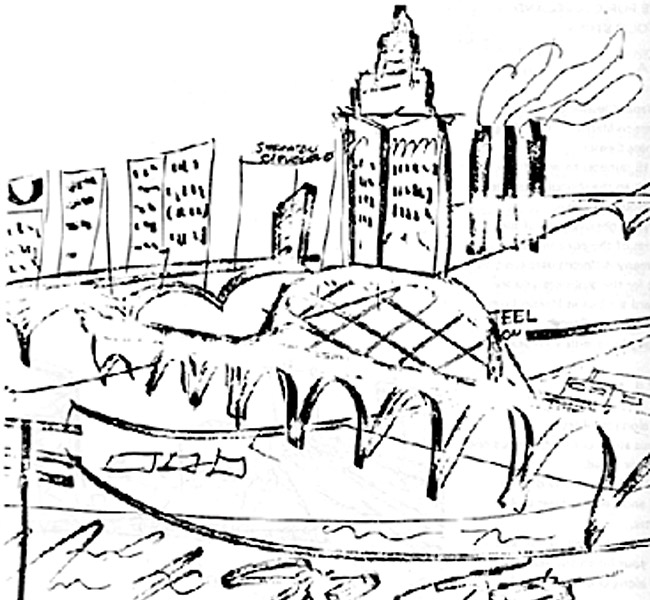 Halprin’s impressionist sketch of Cleveland’s “Flats,” which he praised as a “tremendous resource.”
 The mood of Clevelanders in the early 1970s was bleak. The hope that Cleveland’s first African-American mayor could turn around the city had faded after a deadly confrontation in 1968 between police and an African-American street activist whose “youth development program” had been funded by the Stokes administration. The spontaneous ignition of the Cuyahoga River in 1969 made headlines around the country and gave rise to national derision of the city as the “Mistake on the Lake.” A great number of demoralized Clevelanders accepted this verdict.
Fate handed the Cleveland Foundation a means to help the community re-envision itself. In the fall of 1972, foundation director James Norton participated in an annual gathering of approximately a dozen members of the world’s intelligentsia aboard the luxurious yacht of a Greek shipping magnate, Nicolas Doxiadis. There Norton met and was impressed by Lawrence A. Halprin, a noted urban planner whose redevelopment projects included Ghirardelli Square on San Francisco’s waterfront and Nicollet Mall in downtown Minneapolis. The following February the foundation invited Halprin to Cleveland for a two-day visit during which time he conducted what was dubbed an “urban diagnosis.”
Halprin’s informal prescriptions for Cleveland’s recovery were later turned into a slide presentation that the foundation screened for the newly created Downtown Council of the Greater Cleveland Growth Association and other interested civic groups. Pleased by the favorable reception given Halprin’s preliminary ideas, in 1975 the Cleveland Foundation and the Growth Association commissioned his firm to conceive a master redevelopment plan for downtown Cleveland.
On Halprin’s next visit to Cleveland, he met with the mayor and private developers in addition to foundation and Growth Association officials. He also toured the city with Norton and a Plain Dealer reporter, who conveyed Halprin’s optimistic assessment of the city’s potential for renewal. A grassroots campaign was just under way to restore Playhouse Square’s gilded but abandoned vaudeville and movie theaters, and the planner affirmed that the quest to bring the city’s theater district back to life was achievable and valid, bucking up the small cadre of believers in this massive undertaking.
Halprin also recognized that the city’s industrial valley was ripe for mixed-used development. He called the “Flats” a “tremendous resource,” adding: “This is neat down here. If I had an office in Cleveland, this is where it would be.” Halprin’s enthusiasm for the Flats sparked a renewed interest in this undervalued section of town and paved the way for the creation of a restaurant and nightclub district along the industrial riverfront.
Halprin’s formal master plan remained largely unexecuted, but its farsighted support of an embryonic concept called the “Euclid Transit Corridor” that would link the city’s two major employment centers—downtown and University Circle—influenced the continuation of planning for rapid transit along Euclid Avenue. Thirty years in the making, the HealthLine, a $200 million reconfiguration of a 6.8-mile stretch of Euclid to accommodate rapid transit buses, finally opened in 2008 and has since attracted $5.8 billion in investment along the HealthLine route, confirming Halprin’s perception of the undertaking’s merits.
Even before the major redevelopment projects endorsed by the so-called Halprin Study came to fruition, the Californian’s positive assessment of the city’s future served to uplift the spirits of Cleveland’s business and civic leadership, which had been seriously demoralized by the many confrontations of the Stokes years, culminating in the mayor’s abrupt decision to abandon Cleveland for a new career as a television journalist in New York City. “Cleveland’s whole image was just so rotten,” foundation trustee Gwill York later said of the Halprin Study era, “but now there was a sense that we could be a great city again.”
1975
Peaceful School Desegregation
To prevent the violence that greeted court-ordered busing in Boston, the foundation poured more than $1 million into a three-year public education campaign.
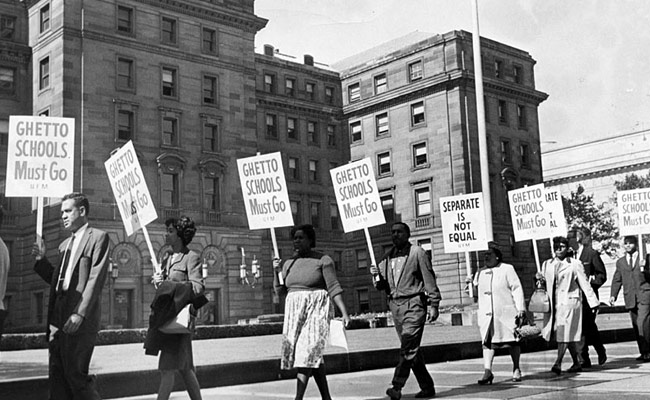
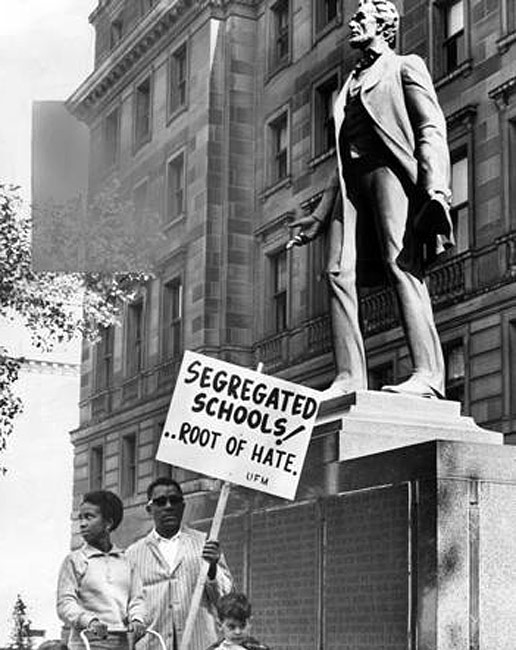
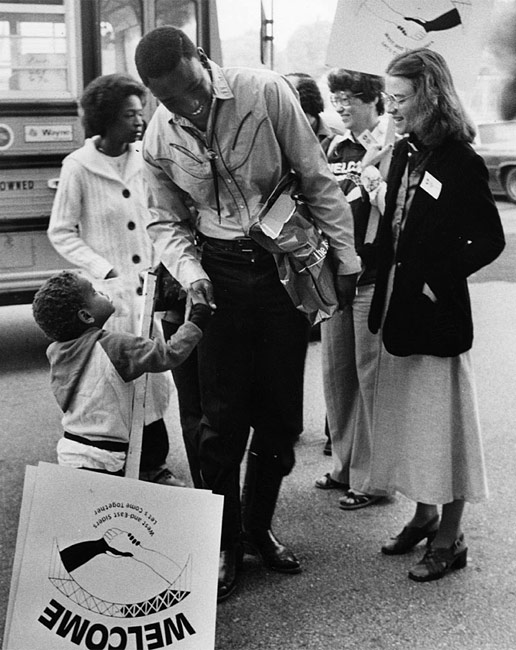
In the 1970s there was no tougher educational issue “pressing on the public’s nervous system,” as then Cleveland Foundation director Homer Wadsworth put it, than the federal lawsuit filed in 1973 by the NAACP (National Association of Colored People) that charged the Cleveland public schools with segregation. In response, the foundation formed a civic study group in 1975 that examined similar cases in other districts and concluded that court-ordered desegregation was the suit’s inevitable outcome.
In the hope of preventing the violent protest that had erupted in Boston when the buses finally rolled, the foundation poured more than $1 million into a community-wide awareness campaign. Despite the discomfort certain political and business figures felt over the foundation’s leadership on this volatile issue, the board withstood the heat and maintained its support of three years of activities promoting peaceful desegregation sponsored by the Greater Cleveland Project, a coalition of nearly 60 community groups. The city remained calm when court-ordered busing began in Cleveland in 1979, setting an important precedent for the foundation to act as a moral leader in the future.
1975
Professional Ballet and Opera Companies
Cleveland Ballet, a professional classical ballet company that began to take shape in 1972, gave its first full-scale public performances at the Hanna Theatre in 1976, buoyed by a foundation grant awarded the previous year to nurture the company’s growth and artistic excellence. Also in 1976, the foundation supported the start-up of New Cleveland Opera, the city’s first major resident opera-producing company. Although ambitious and costly, these ventures filled significant holes in the city’s cultural offerings and attracted enthusiastic new audiences to their stages in Playhouse Square.
1976
Enhancement of Public Spaces

The Cleveland Foundation provided support for the planning and start-up of Rapid Recovery, a citizens’ campaign mounted during Cleveland’s bicentennial year of 1996 to clean up and beautify the trash-littered landscape along the rapid transit line linking Cleveland Hopkins Airport to downtown and points east. The project, which greatly improved the appearance of a right-of-way serving 60,000 commuters and countless visitors each day, morphed into a permanent organization, CLEAN-LAND, OHIO.
CLEAN-LAND planted trees and small flower gardens throughout the city before its transformation in 1999 to ParkWorks, an advocacy and project management organization dedicated to the creation and connection of green and open spaces of all kinds and sizes. In 2011, ParkWorks merged with Cleveland Public Art to form LAND Studio, a developer of urban parks and public art. Recognizing the importance of building these kinds of capacities, the Cleveland Foundation has been a steadfast supporter of the programs and projects of each successor organization.
1976
L. Dale Dorney Fund
Seeding a Community Foundation for Hancock County
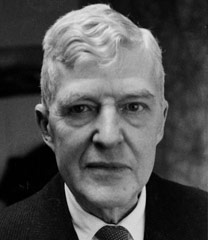
Businessman Leland Dale Dorney (see video), a native and longtime resident of Findlay, Ohio, turned over his life savings to the Cleveland Foundation upon his death in 1976. The disposition, as well as the size, of Dorney’s $5 million estate — the equivalent of $20 million today — no doubt surprised those of his neighbors and associates who mistook for stinginess this bachelor’s frugality.
Dorney, who was born in 1866, had no television or refrigerator. He preferred to spend his free time gardening and canning the fruits of his labor for storage in his root cellar. He racked up only 5,000 miles on his one and only car, a 1951 Buick, opting to walk to the Hancock Brick and Tile, a company founded by his father, where L. Dale worked as an accountant after he left his position as the comptroller of an abrasives manufacturing company in Worcester, Massachusetts. Dorney’s first career, in combination with his inheritance, had left him financially secure, and his thrift and wise money management turned these resources into a fortune.
Dorney already knew about the benefits of giving back through a community foundation when he showed up unannounced at the Cleveland Foundation’s offices in the early 1970s. Lacking an appointment, Dorney was nonetheless seen by foundation director Homer Wadsworth, who enjoyed their initial chat and subsequent discussions about law, finance and philanthropy. As a result, Dorney decided to establish a fund at the foundation whose purposes would be to improve the quality of life in his hometown of Findlay and to strengthen business education programs at Ohio colleges and universities.
The Cleveland Foundation set up a Findlay Distribution Committee, which awarded nearly $3 million in grants from the L. Dale Dorney Fund and its successor supporting organization, the Findlay-Hancock County Community Foundation, between 1977 and 1999. Forty-five percent of these monies went to support projects in Hancock County, located 40 miles south of Toledo, and Findlay (pop. 41,000), the county seat. The Cleveland Foundation ultimately recognized that the supporting organization that had been created in 1992 could be of even greater benefit to the Findlay area if it were granted independence. In 1999, the Cleveland Foundation spun off the Findlay-Hancock County Community Foundation and approved a one-time distribution of $18 million from Dorney principal to the new trust.
Since its inception, the Findlay-Hancock County Community Foundation has awarded $25 million in grants. The cumulative impact of its grantmaking can be seen in Findlay’s 2012 ranking by Site Selection magazine as the second-best “micropolitan” area for business expansion. Just as important, the Findlay-Hancock County Community Foundation has fanned the flame of philanthropy, receiving donations from literally thousands of individuals. The foundation’s endowment now exceeds $70 million. Leland Dale Dorney would be thrilled by the realization of his dream—that his estate might one day form the nucleus of an ever-growing endowment dedicated to the good of his hometown.
1976
Start-up of Friends of Shaker Square
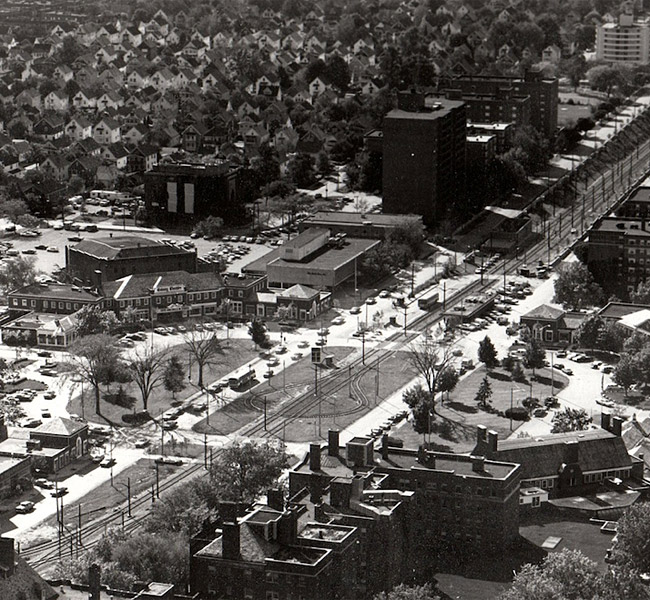
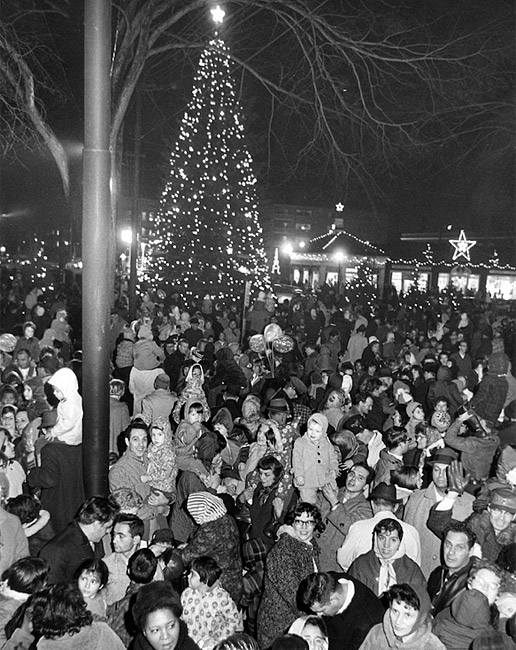
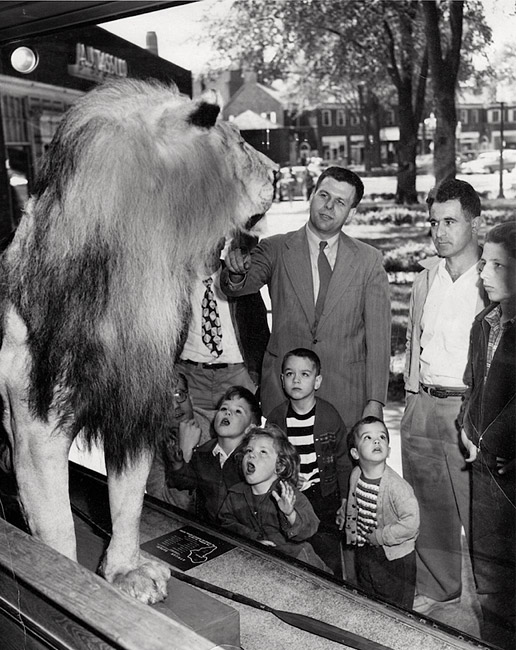
Shaker Square, the first planned shopping center in Ohio, opened on the eastern border of Cleveland in 1929 to acclaim as one of the country’s most architecturally refined retail districts. With its exclusive shops, elaborate window displays and special events, such as a holiday lighting ceremony, the shopping center—named for its location in suburban Shaker Heights—remained a popular destination well into the 1950s.
At the approach of its 50th anniversary, however, Shaker Square had fallen into serious disrepair. In 1976, the Friends of Shaker Square, a broad-based citizens’ coalition formed to push for the shopping district’s restoration, won matching grants of $39,000 each from the Cleveland Foundation and the City of Cleveland to pay for a professional staff. The grants enabled Friends to plan how to most effectively spend federal development funds promised by the city to attract merchants and shoppers back to Shaker Square. This work marked the rebirth of a landmark district whose vibrancy is crucial to the stability of both Cleveland and Shaker Heights.
1977
Safeguarding Cleveland’s Cultural Assets
The foundation took creative steps to secure the financial futures and continued artistic development of the city’s major performing arts organizations at a time when federal support was waning.

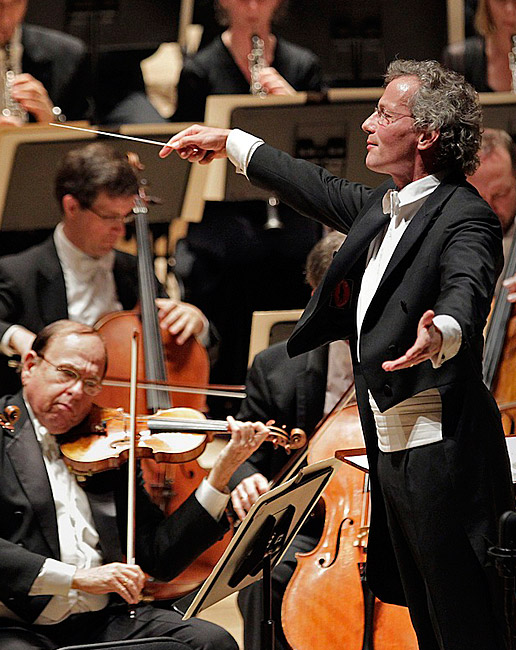
The Cleveland Foundation took creative steps to secure the financial futures and continued artistic development of Cleveland’s major performing arts organizations in the late 1970s. The foundation’s first program officer for cultural affairs, Patricia Jansen Doyle, recognized that the city’s new ballet and opera companies and its more established theater groups were operating on the assumption of ever-increasing government funding at a time when national research predicted a leveling off of federal support in general. With board approval, in November 1977 Doyle invited the Cleveland Ballet, Cleveland Play House, Cleveland Orchestra, Great Lakes Shakespeare Festival, Karamu House, New Cleveland Opera Company (later Cleveland Opera) and the Playhouse Square Foundation to participate in the Cleveland Cultural Resources Study.
The participating arts organizations received technical assistance, including a long-range economic analysis of their revenues and expenditures, to inform their preparation of five-year plans. Doyle also assembled a committee of high-powered business leaders chaired by Allen C. Holmes, managing partner of the law firm Jones, Day, Reavis & Pogue to review and critique the group’s plans, with the objective of nurturing the interest of local corporations in supporting the arts. At the end of this yearlong process of self-study, six of the organizations formed a consortium to pursue a joint $2 million challenge grant from the National Endowment for the Arts (NEA). Since the Cleveland Orchestra had recently been a beneficiary of an NEA challenge grant, it did not participate.
In 1979, the NEA awarded the Cleveland Consortium for the Performing Arts a $1.75 million challenge grant that required a 3-to-1 match. The Holmes committee reached out to 180 corporate executives, requesting financial support. During the three-year challenge period, the participating arts organizations raised nearly $13 million in new and increased donations from corporations and individuals. Each of the consortium members dramatically enlarged its base of support, making it possible for all to expand their artistic horizons.
1978
Critical Infrastructure Replacement
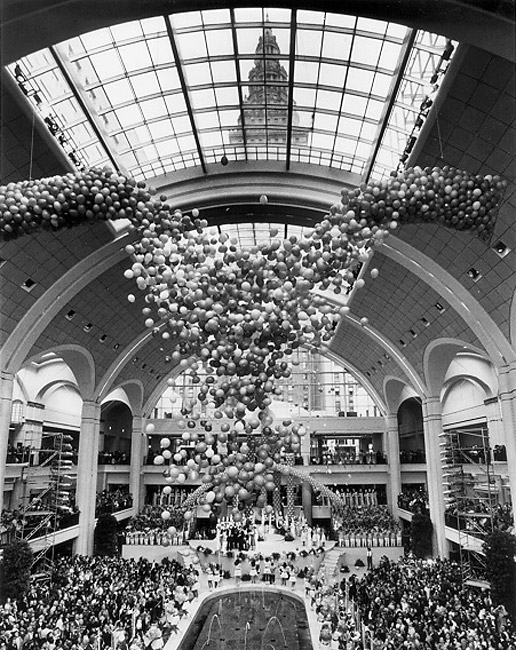
The long-overdue repair or replacement of Cleveland’s roads, bridges and sewers was brought to the fore in a 1978 national study after the foundation arranged with the study’s author, Washington’s Urban Institute, for Cleveland to be one of the cities examined. “The Future of Cleveland’s Capital Plant” documented a staggering $1.3 billion backlog of needed capital improvements.
The Greater Cleveland Growth Association and the Cleveland Foundation brought the Urban Institute back to help city officials develop a master capital improvement and financing plan. This timely intervention enabled Cleveland to obtain hundreds of millions in federal, state and local funds earmarked for infrastructure rebuilding. Perhaps the most important of the resulting capital projects was the rebuilding of bridges carrying traffic around the Terminal Tower. Without this improvement, Forest City Enterprises, the skyscraper’s new owners, would have been unable to proceed with a $200 million plan to develop new offices, a hotel and a shopping mall called The Avenue at Tower City at the site.
1978
Stewardship of the City’s Lakefront Parks
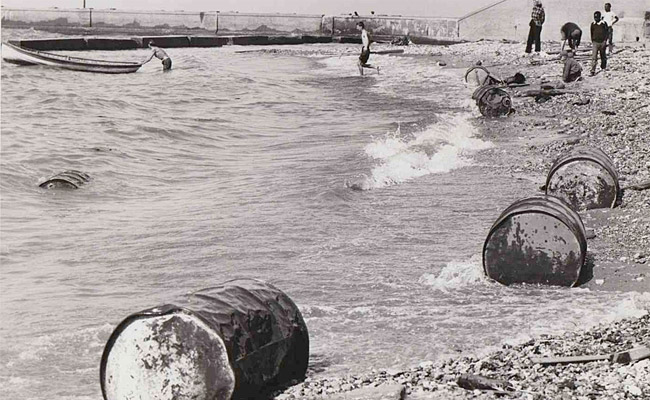
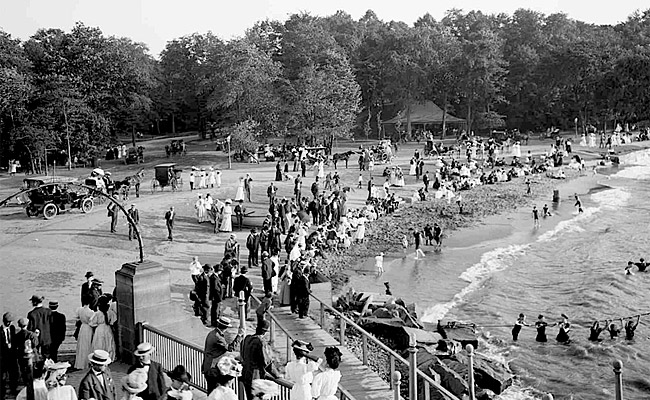
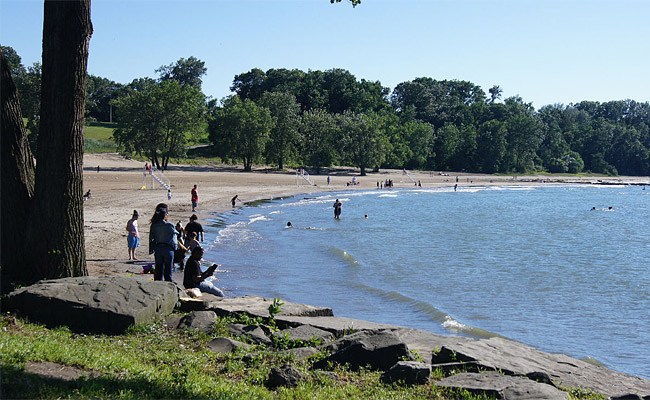
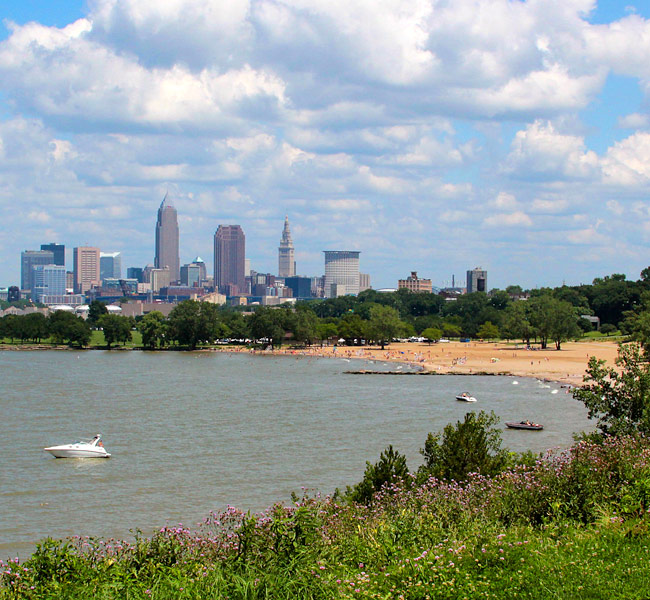
Starting with a $25,000 grant to the Shaker Lakes Garden Center that underwrote a 1974 study by the William A. Behnke Associates landscape architecture firm of ways to improve conditions in Cleveland’s municipal-run parks, the Cleveland Foundation led an effort to restore these invaluable recreational assets.
Recognizing that the City of Cleveland could no longer afford to maintain all of its 3,000 acres of parklands, the foundation guided political discussions that led to the transfer in 1978 of responsibility for the maintenance and management of Edgewater, Gordon and Wildwood (now Euclid Beach) Parks from the city to the Ohio Department of Natural Resources (ODNR).
The renamed Cleveland Lakefront State Park was immediately restored to cleanliness and working order under state stewardship, and ODNR subsequently spent more than $40 million to outfit the parklands with new fishing piers, boat launches, marinas, bike and jogging paths, restrooms and picnic areas. Within a few years, park patronage skyrocketed, leaping from 750,000 visitors annually to more than 12 million.
1979
Digging Out from Default
The foundation-supported Operations Improvement Task Force marshaled the expertise needed to return the City of Cleveland to solvency.
 A greasy-spoon diner and flophouse at Payne and Walnut Avenues downtown, c. 1968—emblems of the City of Cleveland’s intensifying financial distress
 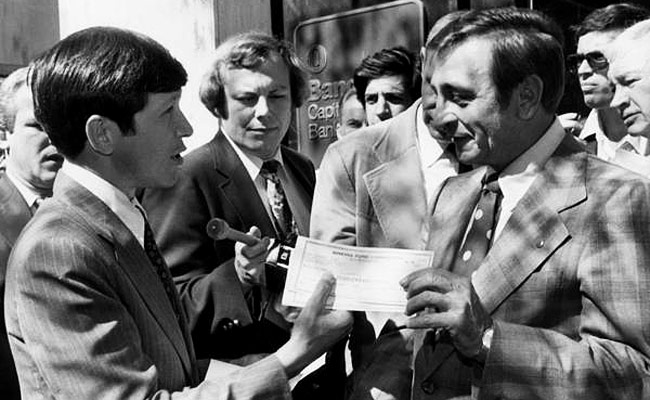 Mayor Dennis Kucinich’s ceremonial presentation of a post-default debt payment
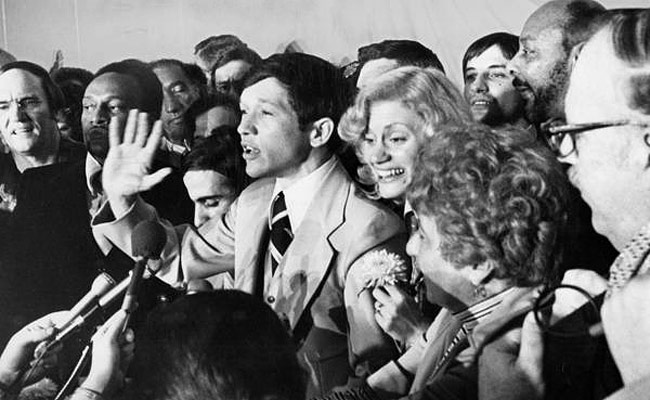 Kucinich proclaiming victory on the eve of his election as mayor in 1977
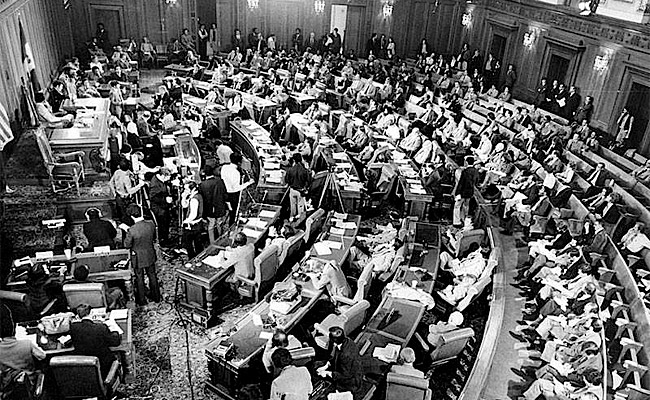 On December 15, 1978, Cleveland City Council considered and rejected Mayor Kucinich’s 11th-hour plan to avoid default.
In 1978, during the mayoral administration of Democrat Dennis J. Kucinich, Cleveland became the first city in the nation to default on its financial obligations since the Great Depression. The following year Republican George V. Voinovich ran against Kucinich, whose combative stance toward big business contributed to a decision by local banks to call the $15.5 million in short-term notes at a time when the city was $30 million in debt.
The day after his election as mayor, Voinovich approached the Cleveland Foundation and the George Gund Foundation with a proposal. In exchange for his agreement to run for mayor, Voinovich had extracted a promise from a small group of corporate leaders that they would provide him with volunteer experts from business and industry to conduct a massive city management assessment once he took office. Now he needed funding for what he was calling the Operations Improvement Task Force.
In less than one month, the foundation approved a grant of $150,000 to help create the Operations Improvement Task Force, provided that half of its money be set aside for implementation of task force recommendations and that the foundation’s entire contribution be matched. $800,000 was ultimately raised.
In early January 1980, 90 loaned executives began fanning out in teams to every city department to observe procedures, ask questions and review documents. By the spring of 1980, the Operations Improvement Task Force (headed by Eaton Corporation chair and chief executive officer E. Mandell de Windt, who had recruited Voinovich to run) had produced more than 800 recommendations. These ranged from computerizing the city’s record-keeping to amending the city charter to provide a four-year term for the mayor. The Voinovich administration implemented almost 75 percent of the suggested cost-cutting and efficiency measures; and indeed, with additional guidance from the state-imposed Financial Planning and Review Commission, the city was able to balance its budget and refinance its defaulted notes during Voinovich’s first year in office.
1979
Reclaiming a Once Magnificent Parkway
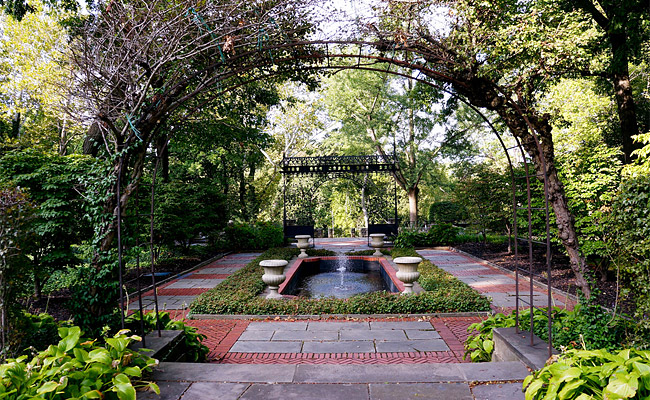
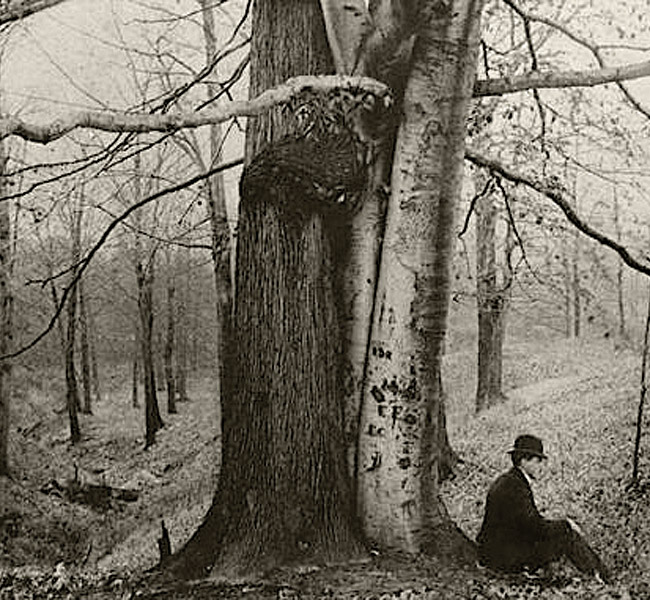
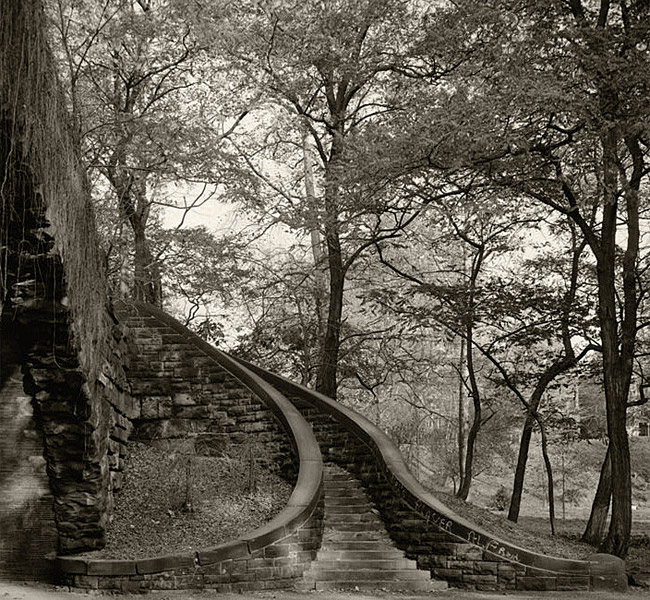
A master plan for Rockefeller Park was prepared in 1979 by the William A. Behnke Associates landscape architecture firm with foundation support. A centennial gift to the city by Cleveland industrialist John D. Rockefeller, the parkway had fallen into disrepair due to lack of maintenance, vandalism and crime. Behnke’s master plan suggested ways to solve traffic, parking and security problems, halt the deterioration of the massive stone bridges spanning the parkway, bring back a now-drained ornamental lagoon and restore the park’s most unique feature: the Cleveland Cultural Gardens, which represented the city’s rich ethnographic diversity. Behnke’s master plan marked the beginning of the reclamation of this magnificent parkway.
1979
Stanley C. Pace
Board Chairman, 1979–1985
Stan Pace was vice chairman of TRW Inc. and later chairman and chief executive officer of General Dynamics Corporation. A native of Waterview, Kentucky (his mother was the first woman elected sheriff in the state), he graduated from the U.S. Military Academy at West Point in 1943. He would later earn a master’s degree in aeronautical engineering from the California Institute of Technology. During World War II, Pace flew 39 combat missions over Europe; he was shot down in 1944 and spent the next 10 months in German hospitals and prison camps. In 1954, he joined Thompson Products (later known as TRW) as general manager of its automobile parts plant in Los Angeles, and the following year came to Cleveland to manage Thompson’s jet engine division. In 1977, he was elected president and chief operating officer, and set about expanding TRW’s space and defense products lines. In 1985, on the brink of retirement, Pace was asked to join the embattled General Dynamics, the nation’s leading military contractor, which had been charged with pervasive misconduct in the awarding of government defense contracts. After getting the company back on track, he retired in 1990.
Pace served on the national boards of the Boy Scouts of America and Junior Achievement. He was a Cleveland Council commissioner for five years and helped to found the Greater Cleveland Roundtable. In 1984, he chaired United Way of Greater Cleveland’s annual fund drive, and in 1988 he was appointed U.S. national chairman for United Nations Day. He is an honorary director of the Western Reserve Historical Society. The Ethics Resource Center in Arlington, Virginia, annually bestows the Stanley C. Pace Leadership in Ethics Award to recognize accomplishments in ethical business management.
1980
Boosting Biomedical Research
Strategically supported by the foundation, basic sciences research at Case Western Reserve University and the Cleveland Clinic has helped to drive the region’s transformation into a national center of biomedical commercialization.



In the early 1980s, the School of Medicine at Case Western Reserve University (CWRU) faced a difficult and momentous transition. The chairs of its departments of microbiology, anatomy, pathology and physiology had either resigned or retired. How the vacancies were filled would affect the school’s competitiveness for national science grants well into the next century. The ability of many Cleveland hospitals to attract topflight physicians also depended on the rebuilding of the medical school’s basic sciences departments, as new faculty members would hold joint hospital appointments.
The new dean of the medical school, Richard E. Behrman, looked to the Cleveland Foundation for funds to enable his new department heads to update laboratories and attract nationally regarded researchers. Behrman’s request for $3 million was three times larger than the foundation’s largest grant to date.
Acting on the advice of a team of 11 nationally known basic scientists led by cardiovascular-pulmonary specialist Alfred P. Fishman, M.D., of the University of Pennsylvania, the foundation agreed to support the rebuilding of CWRU’s basic sciences departments one at a time. Site reviews were to be conducted by the consultants prior to the release of funding for each successive department.
Between 1981 and 1986, the medical school received four large grants totaling $2.15 million, a foresighted investment in an institution vital to the practice of medicine locally and to the vigor of the regional economy. By the end of the 1980s, the new basic sciences faculty had attracted about $20 million in additional federal research funds, and the medical school had announced plans to build a new $78 million biomedical research center. The school’s increasing momentum had also helped to propel CWRU back into the national ranks of the top 20 private research universities.
A three-year foundation grant of $575,000 awarded to the Cleveland Clinic Foundation in 1988 similarly enhanced that institution’s capacity to perform advanced biomedical research. Until then, the hospital’s physicians had conducted research with a largely physiological or biochemical focus. With the foundation’s support, cardiologist Bernadine Healy, the recently arrived director of the Clinic’s research institute, created and staffed a major new department of molecular biology, making possible (among other things) research in the emerging field of genomics and gene sequencing.
The foundation’s vote of confidence in Healy’s vision empowered her. Before leaving to head the National Institutes of Health in 1991, Healy continued to broaden the Clinic’s research interests, promoted the critical place of research in the Clinic’s medical education program, and took the first steps toward relocating the Clinic’s scattered research departments into a single complex. Today, the Lerner Research Institute, which opened in 1999 with support from the Cleveland Foundation, houses 18 multidisciplinary teams in its department of cellular and molecular medicine alone.
The repositioning of the Cleveland Clinic and CWRU’s medical school at the cutting edge of biomedical research has advanced scientific knowledge and medical understanding. Valuable in its own right, the ongoing process of discovery has also been one of the engines driving Greater Cleveland’s transformation into a nationally recognized center of biomedical commercialization—a high-tech, high-growth industry cluster key to northeastern Ohio’s economic recovery and global competitiveness.
1980
Hard Data about the Regional Economy
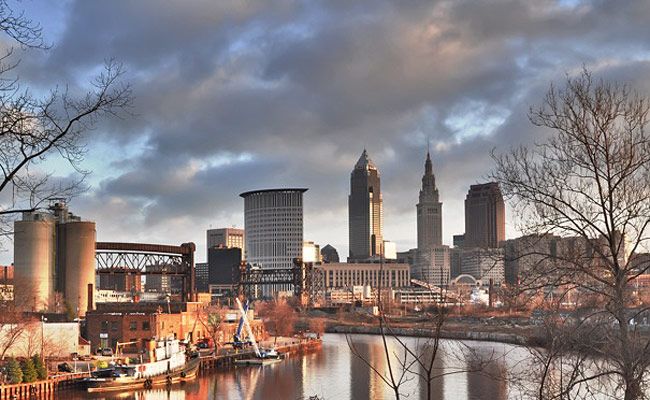
The Center for Regional Economic Issues (REI), in operation at Case Western Reserve University’s Weatherhead School of Management from 1986 until 2005, was an outgrowth of a foundation-sponsored study of the battered Cleveland economy conducted by the Rand Corporation in 1980. In addition to assessing regional economic trends on an industry-by-industry basis—hard data that had been lacking from civic deliberations about how to reverse the region’s postwar stagnation—the California think tank’s report pointed out the benefits of establishing an ongoing capacity to conduct sophisticated economic research on which informed economic development policies and programs could be based. In partnership with the Federal Reserve Bank of Cleveland, the Cleveland Foundation established REI in 1983 to provide hard data and analysis about the regional economy and to make this information widely available for public- and private-sector decision making. The successful effort to enhance Greater Cleveland’s capacity to monitor its economic activity was led by Susan Lajoie Eagan, who later served as the foundation’s executive vice president.
1980
Treu-Mart Fund
Philanthropy’s First Collaboratively Managed Endowment Monies
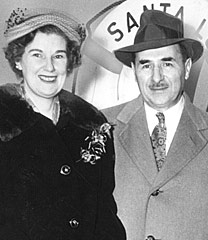
Since its establishment in 1980, the Treu-Mart Fund of the Cleveland Foundation and the Jewish Community Federation of Cleveland has strived to focus its grantmaking on underserved populations or new areas of need. “We believe we can make a difference with that strategy,” explains fund president Arthur W. Treuhaft. However, the fund’s most impactful gift may well be to the field of philanthropy. Treu-Mart is believed to be the first fund in the country to have been set up under the auspices of a community foundation and a major sectarian philanthropic organization to support activities that a jointly appointed board of trustees deems to be in the best interest of the broad community.
This long, productive partnership has accomplished all the objectives of the fund’s creators, William C. and Elizabeth M. Treuhaft. The uncle and aunt of Art Treuhaft, Bill and Libby were each revered for their devoted and wise leadership of a range of civic organizations. When working in concert, they were a powerhouse team whose actions carried immense weight.
The Treuhafts had astutely perceived that the Cleveland Foundation would benefit from exposure to the federation’s exemplary work with living donors. Within a few short years, the foundation had wholeheartedly embraced the concept of donor-advised funds and established a program to provide this philanthropic service. Similarly, the Treuhafts believed the Jewish Community Federation, which relied heavily on volunteer leaders to carry out its planning and programs, would benefit from access to the foundation’s staff-produced analyses. Finally, the Treuhafts wanted to demonstrate to large, independent public charities the power of working together. The concept of collaboration, modeled so effectively over the years by Treu-Mart’s seven-member governing board, has become a key component of the region’s redevelopment strategy.
The name the Treuhafts chose for their fund—a combination of Treuhaft and Libby’s maiden name, Marting—aptly reflected the vibrant linking of two strong personalities and two rich philanthropic traditions. Elizabeth’s grandfather, John C. Marting (after whom Baldwin Wallace University’s Marting Hall is named), was a Methodist minister and educator with a deep commitment to the humanities. Bill Treuhaft, the founder and chairman of a multinational manufacturing company, Tremco International, spent his formative college summers as a counselor at Camp Wise, a training ground for Cleveland’s Jewish leadership for more than a century. In appreciation of Bill’s wide-ranging civic contributions, the Jewish Community Federation named him an honorary trustee for life.
Bill and Libby’s life partnership, which ended with his death in 1981, often found them working on different aspects of the same causes and projects. While he was busy in the 1970s helping to shape the future of the city’s educational and cultural center as the first chairman of the newly federated Case Western Reserve University and founding chairman of University Circle Inc., she was chairing the new University Circle Center for Community Programs, which organized museum field trips for thousands of schoolchildren. Libby also helped to establish the Cleveland Orchestra’s children’s concerts. “Here were these great cultural riches available,” observed Libby before her death in 1998, “but perhaps a little intimidating.”
Children remain central to the mission of the Treu-Mart Fund, which annually awards about $1 million in grants. In recent years, the board—consisting of three donor-appointed directors, two directors appointed by the Jewish Community Federation and two directors appointed by the Cleveland Foundation—has coalesced around a vision of a Greater Cleveland where every child receives the means to thrive. To that end, the Treu-Mart Fund has supported several promising collaborations covering a broad spectrum of youth development efforts. These initiatives include two new public-private partnerships conceived by the Cleveland Foundation: Invest in Children, a county-wide early childhood development initiative, and MyCom, a community-wide mobilization campaign to connect young people with enriching experiences and caring adults. The Treu-Mart Youth Development Fellowship, a professional development program initiated in 2004 by the Mandel Center for Nonprofit Organizations at Case Western Reserve University (CWRU) and now housed at the university’s Weatherhead School of Management, strengthens the community’s capacity to produce positive outcomes for its youth. The program has introduced dozens of area agencies that work with middle-school children to best-practices research in an intensive training program at CWRU, where Libby Treuhaft earned a master’s degree in French literature in 1933.
1981
Systematizing Housing Rehabilitation
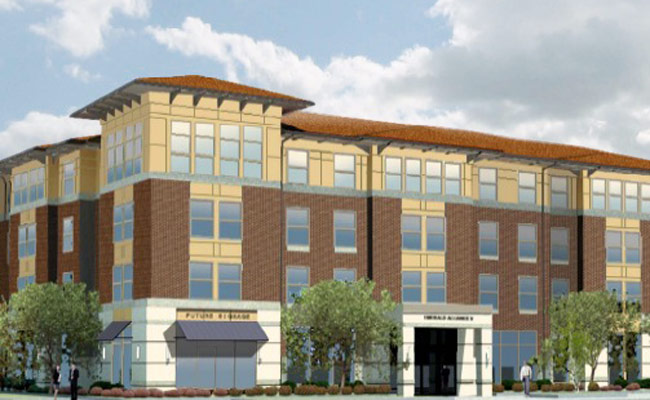 Cleveland Housing Network was the lead developer of Greenbridge Commons, permanent housing for chronically homeless individuals, in the Fairfax neighborhood.
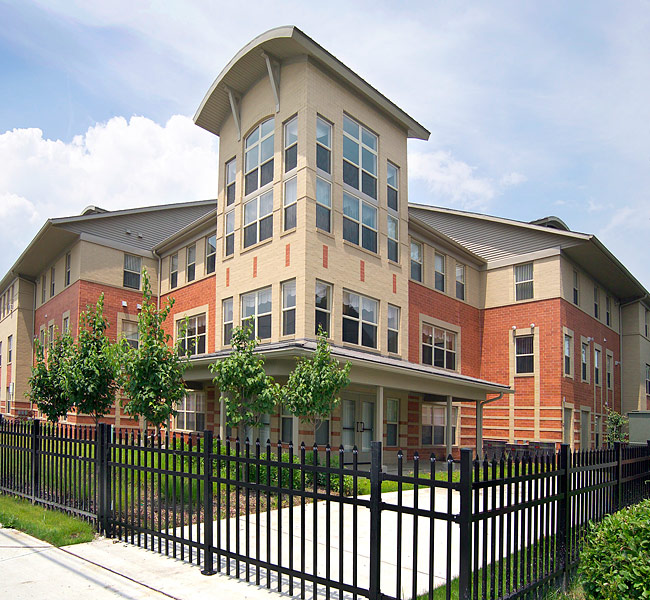 The Cleveland Housing Network assisted the Mt. Pleasant Now nonprofit development corporation with the construction of the Union Court senior apartments.
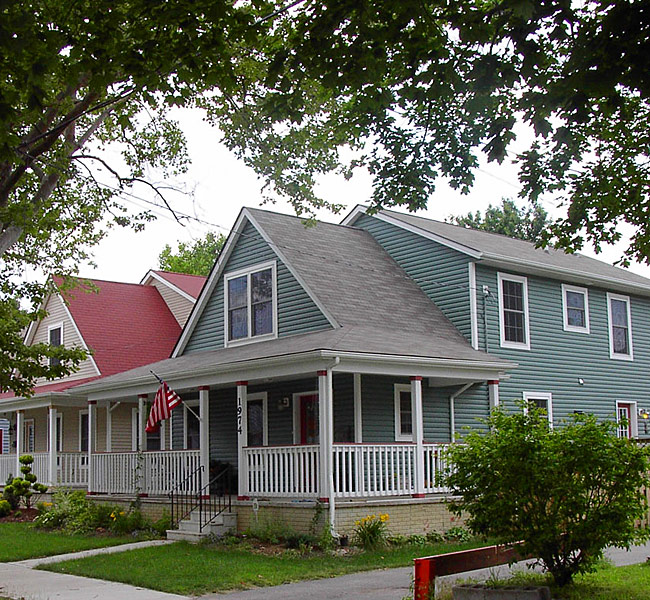 Cleveland Housing Network financing programs have helped low- to moderate-income families become homeowners.
The creation of Cleveland Housing Network (CHN) to provide technical support for housing rehabilitation represented an important first step toward the development of a coherent civic strategy for neighborhood revitalization. CHN built on the success of an innovative program conceived by the Hough-based Famicos Foundation, which acquired and rehabilitated substandard homes that were then rented at very reasonable rates to carefully screened low-income families, who had the option of taking title to the properties after 15 years.
The Cleveland Foundation invested $500,000 in the start-up and operation of CHN, which showed neighborhood development organizations (NDOs) struggling to rehab one or two houses a year how to dramatically increase their annual rates of production. By 1986, CHN had established a working relationship with nine NDOs, resulting in the rehabilitation of more than 220 housing units throughout Cleveland.
In 1989, CHN launched a new program to boost the percentage of owner-occupied properties in Cleveland by providing financial assistance and incentives to aspiring home buyers with low to moderate incomes. To date, CHN’s Homeward Program has produced more than 1,000 units of market-rate housing, generating more than $60 million in direct capital investment in Cleveland’s neighborhoods.
More recently, CHN has become involved, with ongoing foundation support, in the rehabilitation or development of multifamily properties, senior housing and permanent housing for the chronically homeless.
1982
Coming of Age of Great Lakes Shakespeare Festival

Beginning with a small grant that allowed Great Lakes Shakespeare Festival (GLSF) to market its productions of classic plays to audiences outside the summer theater’s home base in suburban Lakewood, the Cleveland Foundation has patiently nurtured GLSF’s artistic growth. The foundation was the first to encourage the company, now known as Great Lakes Theater, to lease the Ohio Theatre on Playhouse Square, a win-win proposition for tenant and landlord. (The Hanna Theatre on Playhouse Square ultimately became the company's permanent home.)
Among the offerings of GLSF’s 1982 opening season in the magnificently restored 1,000-seat theater was an 8.5-hour theatrical adaptation of the Charles Dickens novel Nicholas Nickleby, directed by the festival’s new artistic director, Ireland’s Abbey Theatre alum Vincent Dowling. The elaborate production, made possible in part by a $125,000 foundation grant, attracted local raves and national attention for the up-and-coming theater company.
1982
Robert E. Eckardt, DR PH
Accomplished Grantmaker and Executive Vice President
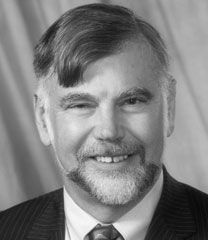
Robert E. Eckardt, executive vice president of the Cleveland Foundation, has worn many hats during his long and accomplished career with the foundation. Eckardt joined the program staff in 1982 with a master’s degree in public health and a certificate in gerontology from the University of Michigan (U of M), and he earned his doctorate in public health at U of M during his rise to the position of senior program officer.
In the fields of health and aging, he initiated several model demonstration projects, such as Successful Aging; helped to coordinate the community’s response to the AIDS crisis; and nurtured cooperation within Cleveland’s world-renowned but highly competitive medical institutions (see the Cleveland Foundation Study Commission on Medical Research and Education). Eckardt also conducted the foundation’s initial study of environmental issues and drafted the strategy for environmental grantmaking, which began in 1990 as part of his program portfolio.
On the national level, Eckardt sparked the creation of professional associations aimed at helping philanthropic organizations share expertise and resources, set standards and speak with a collective voice. Among those he helped to establish and lead are Grantmakers in Aging, Funders Concerned about AIDS and Grantmakers in Health. Eckardt also shares his wisdom as a consultant to foundations and nonprofits around the country that have sought him out for guidance on program development, strategic grantmaking and evaluation. Among the new administrative responsibilities he began to assume in the mid-1990s was management of the Cleveland Foundation’s first systematic program evaluation effort.
Today, Eckardt’s most important role is to provide overall direction for the foundation’s grantmaking. Acting in that capacity at the behest of the foundation’s executive director Steven A. Minter and Minter’s successor, Ronald B. Richard, Eckardt collaborates with board, staff and community leaders to pinpoint the region’s critical needs and leverage resources to help meet them. He is frequently the go-to person for special programmatic assignments.
Eckardt led the foundation’s response to the 2008 economic downturn, for example. He and the program staff held a series of community conversations with some 250 charitable organizations to learn how grantees were faring and how the foundation could help them weather the crisis. Monies were subsequently redirected from the foundation’s major capital grants efforts to immediate needs. Eckardt then worked with grantees to streamline and shorten grant-processing times in order to distribute awards more quickly. A survey conducted in 2010 by the Center for Effective Philanthropy numbered the Cleveland Foundation among the funders perceived by their grantees to have been the most helpful during this difficult time.
Having been promoted to executive vice president by Ronn Richard in 2010, Eckardt now helps to oversee all aspects of the foundation’s management.
In recognition of the high standard of philanthropic leadership he has set, Robert E. Eckardt received the Council on Foundations’ 2010 Distinguished Grantmaker Award, one of the field’s most prestigious and respected honors.
1982
Securing the Playhouse Square Superblock
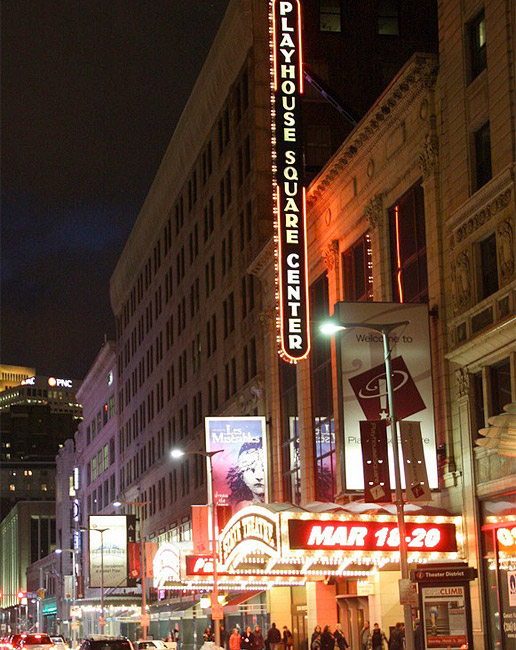
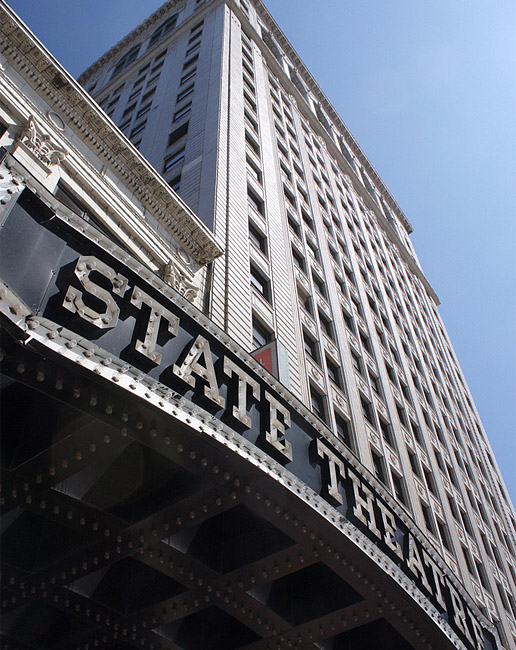
In 1982, the Cleveland Foundation became the first community foundation in the country to make a program-related investment (PRI), thus ensuring that the restoration of the Playhouse Square theaters and revitalization of the theater district did not grind to a halt. The concept behind a PRI is to invest principal to advance projects that have not only socioeconomic value but also the potential to produce a reasonable return on the investment. In applying a $3.6 million PRI toward the purchase of the Bulkley and Selzer Buildings on Euclid Avenue near East 14th Street, the foundation secured the land needed for the reconstruction of the State Theatre stage house to accommodate professional ballet and opera productions at a time when the PlayhouseSquare Foundation (PSF) did not have the necessary funds to act.
While many others were pessimistic about downtown Cleveland’s future, the foundation had embraced PSF’s vision of a theater district enlivened by restaurants, hotels, shops and office buildings. The Bulkley and Selzer Buildings were central to the envisioned redevelopment of the Playhouse Square superblock. In 1986, the foundation sold property it had acquired as part of an attempt to redevelop the Bulkley complex as an enclosed shopping center. However, the sale to PSF provided the theater district with a much-needed parking lot, which ultimately became a profit center.
Finding real estate development to be feasible, PSF went on to bootstrap the financing needed to build a 205-room Wyndham Hotel at Euclid Avenue and Huron Road. The Bulkley Building, which the foundation sold for $6.1 million in 1987 to a private developer, ultimately became part of PSF’s income-producing real estate holdings. The foundation’s gap financing—a $1 million-plus loan and an agreement to hold a second mortgage of $850,000—made the building’s purchase possible in 2002.
1983
Joining the Early Battle against AIDS
The foundation’s support for preventative education and proactive treatment helped to lessen the disease’s impact in Cuyahoga County.
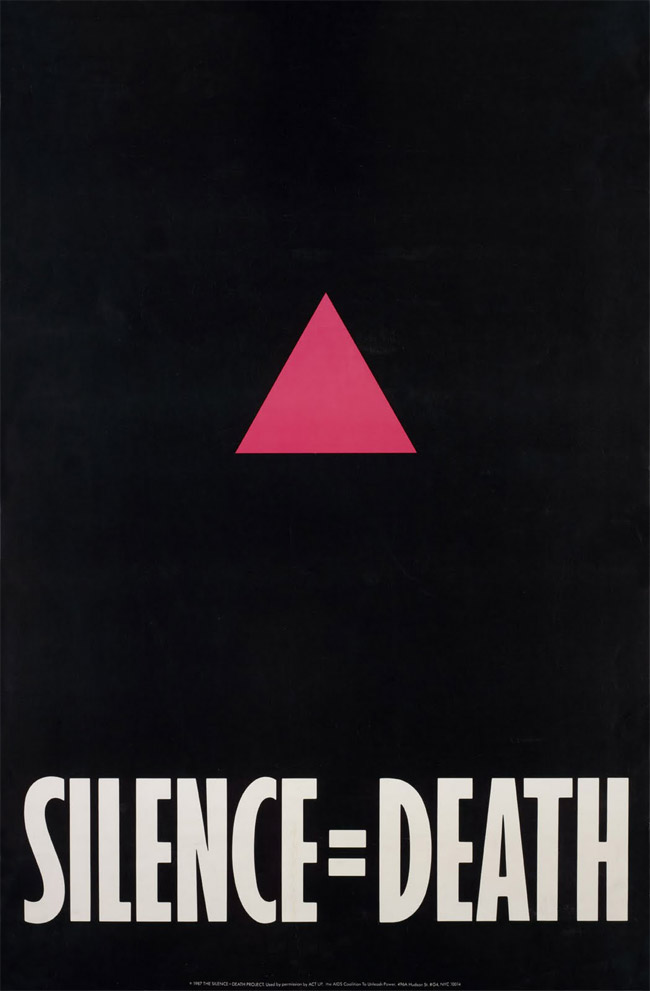
The Cleveland Foundation’s consistent support of efforts to battle AIDS began only a year after U.S. health officials coined the disease’s name: Acquired Immune Deficiency Syndrome. In 1983, foundation staff met with the City of Cleveland’s health commissioner and encouraged the city to move forward with planning for a widespread education program targeted at high-risk groups. In 1986, the foundation followed up with a $67,000 grant for the city’s first public awareness campaign. Spearheaded by program officer for health Robert E. Eckardt, these initiatives stood in marked contrast to the attitude adopted in other peer Midwestern cities, where AIDS was still misunderstood as affecting only the LGBT (lesbian, gay, bisexual and transgender) community, rather than as a major public health threat.
Although spared the brunt of the epidemic, Cleveland saw a doubling of reported AIDS cases every year between the early 1980s and 1988, when Eckardt joined forces with his counterpart at Cleveland’s George Gund Foundation to push for the city’s inclusion in a demonstration project initiated by the Ford Foundation to stimulate a community-wide attack on the disease in nine metropolitan areas. Ford’s National Community AIDS Partnership Project was based on Cleveland’s response to the epidemic. The Cleveland and Gund Foundations raised $1 million for project grants that helped to pave the way for what became a collaborative, broad-based response to AIDS in Greater Cleveland.
With continuing financial support from the two foundations, a Citizens Committee on AIDS/HIV was convened in 1992. The 13-member committee (which included a number of persons living with AIDS/HIV) reviewed service and funding gaps and developed an action plan out of which grew the AIDS Funding Collaborative (AFC). Supported by Cleveland and Gund, the Cuyahoga County Commissioners, United Way Services and the National AIDS Fund, AFC awarded grants to implement the citizen committee’s wide-ranging recommendations and encourage the community’s coordination of services. Since its inception in 1994, AFC has distributed more than $8 million to private and public-sector providers for research, treatment and related social services.
In the period before early screening tests and improved antiretroviral treatments transformed AIDS into a long-term chronic disease for most patients in the United States, the Cleveland Foundation’s advocacy of preventative education and proactive healthcare programs helped to lessen the disease’s impact in Cuyahoga County.
1984
Envisioning North Coast Harbor
Carefully targeted grants nurtured the redevelopment of the Lake Erie shoreline at the foot of East Ninth Street.
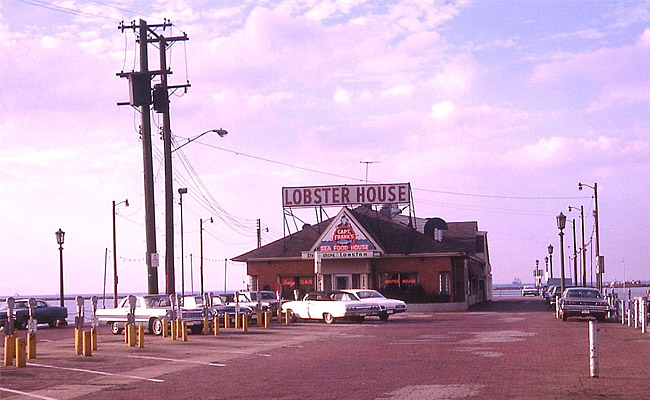
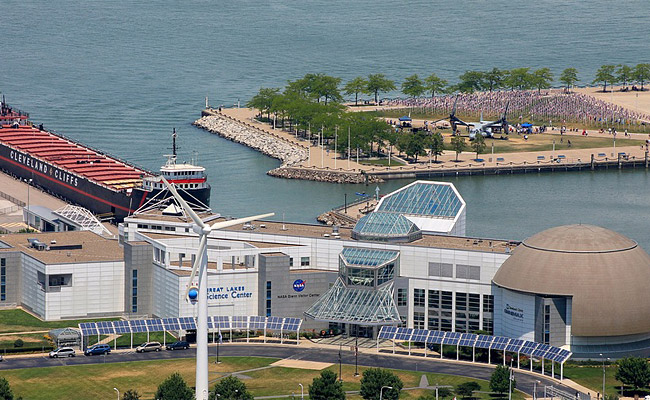

Cleveland’s North Coast Harbor grew out of a planning process begun by the Greater Cleveland Growth Association, which commissioned a fresh look at the city’s sadly deteriorated park system in 1975. The costs of the study were underwritten by a $40,000 grant from the Cleveland Foundation.
A subsequent series of carefully targeted grants nurtured the gradual redevelopment of the Lake Erie shoreline at the foot of East Ninth Street. In 1984, the foundation commissioned a master plan for the 149-acre industrialized site. A collaboration between Zuchelli, Hunter & Associates and the local landscape architecture firm William A. Behnke Associates, the “Cleveland Waterfront Study” recommended the dredging of an “inner harbor” to create a new recreational asset that would also be a prestigious setting for hotels, offices, retail shops, restaurants and such attractions as a museum and an aquarium.
The exciting prospect of opening up public access to the waterfront led (with the foundation’s gentle prodding and provision of operating support) to the establishment of the North Coast Development Corporation, a nonprofit authority charged with managing lakefront development. The dredging of a 7.5-acre harbor and the construction of a surrounding walkway and park were completed in 1987 with federal, state and local funding. Two world-class attractions immediately chose to locate at North Coast Harbor: the Great Lakes Science Center and the Rock and Roll Hall of Fame and Museum (the architectural, program and financing plans for which were developed with underwriting from the Cleveland Foundation). The vision of the harbor as Greater Clevelanders’ downtown entry point to the lakefront, as well as a major tourist and convention destination, continues to inspire public and private investment in redevelopment of the land surrounding this dramatic setting.
1984
Foundation offices relocated to the Hanna Building on Playhouse Square
The move is a symbolic gesture of support for the ongoing redevelopment of Cleveland’s theater district.
1984
Steven A. Minter
CEO, 1984–2003
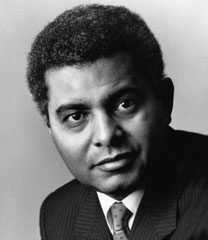
Steven A. Minter would be given the opportunity of a lifetime in mid-career to help rebuild his native region. In 1984, at age 46, he became the eighth chief executive of the Cleveland Foundation. Minter was the first African American in the country to rise to such a position with a community foundation.
As executive director and president of the Cleveland Foundation from January 1, 1984, to June 30, 2003, Minter successfully focused his staff and board on the goal of maintaining the organization’s standing as the country’s premier community foundation in the rapidly changing philanthropic landscape. The organization Minter inherited was nationally regarded for its grantmaking innovations and civic leadership, the legacy of previous foundation directors Homer C. Wadsworth and James A. Norton.
Minter deepened the foundation’s involvement with what he came to call the “enduring issues” of public education, jobs, housing and health care—sectors whose deficiencies and inefficiencies significantly affected the well-being of the region’s poor and minority citizens, from whose numbers he had risen. And, by stimulating the board to approve large-scale commitments to priority initiatives, he advanced the effort, begun by his predecessors, to ensure that the foundation was always a nimble, resourceful and potent agent working to effect progressive socioeconomic change in Greater Cleveland.
Minter assembled a team of well-qualified senior program officers to carry out the foundation’s strategic agenda and set high expectations for their performance. Also notable was his decision to place Susan Lajoie Eagan in charge of strategic planning and programmatic activities. Eagan came to the foundation in 1980 with a Ph.D. in public policy from Harvard University’s John F. Kennedy School of Government. Her ascent to associate director and then executive vice president was propelled by a fine analytical mind.
Eagan and Minter evolved into the classic inside/outside program team. “Steve was big picture, connect the dots,” explained Leslie A. Dunford, the foundation’s vice president for corporate governance and administration. “Susan worked out the nitty-gritty details with the program staff.”
The Cleveland Foundation’s endowment stood at $300 million when Minter took over. Observing that the endowments of peer foundations had benefited from their encouragement of partnerships with living donors, Minter immediately moved to create donor-advised funds. He also worked diligently with the foundation’s investment subcommittee and the trustee banks to maximize the endowment’s financial performance. As a result of his determined focus on asset development throughout his two decades as chief executive, $1 billion was added to the foundation’s endowment from three sources: bequests; promotion of supporting organizations, donor-advised funds and organizational endowments; and market performance. Consequently, grantmaking income increased by 450 percent during his tenure.
Born in Akron, Ohio, the eldest of eight children of a former national Golden Gloves boxing champion, Steve Minter grew up in a succession of small Ohio communities, as his father sought to advance the family’s fortunes by moving from one job to another. Despite the family’s continual uprooting, Minter excelled in school and was active in sports, student government and the band—extracurricular activities that his mother encouraged. It was at the prompting of his teachers that Minter decided to attend college, becoming the only child in his family to graduate from a four-year institution of higher learning.
Despite an impressive record of academic achievement and campus leadership at Baldwin Wallace College, a small Methodist school near Cleveland, after graduating in 1960 Minter was unable to land a job as a high school coach after applying to more than three dozen area school systems. The secretary to the president of Baldwin Wallace empathized with the plight of this talented African American struggling to break into a segregated job market. She put him in touch with her sister who worked as the secretary to the director of the Cuyahoga County Welfare Department, where he was hired as a caseworker. Within nine years Minter had earned a master’s degree from Case Western Reserve University’s School of Applied Social Sciences and become the department’s director.
In 1971, Minter received a call from the governor of Massachusetts that resulted in his appointment as commissioner of public welfare for the state. He turned down an offered second term, believing it was time to make a career change.
Having promised his wife, Dolly, to relocate to a community in which they would be content to live for a minimum of 12 years, time enough to see their three daughters through high school, the family returned to Cleveland, where Minter accepted a position as a program officer at the Cleveland Foundation in 1974. Mentor Homer Wadsworth named him associate director in 1979. Minter took an unpaid leave from the foundation in 1980 to serve as undersecretary—the no. 2 person—in the Carter administration’s newly created U.S. Department of Education. His promise to Dolly and his sense that there was still much to accomplish in Cleveland motivated his return to the foundation after a year in D.C.
As he grew in stature, Minter did not forget his kinship with the disadvantaged and poor. The Cleveland Foundation under his direction would perpetuate his predecessor’s interest in institution-building, while quietly but firmly insisting on minority access to and participation in the city’s institutional life. A mediator by temperament—perhaps because he had straddled two worlds for so many years—he also worked hard to expand the organization’s ability to convene a disparate group of leaders, experts and funders around important urban problems and serve as a catalyst toward their solution.
Internally, he forged a new path in institutionalizing a collaborative relationship between the board and staff. Because program officers do the legwork on grants, Minter perceived that the board of directors often felt that they were merely rubber-stamping others’ decisions. He envisioned a far more active role for the trustees. He wanted to see their intelligence and experience brought to bear on major policy decisions. Immediately upon his appointment, Minter began to search for a way to increase the interplay of committee and staff so all would be, in his phrase, “reading from the same page.”
Rather than dictating his vision for the organization, which would serve only to lessen the board’s sense of engagement, Minter guided the foundation through the development of its first formal strategic plan, a process that actively involved both board and program officers in building a consensus about the priorities that should govern the foundation’s grantmaking. Three years into Minter’s tenure, the foundation made sustained, multimillion-dollar commitments to “Special Initiatives” in the areas of public school improvement, neighborhood revitalization and lakefront development.
Roughly every five years thereafter, the foundation re-evaluated the key challenges and opportunities facing Greater Cleveland, reconsidered the appropriate roles the foundation could play in addressing challenges, and recalculated the resources needed to make a measurable difference. In his final two years, Minter initiated a governance restructuring that streamlined grantmaking procedures and thus freed up board members to assume an even broader portfolio of policy-making functions.
Many in the field considered Steve Minter to be the most successful of the 700 chief executive officers of U.S. community foundations. On the eve of his retirement, the Council on Foundations honored him with the Distinguished Grantmaker Award for his lifetime achievement in philanthropy.
Read an extended profile of Minter, who since 2003 has been an executive-in-residence at Cleveland State University (CSU) and a fellow of the Center for Nonprofit Policy and Practice at CSU’s Levin College of Urban Affairs. Listen to Minter’s reflections on his career in philanthropy (see video).
1985
Economic development becomes a full-fledged program area
1985
F. James and Rita Rechin Fund
Pacesetting Partnership with Living Donors
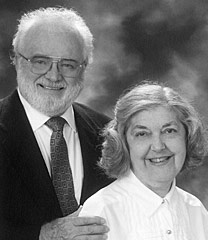
The F. James and Rita Rechin Fund was the first donor-advised fund established at the Cleveland Foundation. “Our fund is modest in the worldly scheme of things,” said Jim Rechin, a retired TRW Inc. group vice president, at the time of the fund’s creation in 1985, “but to those on the receiving end, it’s very significant. And that makes us feel wonderful.”
Natives of New York, the Rechins began creating a lasting philanthropic legacy as a young married couple. Busy rearing four children, they nonetheless opened their Buffalo home and their hearts to orphans at Christmas. In 1955, Jim, a mechanical engineer with experience designing jet engines, accepted a job with TRW, and the Rechins moved to Cleveland. Rita made what turned into long-term commitments to volunteer at Hillcrest Hospital and the Western Reserve Christ Child Society. Jim volunteered, too, notably as a board member of Vocational Guidance Services, a job training agency for people with barriers to employment. Whenever the Rechins bought a new car, they donated their old vehicle to the Salvation Army.
The Rechins’ collaboration with the Cleveland Foundation, facilitated by attorney Michael Horvitz, reflected a zest for tackling tough community issues and promoting innovation. Hoping to build what Jim termed “another focal point for addressing Cleveland’s needs,” the Rechins decided the best use of their fund’s income was as socioeconomic “R&D money.”
Rita passed away in 2012, six years after the death of her husband. But the Rechins’ philanthropic legacy endures, most visibly in the blossoming of the foundation’s donor-advised program. Today, the Cleveland Foundation works with about 440 donor-advised funds, each allowing an individual, family or corporation active involvement in grantmaking, as well as access to the foundation’s programmatic, management and investment expertise.
1985
Richard W. Pogue
Board Chairman, 1985–1989
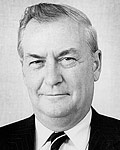
Dick Pogue became acting managing partner of Jones, Day, Reavis & Pogue on March 1, 1984, and managing partner one year later. During his years of service in these roles, the firm grew significantly and for the first time entered international markets. A native of Cambridge, Massachusetts, at age 10 Pogue moved with his family to Washington, D.C., where his father would become chairman of the U.S. Civil Aeronautics Board. He graduated from Cornell University in 1950 and from the University of Michigan Law School in 1953. After a three-year stint in the Office of the Judge Advocate General at the Pentagon, he arrived in Cleveland in 1957 to join Jones Day. He retired from the firm in 1994, signed on as senior advisor at Dix & Eaton, then rejoined Jones Day in 2004.
Pogue began his civic service in Cleveland as a volunteer at the Goodrich Settlement House working with teenage boys, and eventually became board president. He has served as chairman of many organizations, including the Greater Cleveland Growth Association, University Hospitals, City Club, Business Volunteers Unlimited, Greater Cleveland Roundtable and Presidents’ Council Foundation. He chaired Cleveland’s 1989 United Way campaign and served as co-chairman of the city’s 1996 Bicentennial Commission. In the field of education, Pogue has served as a trustee of Case Western Reserve University, University of Akron and Cleveland Institute of Music. He was chairman of the Governor’s Commission on Higher Education and the Economy in 2003–04 and later was a founding trustee of the Business Alliance on Higher Education and the Economy. In 2009, Pogue was named board chair of the American Red Cross of Greater Cleveland. He currently serves as a trustee of Philanthropy Ohio.
1986
A Catalytic Industrial Park for MidTown
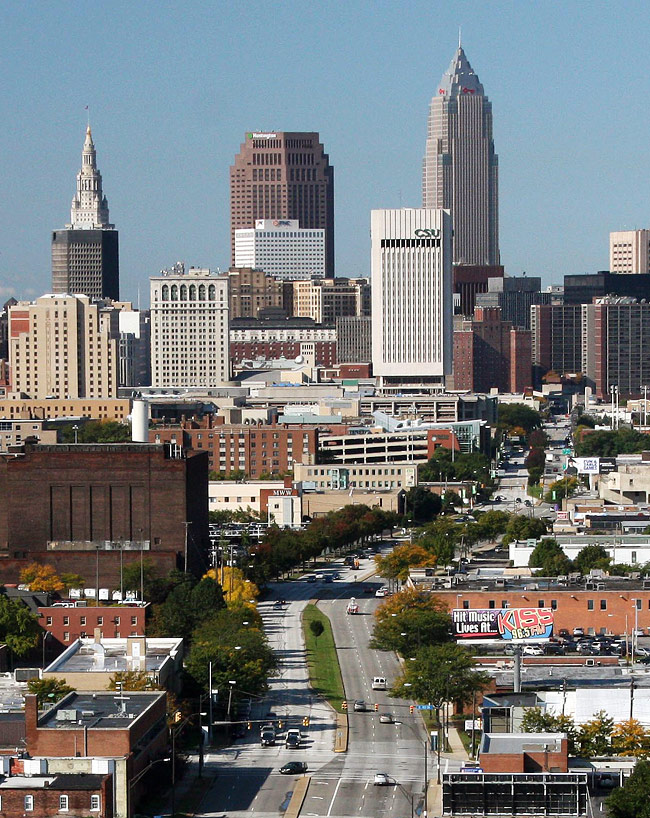
MidTown Corridor, Inc., a private neighborhood reclamation effort fueled largely by the vision and energy of its co-founder, Premier Industrial Corporation chairman and CEO Morton Mandel, had within its first five years succeeded in stemming disinvestment in the deteriorating inner-city business district in which Premier was located. Physical improvements, business expansions and new business development were visible throughout the corridor stretching from University Circle to downtown between Euclid and Carnegie Avenues.
But the embryonic economic development corporation recognized that it had reached a turning point by 1986. With the support of a foundation grant, MidTown conceived a bold plan that persuaded the City of Cleveland to acquire and demolish the outdated, oversized, unused factory buildings that occupied so much of the corridor’s potentially valuable real estate. Additional foundation grants enabled MidTown Corridor to purchase a cleared 20-acre parcel at East 65th Street and market it as an industrial park. Although not an overnight success, MidTown Commerce Park marked the first stage in the corridor’s repositioning as a “health-tech” district, which is now home to 600 businesses, 18,000 employees and 2,000 residents.
1986
Donor-advised funds established
The foundation formalizes its commitment to serving living donors.
1986
Encouraging the Film Festival’s Relocation Downtown
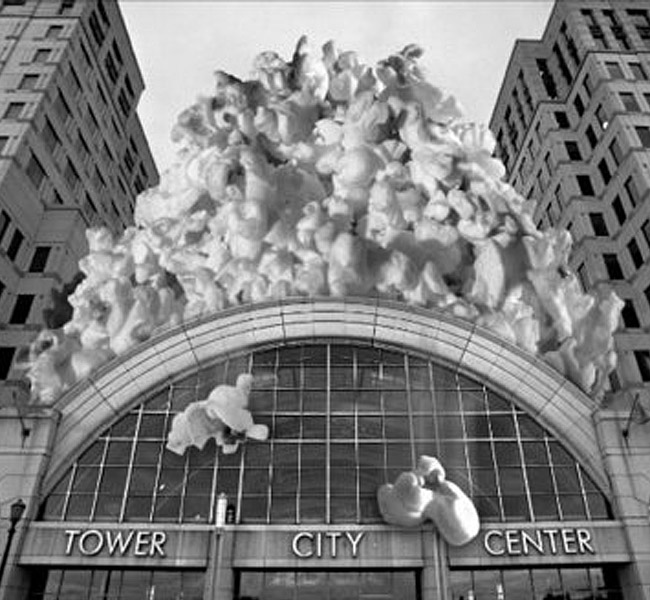

During its first decade, the Cleveland International Film Festival screened the best of contemporary world cinema primarily at the Cedar Lee Theatre in Cleveland Heights. Recognizing the financial imperative of making this annual event accessible to filmgoers across the region, the Cleveland Foundation encouraged the festival to move its 1986 opening-night festivities downtown to Playhouse Square’s Ohio Theatre by underwriting the installation of the requisite projection and audio equipment. The festival permanently moved downtown to a theater complex in Tower City in 1991. It has since enjoyed a 600 percent growth in attendance.
1986
Turnaround in Hough
The foundation’s championship of a unique proposal to build townhomes near the flashpoint of the Hough riots marked the beginning of reinvestment in the central-city neighborhood.
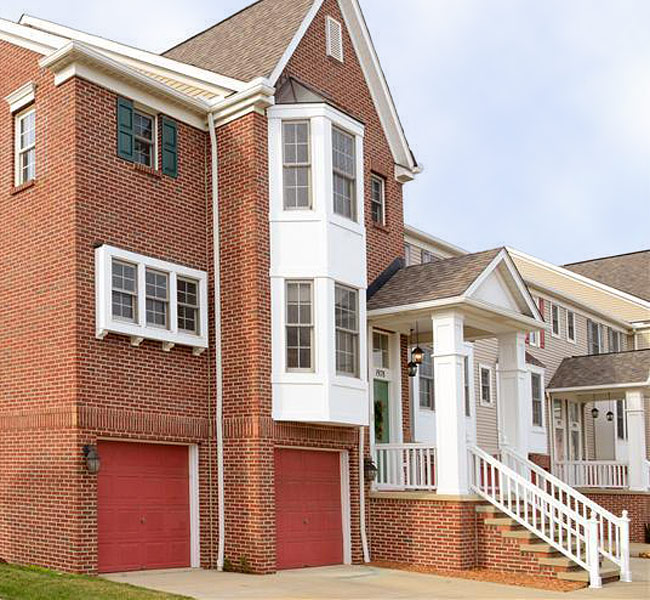


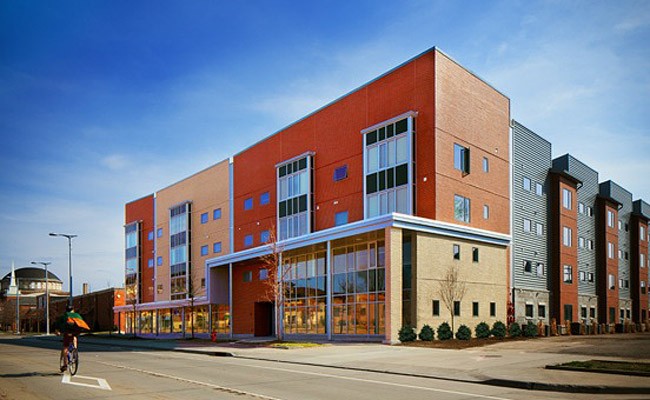
In the early 1980s the Cleveland Foundation helped finance Lexington Village, the first market-rate rental housing built in the east-side Cleveland neighborhood of Hough in 50 years, precisely because it was a “project of scale,” not a small program that tinkered at the edge of a problem. The 183 townhomes proposed for Phase 1 of Lexington Village had the potential to offer a turnaround solution for disinvestment in the predominately African-American neighborhood, which had never been rebuilt since being engulfed in riots in 1966.
The opportunity to stem the neighborhood’s continuing decline was presented by the Famicos Foundation, a nonprofit developer of housing for low-income families, whose director approached the Cleveland Foundation with a unique proposal to build rental property at Lexington Avenue and East 79th Street, near the flashpoint of the Hough riots. The foundation’s program officer for civic affairs (and future director), Steven A. Minter, embraced the quixotic project. He recognized the immediate benefits for a neighborhood of which he had become a dedicated champion during his days as a caseworker for the City of Cleveland’s welfare department. Minter also saw the project’s potential to provide concrete evidence that middle-class suburb dwellers, provided the proper inducements, could be persuaded to live in and help to revitalize central-city neighborhoods.
The civic affairs program officer persuaded the board to make a program-related investment of $800,000 in Lexington Village—only the second time to date that the foundation had used the still-unconventional tactic of investing principal in a project. Minter then went on to assemble a coalition of 27 public and private lenders that provided the additional $13.3 million in needed working capital.
The marketing of the Phase 1 units, completed in 1986, was so successful that another $6.4 million in bank loans and private-sector and foundation investments was raised to build 93 more units on adjacent land. As the foundation had believed, Lexington Village set off a chain reaction of new development in Hough, including the Church Square shopping center, additional townhome complexes along the main arteries of Chester and Euclid Avenue, and the construction of single-family residences on side streets. Hough is no longer a dead zone, and redevelopment is slow but ongoing.
1986
Updated Citywide Development Plan
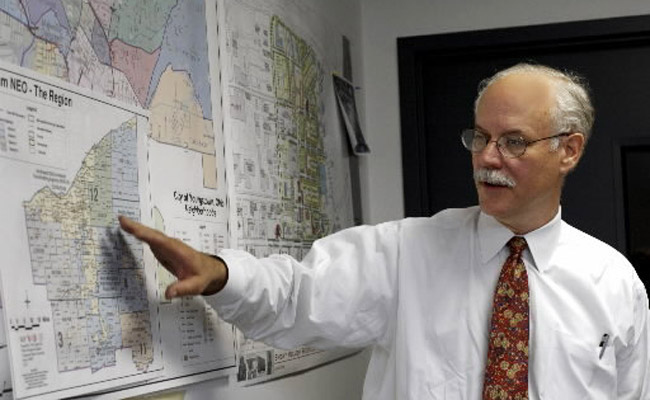
The Cleveland Foundation contributed $300,000 to the $1 million cost of updating what was then Cleveland’s last citywide plan, completed in 1949, and its last downtown plan, completed in 1959. Unveiled in 1988, “Civic Vision 2000” was the culmination of two years of studies and dozens of community meetings conducted under the leadership of city planning director Hunter Morrison. Morrison, who had city planning degrees from both Harvard and Yale, had worked for the Hough Area Development Corporation before taking the planning chief’s job in 1980.
Civic Vision affirmed the importance of neighborhood redevelopment to the city’s future, presenting detailed land-use plans for each residential area of the city. Adopted by the City Planning Commission in 1989, Civic Vision influenced the direction of downtown redevelopment, calling for continuous public access to the waterfront, a pedestrian-friendly city center and the development of a critical mass of attractions to lure tourists and residents. The plan received the 1992 American Planning Association National Planning Award for Comprehensive Planning.
1987
First City-History Encyclopedia
With the publication of The Encyclopedia of Cleveland History, Cleveland became the only U.S. city to have such a reference work, which covered everything from the region’s prehistoric inhabitants to the city’s recent recovery from default. Weighing in at five pounds and 1,127 pages, the encyclopedia had first been suggested to its eventual co-editors, David D. Van Tassel and John J. Grabowski, by retired Cleveland Foundation director Homer C. Wadsworth. A series of foundation grants supported the research and writing of more than 2,300 entries. An updated edition of the encyclopedia can now be found online.
1987
“Special Initiatives” launched to revitalize schools, neighborhoods and the lakefront
Sustained, multimillion-dollar commitments are now seen as central to the foundation’s ability to make a difference.
1988
Sustained Resources for Neighborhood Redevelopment
“Nowhere else in the United States is there a more extensive, carefully arranged and widely supported system of neighborhood investment.”
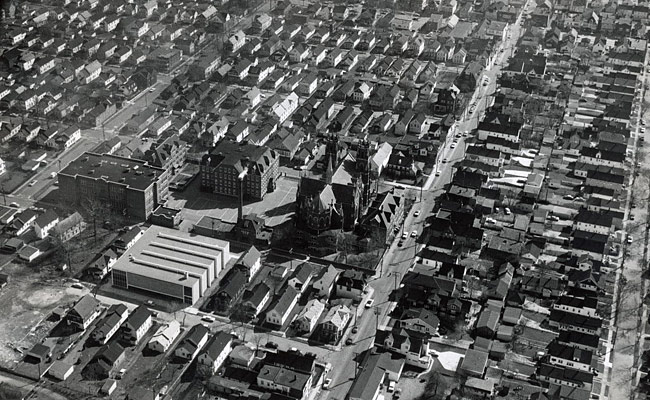


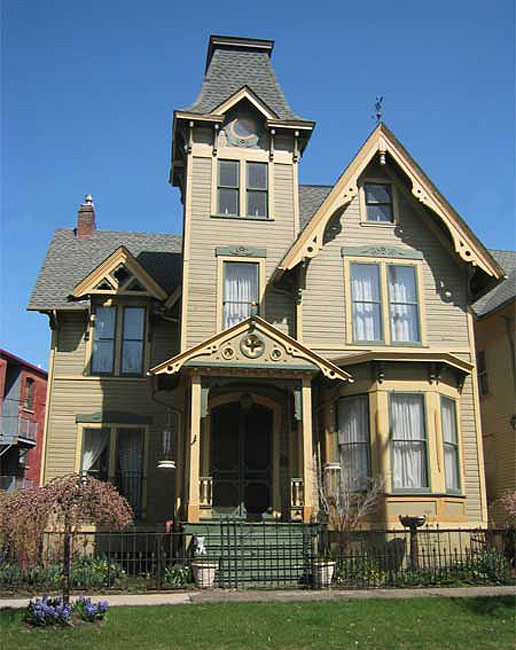
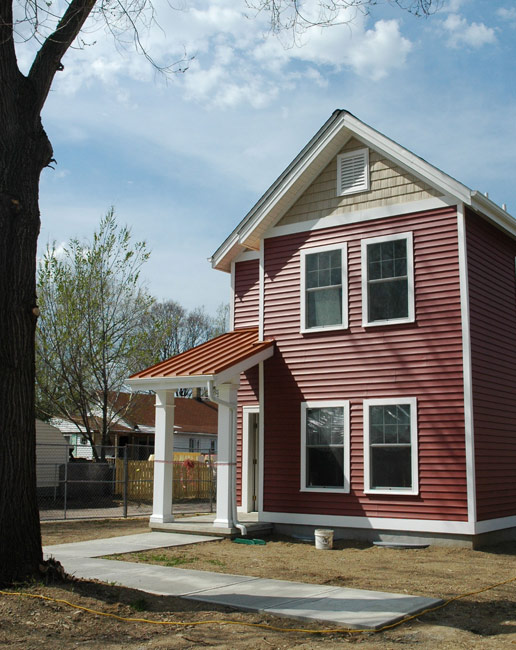
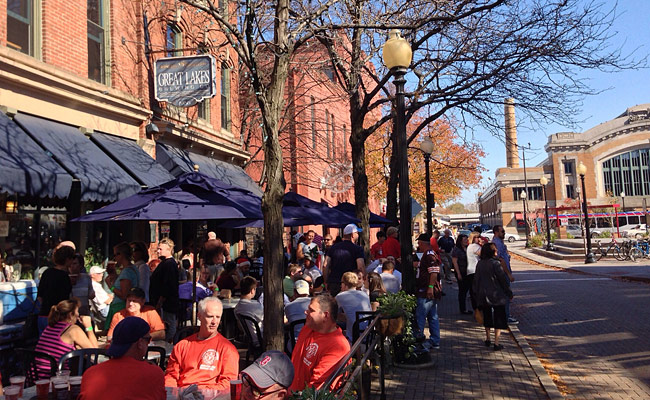
By the 1980s, Cleveland boasted a wealth of neighborhood development organizations (NDOs), but few of them had the staff or technical skills to rehab more than a handful of housing units per year, and most could only dream about tackling a commercial redevelopment project. Wishing to accelerate the notoriously slow process of neighborhood revitalization, local funders seized on the opportunity to include Cleveland in a national demonstration project undertaken by the Ford Foundation to increase the productivity of NDOs in selected test cities. With the Cleveland Foundation, the George Gund Foundation, the Standard Oil Company and the City of Cleveland joining forces to provide the required 2-to-1 match of Ford’s $300,000 grant, the $1 million Cleveland Neighborhood Partnership Program (CNPP) was launched here in late 1985.
By early 1987, CNPP had selected six NDOs from across the city through a competitive application process to receive two annual grants averaging $85,000 per year—the means that NDOs had long needed to plan and execute high-impact projects. With the six grantees expected to stimulate $13 million in new development, the Cleveland Foundation recognized the importance of finding a permanent way to coordinate public and private resources in order to turbocharge neighborhood redevelopment.
The foundation reconvened corporate, neighborhood and philanthropic leaders to discuss this issue, and these discussions led to the creation of Neighborhood Progress, Inc., an umbrella coordinating and planning organization that has (with the foundation’s steadfast support) provided Cleveland’s community development organizations with operating monies, technical assistance and working capital needed to build new homes, rehab commercial spaces and improve neighborhood amenities.
Established in 1988 with the foundation’s contribution of $500,000 to its first three years of operation, Neighborhood Progress, Inc. (recently renamed Cleveland Neighborhood Progress) has since mobilized $26 million from public and private sources to support community development organizations (CDOs) that have attracted residents, jobs and new retail, cultural and recreational amenities to the Buckeye-Woodland, Detroit Shoreway, Fairfax, Glenville, Hough, Ohio City, Slavic Village and Tremont neighborhoods (among others). Over the past 20 years, Cleveland’s CDOs have produced nearly 7,500 units of new and rehabilitated housing and developed 1.7 million square feet of new and rehabilitated commercial space.
In a 2003 evaluation commissioned by the Cleveland and Gund Foundations, national community development expert Tony Proscio praised Neighborhood Progress’s work, which demonstrates how sustained investment can pay real dividends for residents, their neighborhoods and the city as a whole. “Nowhere else in the United States,” Proscio stated, “is there a more extensive, carefully arranged, centrally coordinated and widely supported system of neighborhood investment than in Cleveland.”
Proscio’s observation that Cleveland’s CDOs needed to consolidate their disparate gains into a larger, more coherent redevelopment effort that could help to restore market forces in their neighborhoods led to a new Neighborhood Progress initiative begun in 2004 with the support of nearly $4 million in grants and program-related investments from the Cleveland Foundation. These monies, which enabled six CDOs chosen through a competitive application process to undertake large-scale redevelopments, have since leveraged more than $100 million in public and private investments.
1988
Understanding the Causes of Poverty
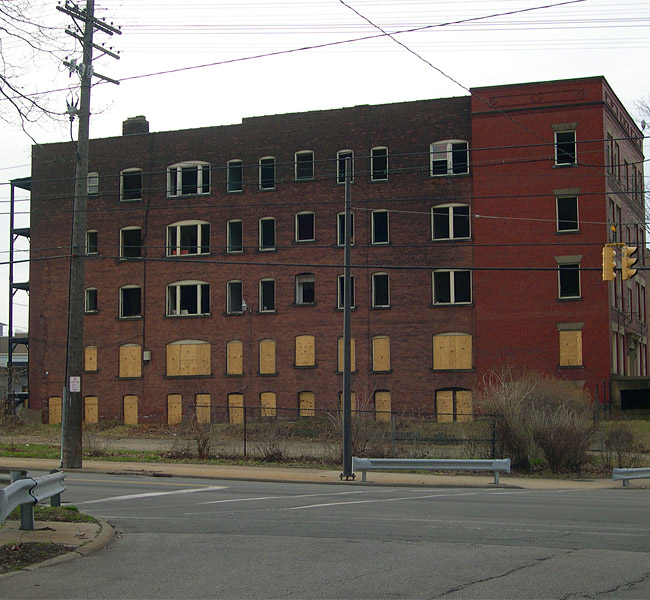
In response to concerns about Cuyahoga County’s unacceptable poverty rate, which had surpassed the nationwide average, the Cleveland Center for Urban Poverty and Social Change was established at Case Western Reserve University in 1988 with joint funding from the Cleveland and Rockefeller Foundations. Under the leadership of director Claudia Coulton, the center set out to provide the area’s socioeconomic policymakers with previously unavailable data that might help to explain the county’s high and ever-increasing poverty rate.
Released in 1989, the so-called Coulton Report revealed the precise geographical areas with high concentrations of poverty and helpfully broke down poverty into four types based on degrees of newness or persistence. The growing demand for a highly educated workforce, the outmigration of jobs to the suburbs, the isolating influence of public housing and the sharp decline in economic investment in central-city neighborhoods—all played a role in impoverishing individuals and families. In pinpointing the causes of poverty, the Coulton Report contained the germs of new ideas about how to combat the problem.
1989
George and Janet Voinovich
Memorializing a Departed Child
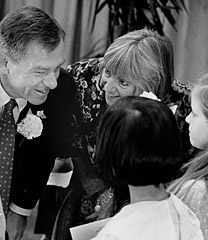
The Cleveland Foundation has long served as a steward of gifts made in memory of a recently departed loved one. During World War II, the foundation even started a memorial fund to provide Clevelanders with a significant way to honor the sacrifice of relatives lost in combat. Retired U.S. Senator George V. Voinovich and his wife, Janet, are among the bereaved parents who have found solace in this form of philanthropy. After the tragic death of their nine-year-old daughter just days after Voinovich won the Republican primary for Cleveland mayor in 1979, the couple created the Molly Agnes Voinovich Memorial Fund to “share Molly’s love with people,” as Voinovich, who won the mayor’s race and went on to serve as Ohio governor and in the U.S. Senate, had simply explained.
Molly Agnes, the youngest of four siblings, was killed when a van that had run a red light struck her while she was walking back after lunch to her fourth-grade classroom at Oliver Hazard Perry School in Cleveland’s Collinwood neighborhood. Fittingly, her parents decided that income from Molly’s memorial fund, which the Cleveland Foundation has administered since 1989, should help to pay for special academic programs, unbudgeted materials and equipment, and enrichment activities for students at Oliver Hazard Perry and other schools in the Cleveland Metropolitan School District.
1989
John J. Dwyer
Board Chairman, 1989–1992
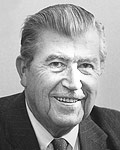
Jack Dwyer (1917–2005) was the retired head of the Oglebay Norton Company; he led the mining and lake transportation concern for 12 years until 1982. Born in Gary, Indiana, he graduated from Harvard Law School in 1944 and came to Cleveland to work with the firm of Thompson, Hine & Flory. He joined Oglebay Norton two years later, and in 1970 became the company’s president and chief executive officer. After Dwyer left Oglebay Norton, he returned to Thompson Hine as a partner. As chairman of the Greater Cleveland Growth Association in the early 1980s, he helped bring together government and corporate officials as the city emerged from default. He also served as a director of the Cleveland-Cuyahoga County Port Authority.
Dwyer was chairman, president or trustee of organizations that included the Red Cross, United Way, Federation for Community Planning and Musical Arts Association. He was on the boards of University Hospitals and St. Vincent Charity Hospital Development Fund Company. He was a life trustee of Notre Dame College and a major fundraiser and trustee for his alma mater, DePauw University (class of 1939), and also served as a trustee of John Carroll University and Laurel and Glen Oak schools. He was the founding chairman of the Cleveland Education Fund.
1989
Lake-Geauga Fund
Grantmaking Expanded to Adjacent Counties
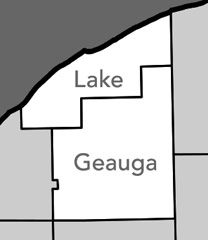
The year 2014 marks the 25th anniversary of the start of grantmaking by the Lake-Geauga Fund, an initiative, supported by the Cleveland Foundation, to meet the often unique needs of communities to the east of Cuyahoga County. By the mid-1980s, when the idea for the fund was conceived, nearby Lorain and Summit Counties had started community foundations, but neither Lake nor Geauga County had such philanthropic support for social services, arts, health care, education and economic development.
Lake County philanthropists John Sherwin Jr. and his father, who were directors of the Cleveland Foundation’s Sherwick Fund supporting organization, approached the foundation with the suggestion that a new fund be created to provide Lake and Geauga County residents with a means to address local needs. Both rural jurisdictions had pockets of poverty (as well as wealth) and faced the onrush of exurban development. Recognizing the idea’s merit, the foundation contributed a $500,000 challenge grant to launch the Lake-Geauga Fund.
With a leadership gift of $250,000 in hand from the Sherwick Fund toward the 3-to-1 match, the Sherwins, assisted by Arthur S. Holden Jr., a patron of Lake County’s Holden Arboretum and a founder of Lakeland Community College, spearheaded a successful fund-raising campaign. By 1989 a seven-member advisory committee of local leaders had been assembled to recommend grants.
In the fund’s first three years alone, more than $1 million was awarded. The list of recipients was wide-ranging, from a new birthing center in Geauga’s Amish community of Middlefield to the new Farmpark of Lake Metroparks. With the fund’s subsequent support of the innovative plans, programs and projects of nearly every local institution and agency of note, the lives of the people of Lake and Geauga Counties have been immeasurably improved by the fund’s grantmaking, which approaches $15 million to date.
The fund’s presence also has helped to promote private interest in giving. Witness the timing of the Lake-Geauga Fund’s grant of $100,000 (matched by a Cleveland Foundation grant of $100,000) toward the renovation of the Nassau Astronomical Observing Station at Observatory Park in Montville Township. When the twin grants were announced in late summer 2013, the Geauga Park District had already raised from private sources more than half of the needed $1.175 million for the project, which will make the observatory even more useful and welcoming to teachers, students and amateur astronomers. The $590,000 that private donors had contributed as of August 2013 came on top of $2.1 million previously raised by the park district to cover the purchase of the observatory from Case Western Reserve University and the acquisition of more than 200 acres of surrounding land.
As its founders intended, the Lake-Geauga Fund has helped the residents of these counties recognize they have the means to take care of their own.
1990
Sustained grantmaking begins in the field of the environment

1991
Encouraging Collaboration on Medical Research and Education
By raising awareness of the promise of biotechnology as an economic driver, a foundation-initiated study commission paved the way for new biomedical research and technology-transfer partnerships.



In the early 1990s, the Cleveland Foundation sought to bridge the nearly century-old rift between University Hospitals of Cleveland (UH) and the Cleveland Clinic and to illuminate how the region’s economy could be restructured if these clinical competitors could collaborate on medical research and education. Few people believed that anything could be done to repair the fractured relationship, but foundation chairman and UH trustee John J. Dwyer and Robert E. Eckardt, then senior program officer for health, urged the board to use the foundation’s convening powers to raise the issue publicly.
In 1991, the foundation formed the Study Commission on Medical Research and Education, a panel of nationally prominent medical administrators and corporate executives chaired by William G. Anlyan, M.D., chancellor for health at Duke University. The commission was charged with recommending possible avenues of collaboration among UH, the Clinic, the school of medicine at Case Western Reserve University (CWRU) and Metropolitan General Hospital, the precursor of MetroHealth, Cleveland’s public hospital system. To emphasize its serious intent, the foundation suspended grantmaking in the areas of medical research and education until the study commission released its findings.
Published in the summer of 1992, the commission’s final report raised awareness of the promise of biotechnology as an economic driver for the region, but it did not produce changes in institutional relationships overnight. Yet the study’s recommendations, which Eckardt and foundation director Steve Minter continued to bring to the attention of new leaders at the concerned institutions over the next decade, planted seeds that ultimately bore fruit.
In 1995, CWRU’s school of medicine, which had long been exclusively associated with UH, entered into a joint venture with the Cleveland Clinic to create a center of excellence in structural biology. With significant ongoing support from the foundation for faculty recruitment and state-of-the-art equipment, the Cleveland Center for Membrane and Structural Biology built a vibrant research community dedicated to accelerating the discovery of therapeutic agents to slow, prevent or even reverse an array of diseases and conditions.
Another important collaboration took shape in 2002, when UH, the Clinic and CWRU joined forces to help found BioEnterprise, a state-supported initiative aimed at facilitating the commercialization of locally developed bioscience technologies and fostering the growth of biomedical companies in northeastern Ohio. The foundation’s initial commitment of $4 million was the first private funding the initiative received, and it rallied the philanthropic community around the venture. With significant ongoing support from the foundation and other private funders, BioEnterprise has created, recruited or grown more than 170 biomedical companies to date, and those companies have in turn attracted more than $1.5 billion in new venture capital. More than 500 technology transfer deals have been arranged with industry partners by BioEnterprise.
The nagging fear that northeastern Ohio might miss the opportunity to reinvent itself as a national center of innovation and entrepreneurship in the biosciences and biotechnology has been replaced by pride in the sector’s solid performance. In the mid-1990s, Cleveland was not a leading biotechnology market. Fifteen years later, the situation had changed. In 2011, Cleveland bested its peer cities in the Midwest both in the number of biomedical companies that successfully raised venture capital (43) and in the total dollars raised ($226 million). The synergistic relationships that have been nurtured between the region’s medical-research institutions and its biotechnology entrepreneurs have clearly paid off.
In 2013, the Cleveland Clinic concluded its long search for a partner with whom to collaborate on medical education. In June, the Clinic and CWRU announced the decision to relocate the university’s school of medicine to a new $80 million facility on the Clinic’s campus. With $50 million in construction monies already in hand—including a $10 million commitment from the Cleveland Foundation, its largest grant to date—the school will be ready to educate and train the next generations of physicians by 2016. Its opening will burnish Greater Cleveland’s reputation as a healthcare mecca and swell the ranks of young doctors contributing fresh ideas and energy to the region’s biotechnology pipeline.
1992
Alfred M. Rankin Jr.
Board Chairman, 1992–1996
Alfred Rankin is chairman, president and chief executive officer of NACCO Industries and Hyster-Yale Materials Handling, and chairman of Hamilton Beach Brands, The Kitchen Collection and North American Coal Corporation. Before joining NACCO, he served as vice chairman, chief operating officer and director of Eaton Corporation, and with McKinsey & Company. He is a director and member of the executive committee of the National Association of Manufacturers and serves as trustee and chairman of the board of University Hospitals of Cleveland, advisory chairman of the board of the Cleveland Museum of Art, trustee of the Musical Arts Association and trustee emeritus of Case Western Reserve University. In addition to his past service as board chair of the Cleveland Foundation, Rankin is a former member of the boards of trustees of Oberlin College, the Holden Arboretum and the World Resources Institute, and former board president of Hathaway Brown. A former director and chairman of the board of the Fourth District Federal Reserve Bank, Rankin holds a B.A. in economics and a J.D. from Yale University.
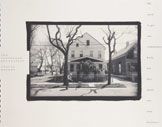
1992
Boosting the Manufacturing Sector’s Growth and Competitiveness

By the 1990s, northeastern Ohio, like the nation, had lost a significant number of manufacturing jobs. Nevertheless, more than one-fifth of all jobs in the region were still in manufacturing, and each year the sector generated more than $11 billion in payroll spending. Especially concerned about the retention and expansion of Cleveland-based manufacturing companies, the Cleveland Foundation provided more than $210,000 in 1992 to the Cleveland Advanced Manufacturing Program (CAMP) to enable the management and technology consultants to open a “teaching factory” for college students.
Working in collaboration with Cuyahoga Community College and Cleveland State University, CAMP’s Manufacturing Learning Center offered hands-on courses that supplemented the colleges’ curricula in order to produce the highly skilled workers needed to ensure the competitiveness and growth of Cleveland’s small to mid-sized manufacturing companies. A second grant of $200,000 in 1994 helped CAMP obtain $5 million in federal monies to expand the reach of the learning center, which had already gained national prominence for the effectiveness of its training, to older workers.
1992
Gateway’s Public Plaza and Art
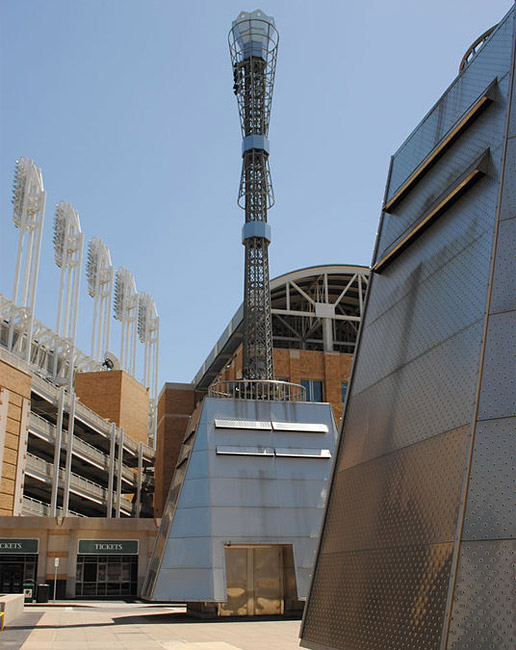

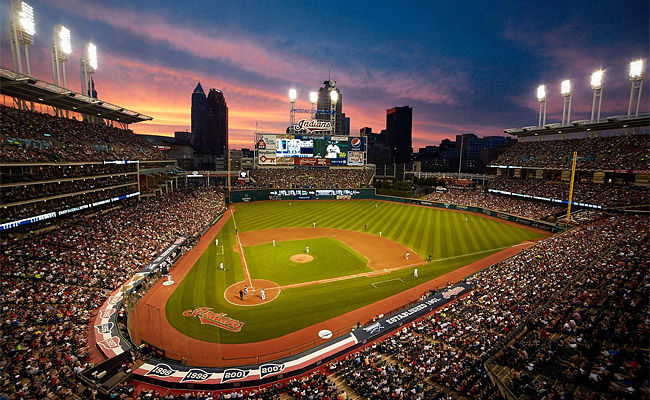
When completed in 1994, Gateway—the intended home of the Cleveland Indians’ new baseball stadium and the Cleveland Cavaliers’ new basketball arena—was expected to dramatically enhance downtown’s attractiveness as a destination for tourists and residents. To ensure that the public spaces surrounding the sports complex were as exciting as the stadium and arena themselves, in 1992 the Cleveland Foundation made a $750,000 grant and a $2 million program-related investment to provide Gateway Economic Development Corporation with the resources to design and construct gracious exterior plazas filled with public art.
A competitive application process overseen by Cleveland Public Art attracted 125 submissions, from which four artists were commissioned to create outdoor works that became overnight sensations with fans. R. M. Fischer’s Sports Stacks, incorporating elements of the complex’s exhaust system … Nancy Dwyer’s benches entitled Meet Me Here and Who’s on First? … and a planting bed/seating area decorated with Penny Rakoff’s historic photographs of the old Central Market that once occupied the site and Angelica Pozo’s ceramic tiles of market produce would likely not have been created without the support of the foundation’s “patient money.”
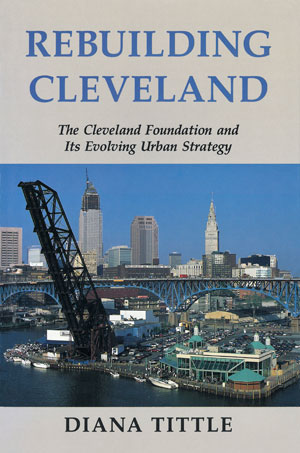
1993
African-American Philanthropy Committee
Raising Awareness of a Rich Tradition of Giving
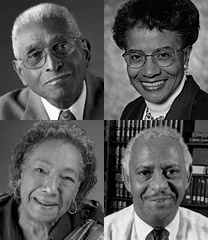
Beginning with the period before the Civil War, when their charitable focus was on abolishing slavery and securing aid for ex-slaves, through today, when their giving is likely to be combinations of individual and organization voluntarism and monetary or material support of beneficiaries well known to the donor, African Americans have a rich philanthropic history, according to Adrienne Lash Jones, associate professor emerita of African-American studies at Oberlin College.
Dr. Jones, who became a member of the Cleveland Foundation board in 1988, had made scholarly studies of African-American philanthropy, an area of history underappreciated by the larger society and perhaps even by some African Americans themselves. She recognized that the Cleveland Foundation was well positioned to help raise awareness among African-American Clevelanders about the societal impact and personal rewards of philanthropic engagement.
In 1993, Dr. Jones, several other current or former members of the foundation’s board, including the Reverend Elmo A. Bean (upper left), pastor of St. James A.M.E. Church, Doris A. Evans, M.D. (upper right), and businessman David G. Hill (bottom right), and a select number of other African-American civic leaders, including Cleveland Municipal Court judge Lillian W. Burke (bottom left), accepted the foundation’s invitation to form an African-American outreach advisory committee.
The group, which was renamed the African-American Philanthropy Committee in 2001, has sought, through a variety of educational activities, to nurture and broaden the charitable pursuits of African Americans who are generous supporters of their churches or active in fraternal or sororal organizations devoted to community service, and to inspire others who have yet to find a personally meaningful way to give back to their community.
The African-American Philanthropy Committee has recently begun to sponsor biannual summits on the use of wealth for charitable purposes. The 2010 and 2012 summits were open to members of the public and attracted a broad range of attendees, including young adults who were encouraged to perpetuate African-American traditions of philanthropy that can be traced back to (among other antecedents) the Free African Society, a mutual aid society founded by free blacks in Philadelphia in 1787.
1993
Holsey Gates Handyside
Donor of the First Historic Preservation Funds
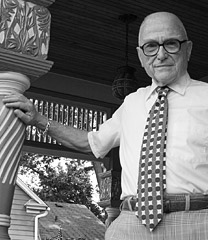
Cleveland native Holsey Gates Handyside spent more than 30 years in the U.S. Foreign Service, working primarily in the Middle East. The highlight of his career, which began in 1955 and took him to Egypt, Lebanon, Iraq and Libya, was his appointment to serve as ambassador of the West African nation of Mauritania.
Having traveled the world, Ambassador Handyside decided upon his retirement in 1985 to return to his hometown and devote himself to the preservation of his family home in the Cleveland suburb of Bedford. The Queen Anne Revival home, which stands at 762 Broadway Avenue and is listed on the National Register of Historic Places, was built in 1894 by his great-grandfather, Washington Gates, a member of the family that originally settled Gates Mills, Ohio, and later operated a mill near Bedford at the Great Falls of Tinker’s Creek.
In order to enable the maintenance of the Victorian-era residence by the Western Reserve Historical Society, Ambassador Handyside embraced the pioneering idea of using life insurance as a vehicle to establish a preservation fund at the Cleveland Foundation. With the foundation as the owner and permanent beneficiary of the policy, the insurance premiums paid by the donor are tax-deductible. Established in 1993, the Holsey Gates Handyside Charitable Remainder Trust supplemented a smaller historic preservation fund—the foundation’s first so-designated fund—that Handyside had previously created in 1988. A gift of life insurance, the former diplomat had recognized, was a “problem-free way to produce substantial dollars for a desired charitable enterprise.”
1993
Reinhold W. Erickson, D.D.S.
Turning Church Spires into Glorious Nighttime Landmarks
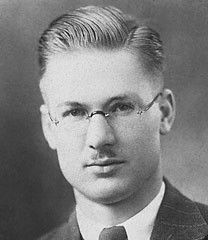
Reinhold W. (Ray) Erickson (see video) had an unusual dream. He wanted to light up the church steeples of Cleveland that can be seen from Interstate 71. Erickson wasn’t particularly religious, according to his attorney. He simply found the spires charming and thought it was a shame they couldn’t be enjoyed at night.
A dentist who practiced in East Cleveland, Ohio, for 40 years after his graduation from the dental school of Western Reserve University, Erickson died without kin in 1992 at the age of 87. Counting on the Cleveland Foundation to help him realize his dream, he directed that income from his life savings of $370,000 should first be used to illuminate as many of the 21 towers visible from the interstate as possible. (Thereafter, the monies were to be used to advance health education.) The Cleveland Foundation honored the last wishes of this quiet-living retiree, establishing the Reinhold W. Erickson Fund in 1993 to pay for the lighting and installation costs. The Cleveland Restoration Society oversaw the work.
The imposing Romanesque spire of the Pilgrim Congregational Church in Tremont became the first “Beacon of Hope,” as the lighting program was named. To date, 17 churches have received Erickson’s gift of light, ranging from Trinity Episcopal Cathedral (the downtown Cleveland home of the Episcopal Diocese of Ohio) to Tremont’s Zion United Church of Christ, founded by German immigrants in 1867.
1995
“National Heritage Corridor” Designation for Ohio & Erie Canalway
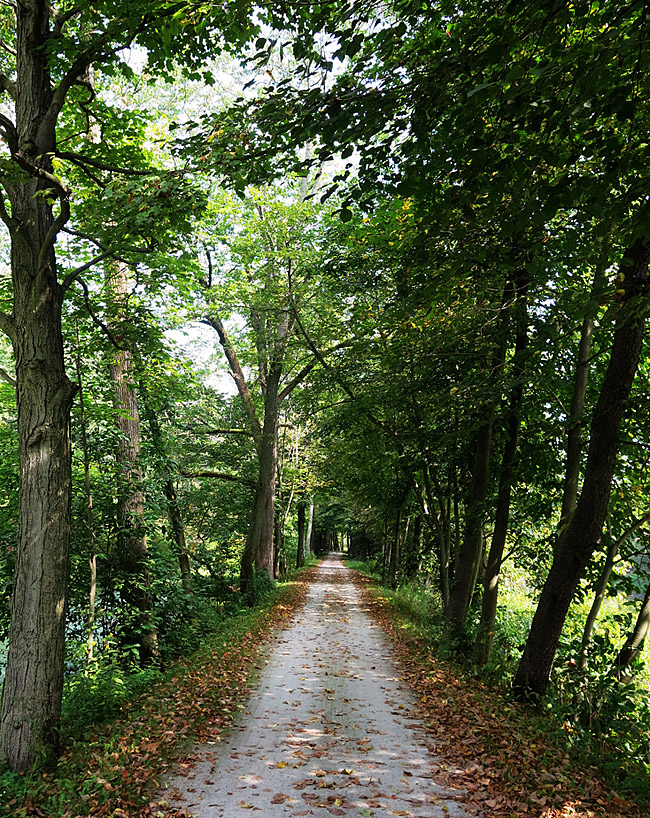
The Ohio Canal Corridor Inc. received a $40,000 foundation grant to support its efforts to secure a “National Heritage Corridor” designation for the historic Ohio & Erie Canal route, extending south from Lake Erie through the Cuyahoga River Valley to New Philadelphia, Ohio. Congress awarded the canalway this recognition in 1996, paving the way for Ohio Canal Corridor Inc. to receive $1 million in federal funds. A second $40,000 grant in 1997 enabled the heritage corridor’s chief advocacy and management group to develop a strategic plan for using these funds to advance development of the Ohio & Erie Canal Towpath Trail, an envisioned 100-mile-long scenic hiking and biking trail.
1996
Charles A. Ratner
Board Chairman, 1996–2000
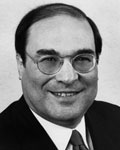
Charles A. Ratner is chairman of the board of Forest City Enterprises Inc. He served as the company’s chief operating offer from 1993 to 1995, and then as president and chief executive officer for 16 years. During his tenure as CEO, Ratner guided Forest City on a growth trajectory that saw the company’s real estate assets at cost increase from $2.4 billion to $11.8 billion, earnings before depreciation and taxes from $82 million to $309.9 million, and market capitalization from $330 million to more than $3 billion.
An active member of the community, Ratner serves on the boards of the Greater Cleveland Partnership, Musical Arts Association and United Way Services. He is on the board of the Jewish Community Federation and a trustee of the Mandel Associated Foundations and David and Inez Myers Foundation. Ratner is the former chairman of the board of trustees of the Jewish Community Federation of Cleveland and the United Way, and past president of the Jewish Education Center of Cleveland. He graduated from Colgate University and New York University School of Law.
1996
Reforming Public School Governance
The directors of the Cleveland and George Gund Foundations chaired a nonpartisan study commission that led to voter approval of mayoral control.
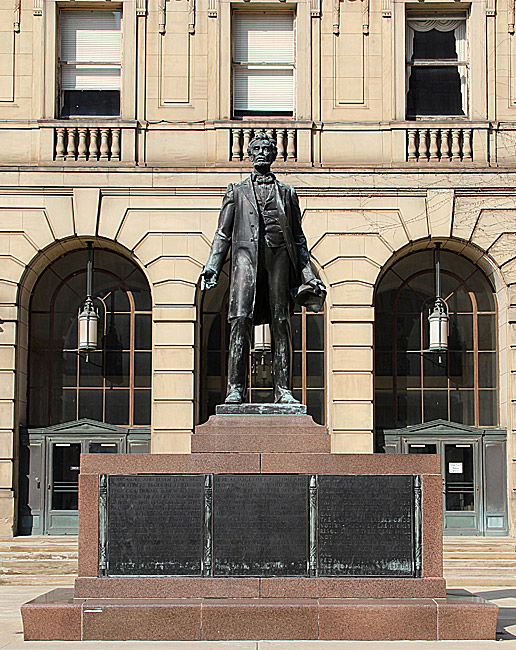
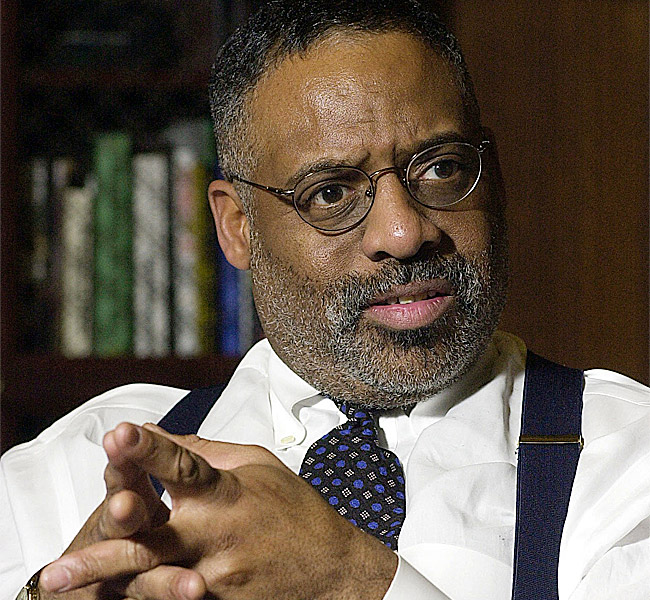
Steven A. Minter felt duty-bound to accept Cleveland mayor Michael R. White’s request that he co-chair the Mayoral Commission on School Governance in 1996. The Cleveland Foundation had a long tradition of leading efforts to improve the public schools, and the foundation’s seventh chief executive was personally devoted to education reform.
During the first three years of Minter’s tenure, the foundation had stepped forward to make the lead commitment to a $16 million philanthropic-corporate partnership called the Cleveland Initiative for Education (CIE), which sought to establish universal postsecondary scholarship and employment programs requested by the system’s superintendent as incentives for his students. Minter deemed the initiative so critical to the well-being of the city and its children that he joined the CIE board and helped guide its evolution into a broad-based coalition working to effect school improvement on multiple fronts.
Minter’s new assignment came as a result of a proposal floated by two Ohio General Assembly members recommending that control of the state’s failing public school systems be vested in the top elected official of the system’s home city. If adopted (as similar legislation had been in Chicago), Clevelanders would no longer elect school board members.
The prospect of losing hard-won voting rights did not sit well with many of Cleveland’s African-American leaders, and the leaders of the Cleveland Teachers Union were opposed to ceding control of the schools to a politician with whom they had publicly wrangled over contract negotiations. Yet “mayoral control” seemed to be making a difference in the performance of the Chicago schools. A nonpartisan study of the concept, Mayor White recognized, might help to ensure it a fair hearing in the General Assembly. To chair the study, he looked to civic leaders who could be counted on to do a thorough examination and who would be perceived as having no axes to grind: Steve Minter and David Bergholz, then executive director of the George Gund Foundation.
Like all champions of public education, Minter had watched with increasing concern the comings and goings of 14 Cleveland schools superintendents and the dysfunction of the system’s elected board. The board proved incapable of heading off either state control, which the federal courts imposed on the system in 1995, or the “fiscal emergency” declared by the state auditor in 1996. Finding these developments intolerable, Minter had given considerable thought to the issue of school governance and believed that mayoral control might be a workable alternative.
To inform its deliberations, the Mayoral Commission on School Governance conducted research, sought perspective from national experts and held public hearings that brought out contentious opposition to the concept of an appointed school board. Minter knew the hearings would change no minds, but believed them necessary to the integrity of the study process. He did not want it said that the commission had ignored legitimate concerns. Minter took special pains to solicit the feedback of then U.S. Congressman Louis Stokes, who had represented Cleveland’s 11th District since 1970 and whose opinions counted with both the public and the powers-that-be. The congressman helped to shape a positive outcome by vetoing the idea of having suburban representatives on the appointed board and making his opposition to mayoral control known without mounting the barricades.
The commission issued its final report in December 1996, arguing that “those involved in governance must have the ability to make a variety of financial, policy and other strategic decisions that will effectively chart the correct course of the Cleveland Public Schools…. We believe these types of skills can best be brought to bear through an appointed board structure.” The commission co-chairs succeeded in moving “the debate beyond the political to considerations of management and education,” according to Mayor White.
The Ohio General Assembly ushered in a new day for the Cleveland public schools by enacting legislation that enabled the city’s mayor to name a chief executive officer of the public schools and appoint a nine-member board of education. The legislation called for a referendum on mayoral control after four years. When the vote came on November 5, 2002, more than 70 percent of the city’s electorate said yes to the perpetuation of the untraditional governance model that has been essential ever since to the initiation of substantive efforts to improve Cleveland’s public schools.
1996
Spending policy revised to increase income available for grantmaking
The new formula for calculating available income is based on the endowment’s performance over time.
1997
Public Funding for Arts and Culture
Cuyahoga County is now almost without peer in the level of public funding provided to arts organizations and individual artists.
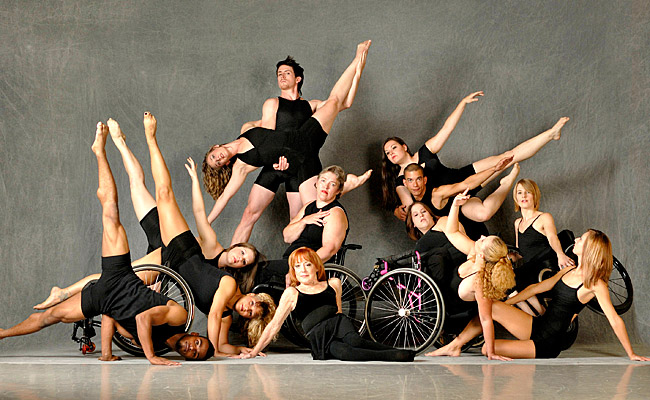






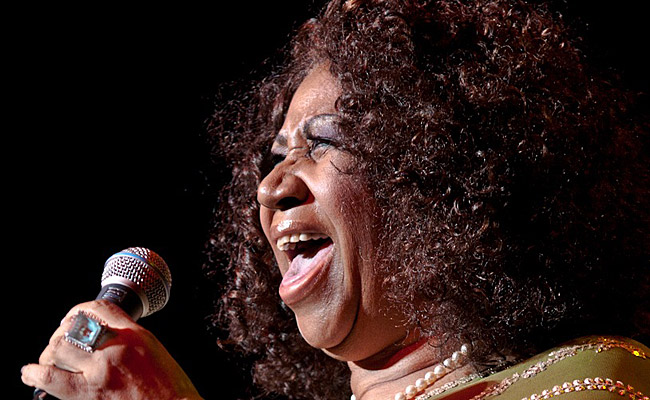
In late 1996, the Cleveland Foundation Civic Study Commission on the Performing Arts issued a warning that the stability and permanence of cultural assets throughout the seven-county region were under threat. In response, the foundation teamed in 1997 with the George Gund Foundation and the Cleveland Cultural Coalition to convene the Community Partnership for Arts and Culture (CPAC), a community-wide group of committed arts leaders, practitioners and advocates, to develop a regional strategic plan to address the sector’s needs.
With support from the two foundations, CPAC commissioned unprecedented research on the value of arts and culture to the regional economy. Published in 2000, the research documented that the sector annually contributed $1.3 billion to the local economy and that arts and cultural organizations employed about 3,700 full-time equivalent staffers, who earned salaries totaling more than $105 million.
CPAC simultaneously led a two-year engagement process in which more than 7,000 northeastern Ohio residents expressed their views on how to more effectively connect people to arts and culture, make that sector a partner in neighborhood, community and regional development, and secure financial and other resources needed to sustain and grow the sector.
Under the leadership of Thomas Schorgl, CPAC became a nonprofit organization charged with carrying out the community’s strategic plan. Among CPAC’s many subsequent accomplishments, none was more critical than its championship of public financing of the arts and culture, an endeavor endorsed by a $300,000 Cleveland Foundation grant in 2003 (see video).
At the dawn of the new millennium, Cuyahoga County had among the lowest levels of public support for the sector of any peer community. CPAC initiated conversations with the county commissioners that led to their agreement to place on the 2004 ballot a joint economic development and arts and culture issue that would have provided the latter sector with $10 million annually via a property tax. Issue 31 failed by a slim margin.
CPAC rallied county officials and state legislators around a new funding plan, which required the Ohio General Assembly to create a special-assessment district for arts and culture in Cuyahoga County. Issue 18, which called for a 10-year increase in the cigarette excise tax to fund the district, was placed on the ballot in 2006. Thanks to the hard work of CPAC’s dedicated corps of arts advocates, this time voters approved the funding plan.
Today, Cuyahoga County’s arts and cultural organizations receive public monies for operations and programs, awarded annually in a competitive application process. To date, $112 million has been distributed to 237 organizations, large and small. Each year, Cuyahoga Arts & Culture, the county agency that has assumed responsibility for inspiring and strengthening the community through judicious investment of the excise tax funds, also presents $20,000 fellowships to 20 individual artists whose work has enriched the quality of life here.
Cuyahoga County is now almost without peer in providing a high level of public funding to maintain the vibrancy of the arts and cultural assets within its jurisdiction. In turn, public support has contributed to the strengthening of the arts and culture sector as an economic driver. The 182 nonprofits that received public funds from Cuyahoga Arts & Culture in 2011 employed more than 8,700 people and accounted for more than $286 million annually in direct spending, including more than $140 million in salaries.
1997
Trust for Public Land’s Local Field Office

The Trust for Public Land (TPL), a national leader in land conservation based in California, has been working in Ohio since 1974. With the support of a $100,000 grant from the Cleveland Foundation in 1977, the organization played a key role in acquiring 30,000 acres of land for the Cuyahoga Valley National Park around Blossom Music Center, at the former site of the Richfield Coliseum, and along the Ohio & Erie Canal Towpath Trail, a scenic hiking and biking trail.
With foundation support, TPL opened a Cleveland field office in 1997, facilitating its efforts to connect Cleveland residents to Lake Erie, the Cuyahoga River and the national park. TPL-Cleveland subsequently acquired land for the Lake Link Trail connecting the river valley to Cleveland’s near west side and purchased property needed to extend the Towpath Trail through Cleveland’s industrial Flats. In 2006, the foundation made a $1 million program-related investment in TPL’s Ohio Land Protection Fund, a revolving loan fund that allows the organization to act quickly to protect environmentally sensitive land.
1998
Maintaining the Excellence of the Lively Arts
Over the last quarter century, the foundation has awarded grants totalling almost $200 million to sustain the vibrancy and viability of this critical sector.
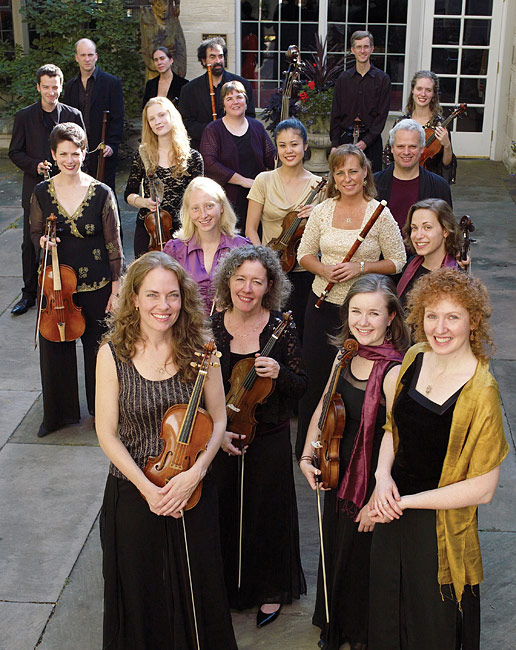
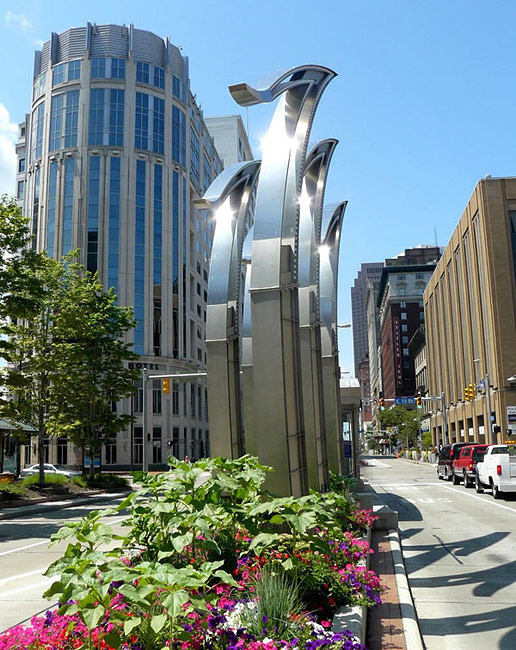

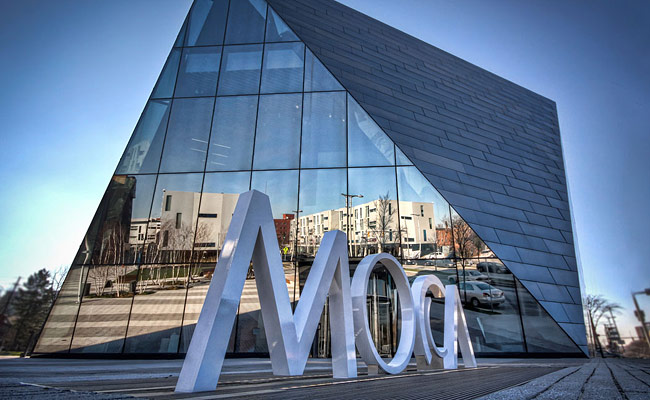

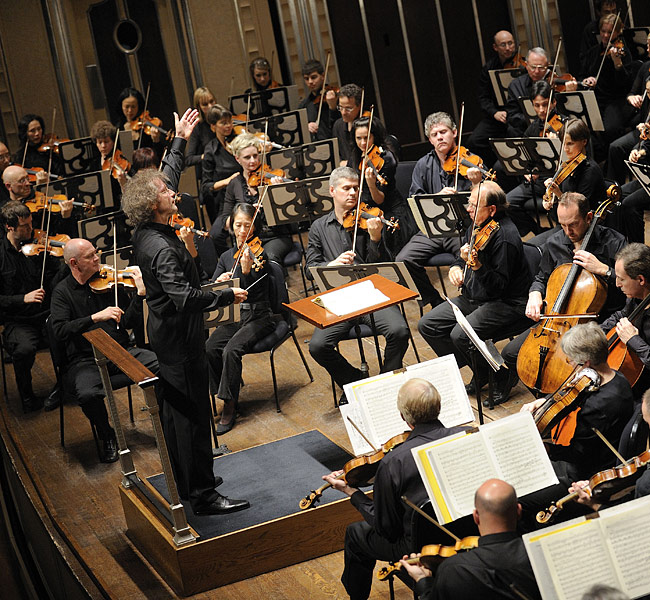
The first in-depth examination of the well-being of the area’s performing arts organizations in 20 years was undertaken by the Cleveland Foundation in 1996. The Cleveland Foundation Civic Study Commission on the Performing Arts issued two major recommendations: If the excellence of the region’s orchestral and chamber ensembles, opera companies, theaters, and dance presenters and troupes was to be maintained, a substantial renewable source of public funding of the arts must be secured, and the leadership, business acumen and operational effectiveness of lively arts organizations must be dramatically improved.
The Cleveland Foundation’s grantmaking in arts and culture traditionally had focused on nurturing artistic aspirations and organizational growth. In 1999, the foundation revised its strategy, unveiling the first of a continuing series of initiatives aimed at maintaining the excellence and stability of the region’s leading arts organizations. The first initiative, dubbed BASICs (“Building the Arts’ Strength in Cleveland”), was a $10 million commitment to foster the professionalism of 14 participating organizations. The grantees received operating support for the duration of the five-year initiative and one-time grants to strengthen financial management, strategic planning or information technology.
To continue the progress generated by BASICs, in 2004 the foundation committed $5 million to implement an Arts Advancement Program. The three-year initiative sought to encourage operating efficiencies, develop highly skilled leaders and improve the financial positions of six mid-sized arts organizations. Deemed ready for additional capacity-building by nationally recognized experts in arts management, Apollo’s Fire (Cleveland Baroque Orchestra), the Cleveland Film Society, Cleveland Public Art, Great Lakes Theater Festival, MOCA (the Museum of Contemporary Art Cleveland) and Young Audiences of Greater Cleveland received technical assistance, working capital and grants to underwrite needed staffing, planning and feasibility studies, and marketing.
Sustaining Excellence, an invitation-only program of special support, was launched in 2008 to counter the effects of the economic downtown. This initiative extended a safety net of $6.6 million in grants to continue the movement of a spectrum of arts organizations toward self-sufficiency. In 2011, the foundation kicked off Engaging the Future, a three-year initiative that enlisted 11 established arts and cultural organizations of varying sizes—from the Cleveland Orchestra to GroundWorks DanceTheater—in an all-out effort to adapt to rapidly shifting demographics, technologies and tastes. The goal of this initiative, which provided $1.44 million in first-year grants, is to give the participating organizations the time and means to attract the younger, more diverse, more tech-oriented audiences they will need to survive for generations to come.
Over the last quarter century, the Cleveland Foundation has awarded grants totaling almost $200 million to sustain the vibrancy and viability of the region’s arts and cultural amenities. The foundation led its peers in deciding at the turn of the 21st century to redirect significant resources to building the management capacities of local arts organizations. It remains at the cutting edge in recognizing the cultural and economic imperative of providing long-term support for arts professionalization and new-audience development.
1999
Helping Young Children Thrive
Cuyahoga County’s early childhood development program, a reform initiative advocated by the foundation, has received recognition as a national model.



Aware that many Cleveland youngsters lacked basic necessities and proper parenting, the Cleveland Foundation helped to move the community closer to the day when every child born in Cuyahoga County receives the care necessary to thrive. Acting on new research showing the years from birth to five to be the most critical developmentally, the foundation successfully advocated for a major redesign of the county’s child welfare services. Rather than merely treating the problems presented by neglected or abused children, county officials collaborated with the foundation’s senior program officers for social services and civic affairs on a new delivery system aimed at fostering good parenting practices and preventative care.
The resulting early childhood development initiative, which came to be called “Invest in Children,” was launched in 1999. Parenting information placed in the hands of the families of all babies born within the county’s boundaries underpinned the program. Diagnostic and follow-up visits to newborns’ homes by qualified nurses directed families, as needed, to existing support services, such as healthcare insurance and quality day care. County, state and federal governments teamed to contribute $30 million to the $40 million rollout. The foundation authorized a start-up grant of $3.5 million and took the lead in raising the remainder of the $10 million needed to sustain the program during its first three years, lining up 23 corporate and philanthropic partners. Invest in Children, which received national recognition as a model for other urban areas, is now an integral component of Cuyahoga County’s social services system.
1999
Return of Farming to the Cuyahoga River Valley

The Cleveland Foundation’s interest in preserving the unique natural and cultural heritage of the Cuyahoga River Valley dates back to its support in the mid-1970s of the Cuyahoga Valley Association (CVA), a citizens advocacy group that played a key role in the creation of the Cuyahoga Valley National Park in 1975. In addition to providing operating funds, the foundation supported CVA’s efforts to protect the perimeter of the newly established park from commercial exploitation.
Over the years the foundation has helped the park enhance its infrastructure and programs. Perhaps the most innovative of these improvement projects is the Countryside Initiative, which was undertaken to preserve the rural heritage of the Cuyahoga Valley. Planning for the project began in 1999 with a Cleveland Foundation grant of $100,000. Believed to be the only endeavor of its kind in the country, the initiative has nurtured the return of agricultural food production to historic farmlands located within the boundaries of what is now the Cuyahoga Valley National Park and provided park patrons with opportunities to visit a working farm.
The Countryside Conservancy, the project’s manager, set a goal of rehabilitating the 20 or so old farmsteads within the park’s boundaries and leasing them to persons committed to practicing sustainable agriculture. Long-term leases are awarded on a competitive basis, and the first request for proposals went out in 2001. A second foundation grant of $80,000 in 2003 gave the initiative, which was still in its formative stages, time to prove its effectiveness. To date, 11 farms have been placed back into fruitful production.
2000
Catharine Monroe Lewis
Board Chair, 2000–2003
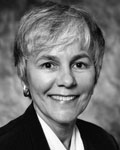
Cathy M. Lewis has played a leadership role with many Cleveland organizations. She was a member of the Citizens Committee on AIDS/HIV, which devised Cleveland’s strategy for AIDS prevention, education and service delivery, and chaired its successor organization, the AIDS Funding Collaborative. She serves on the board of the Institute for Research on Unlimited Love and was on the advisory committee for the Center for Global Child Health at Case Western Reserve University.
A graduate of Smith College, Lewis has served as president of Rainbow Babies and Children’s Hospital, vice chair of the Baldwin Wallace College board of trustees, and board member of the Gund Foundation. She received the Creative Philanthropy Award from the Women’s Community Foundation, the YWCA’s Career Women of Achievement Award and the March of Dimes Franklin Delano Roosevelt Award for Community Service. In 2007, she received the Ohio Philanthropy Award from Ohio Grantmakers (now Philanthropy Ohio).
2000
Rolling grant reviews replace quarterly decision-making
More timely review procedures speed the disbursement of funds to grantees.
2001
Promoting Green Buildings
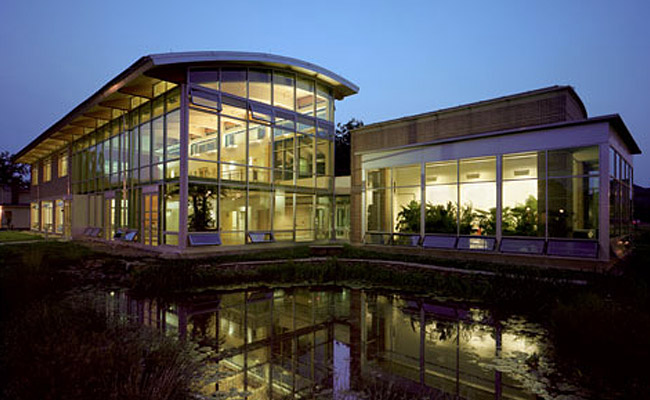

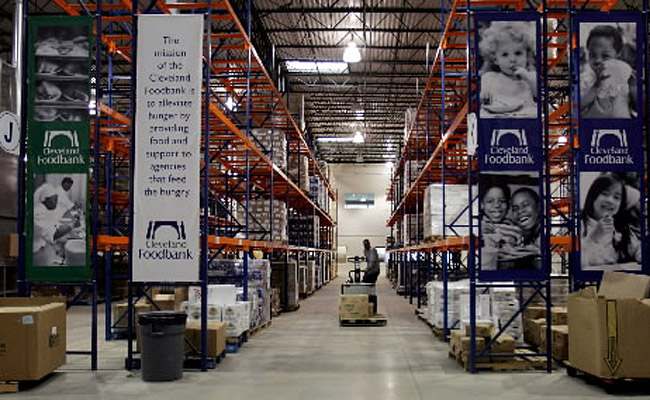
The Cleveland Foundation provided critical early-stage programmatic support over several years to the Cleveland Green Building Coalition, formed in 1999 by the Oberlin College environmental studies program to educate community and real estate leaders about the economic, environmental and health benefits of green building. The foundation’s first grant of $50,000 was awarded in 2001, several years before the movement to advance sustainable development gained a national advocacy arm.
The coalition, which is now a chapter of the United States Green Building Council, applied the foundation’s initial grant toward the renovation of a 1914 Ohio City bank building as a collaborative work space for its staff and volunteers and several other environmental groups. The Cleveland Environmental Center at 3500 Lorain Avenue was also a landmark demonstration project—Ohio’s first commercial retrofit of a historical building with energy-saving features.
2001
Updated Approaches to Successful Aging
Greater Cleveland began mobilizing the resources needed to serve the coming explosion of aging but still active adults with the foundation’s encouragement.

Every single day for the next 10 years, 10,000 Americans will turn 65. The Cleveland Foundation began laying the groundwork early in the 21st century for the community to assess and develop the resources that will be needed to serve this explosion of aging but still active adults. In 2003, the foundation launched a three-year initiative called Successful Aging that provided $4 million to implement the recommendations of a task force of community leaders and professionals convened in 2001 to discuss ways to engage seniors through volunteering and civic involvement, lifelong learning and job opportunities.
The first grants enabled Cuyahoga Community College, Fairhill Center for Aging, Goodrich-Gannett Neighborhood Center, the Murtis H. Taylor Multi-Service Center, the OASIS Institute and the Orange City School District to establish lifelong learning and development centers. The centers, most of which began operations in early 2004, are places for older adults to congregate, network, participate in learning activities and connect with opportunities to give back to the community.
An assessment tool was created to help every municipality in northeastern Ohio evaluate and address how well they meet the needs of their aging populations in three key areas: home life, community life and mobility. Home life gauges the affordability and availability of appropriate housing choices. Community life measures the availability and accessibility of social and safety services. Mobility assesses how easy it is for seniors to get around in their communities.
Finally, the initiative gave nonprofit organizations the means to create or expand programming that serves seniors. For example, the Retired Senior Volunteer Program of Cleveland (RSVP) received a grant to enlarge its Experience Corps. The program, which began in 1997, mobilizes senior volunteers to tutor grade K-3 students in Cleveland schools. With the foundation’s support, RSVP increased the program’s reach from six to 16 schools and from 60 to 260 volunteers. Experience Corps not only helps improve children’s reading skills, but also provides older individuals with meaningful volunteer activities, which have been shown to improve physical and mental health.
Building on the concept of providing opportunities for seniors to give back to their communities, the Cleveland Foundation announced in 2013 that it will take a lead role in developing an “encore career” program for Greater Cleveland. The foundation will consult with Encore.org, a San Francisco-based nonprofit, on the best means locally to help find second careers in public service for individuals who may be close or at retirement age, but still wish to be productive.
2002
Board expanded from 11 to 15 directors
A larger board gives the foundation the benefit of a greater range of perspectives.
2002
Board responsibilities refocused on identification of programmatic priorities
2002
Empowering Grassroots Citizens and Groups
The foundation’s Neighborhood Connections grant program has tapped the creativity and capabilities of everyday folks.
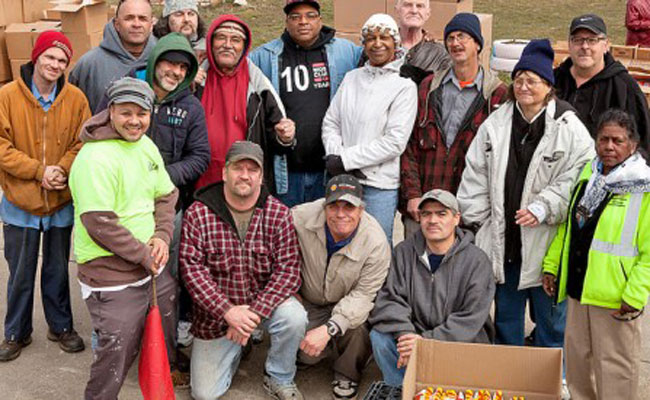
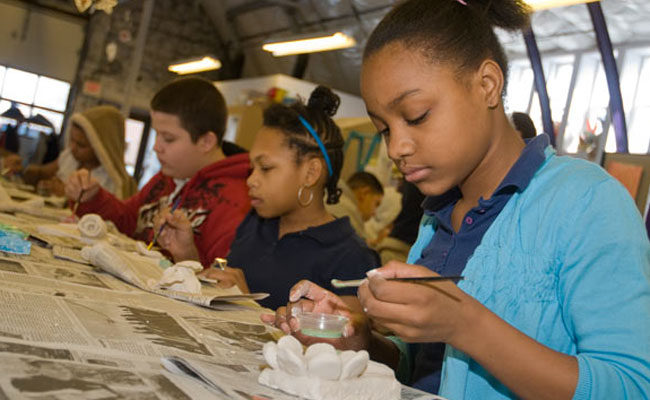
At the time of its creation in 2002, Neighborhood Connections was the only known small-grants program administered by a private philanthropy that delegated total decision-making authority to ordinary citizens. An outgrowth of the Cleveland Foundation’s long-term commitment to physical revitalization and leadership development in Cleveland’s neighborhoods, Neighborhood Connections started with an initial fund of $1.35 million to be distributed over three years to grassroots groups judged to have the most compelling ideas for improving their particular sections of the city. The program was conceived in part to build on the successes of Cleveland’s neighborhood redevelopment movement, which had gained critical mass as the result of sustained private and public investment in the capacity of local community development corporations catalyzed by the Cleveland Foundation and the George Gund Foundation.
Neighborhood Connections aimed to expand the scope of revitalization activities by tapping into the aspirations and creativity of block clubs, ad hoc bands of neighbors and concerned individuals. A committee of representative neighborhood residents selected by the Cleveland Foundation from a community-wide pool of nominees determines which improvement projects should receive grants of $500 to $5,000. A required dollar-for-dollar match serves to build the capacity of the grantees and to encourage them to partner with more established organizations.
Now in its 11th year, Neighborhood Connections has provided $6.5 million to help realize 1,800 project proposals. By showing respect for the vision and capabilities of everyday folks, this innovative program has changed the way things get done in Cleveland.
2002
Stimulating Economic Growth
The foundation has invested more than $85 million in a concerted attempt to foster innovation, entrepreneurship, business attraction, global competitiveness and the development of new high-potential industry clusters.
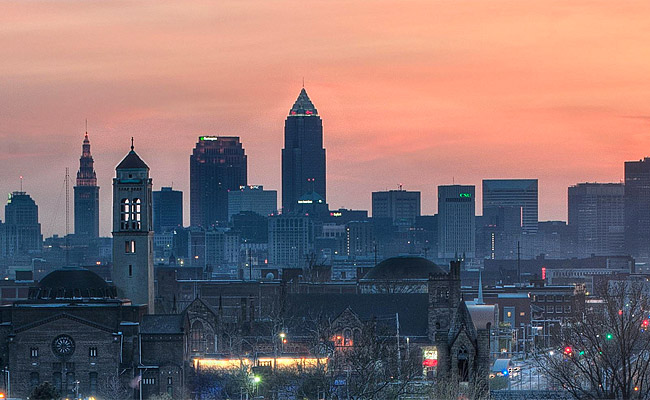
 Entrepreneurship: Wood Trac, an affordable, drop-ceiling system developed and marketed by Sauder Woodworking, a family-owned business in Ashland, Ohio
 Innovation: CleveMed’s wireless sleep monitor
 Business growth: The Greater Cleveland Partnership’s business development team
 Business attraction: The Global Center for Health Innovation
Job and business creation has been a top priority of the Cleveland Foundation since 1985, when the foundation’s board responded to a growing sense of urgency about the region’s stagnation by elevating economic development grantmaking to a full-fledged program area. In 2002, the foundation recruited a senior fellow for economic development, who began meeting with business, political and academic leaders to formulate a comprehensive strategy. The foundation has since invested more than $85 million in helping to create a network of programs that support innovation and entrepreneurship, business attraction and growth, advancements in manufacturing, global competitiveness and the development of new high-growth industry clusters, including biotechnology and advanced energy.
These activities are carried out by a number of new intermediaries, such as BioEnterprise, Global Cleveland, JumpStart and MAGNET. All have received foundation grants to support their start-up, early-stage operation and programmatic expansion.
More recently, the Cleveland Foundation has sparked the creation of innovative programs specifically designed to create good jobs for city residents, including employee-owned business cooperatives and a microlending fund to seed the business ideas of grassroots entrepreneurs. Replacing the tens of thousands of manufacturing positions lost throughout the region since the 1970s remains a work in progress, but the intense focus on economic development has produced measurable results. One hopeful statistic: Manufacturing jobs were up by 1,000 between October and October 2013.
2003
A Greater University Circle
An unprecedented collaboration is attracting capital investments, jobs and residents to the Circle and surrounding neighborhoods.
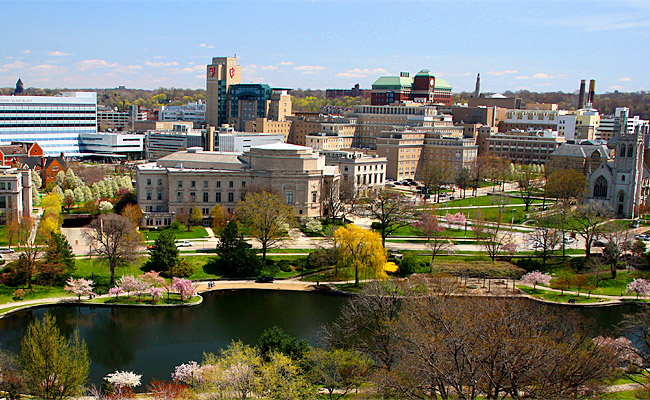 Wade Lagoon, the tranquil heart of Cleveland’s cultural hub
  Participants in Parade the Circle, an annual celebration of creativity
  University Circle’s cultural institutions have long been renowned for their enriching educational activities.
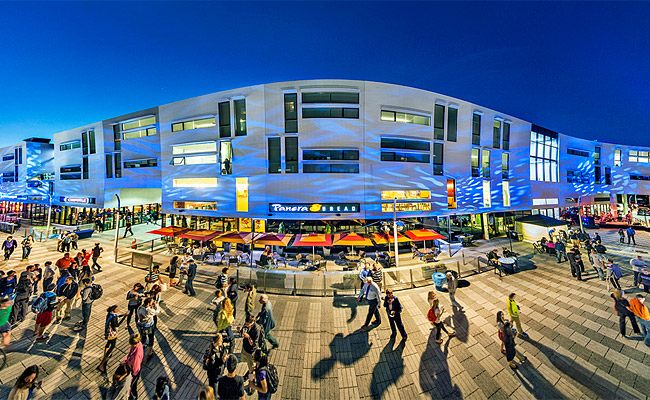 Uptown, the Circle’s exciting, new high-density neighborhood, has all the amenities associated with urban living.
 Proposed townhomes for East 118th Street
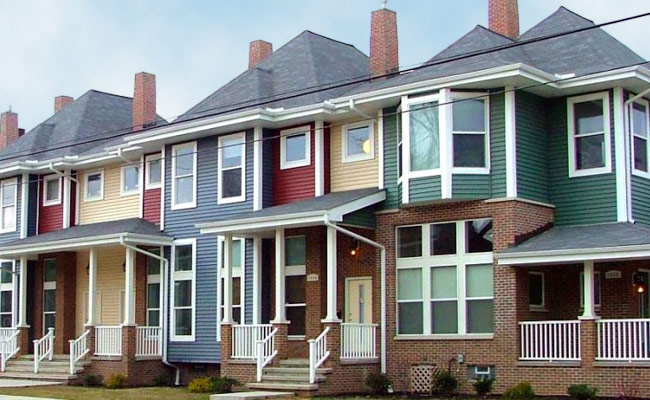 Sold out! Heritage Lane townhomes, built within walking distance of the Circle
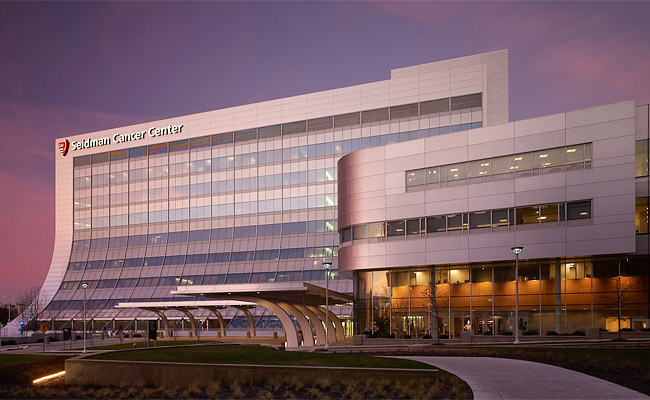 Circle institutions have invested or are planning to invest billions in capital improvements, such as University Hospitals of Cleveland’s new Seidman Cancer Center.
 Upper Chester, which abuts the Cleveland Clinic, is the next Circle neighborhood slated for redevelopment.
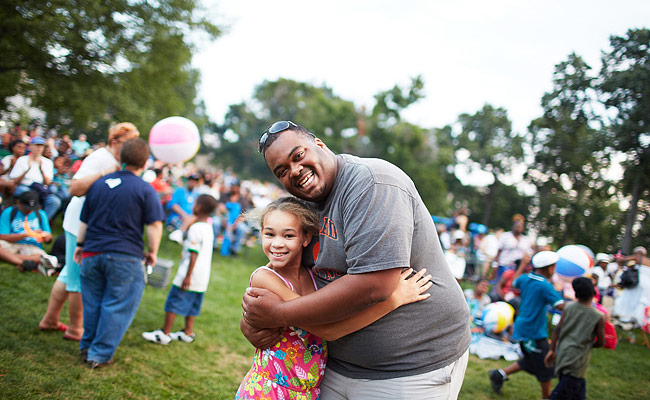 Wade Oval Wednesdays, summertime’s popular outdoor music series
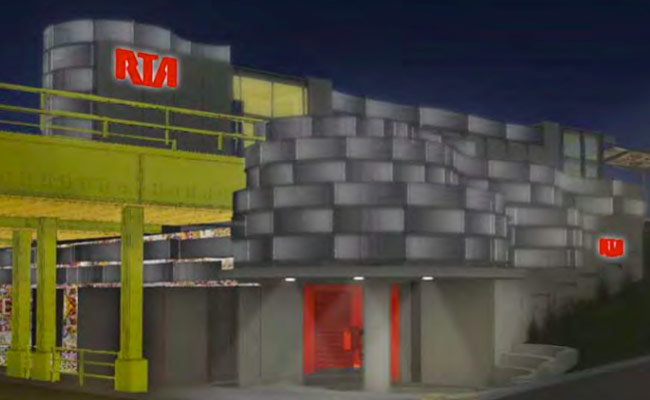 Artist’s conception of the new Regional Transit Authority station planned for Mayfield Road in Little Italy
 27 Coltman, a luxury townhome development on the eastern boundary of University Circle
 MOCA Cleveland’s faceted, mirrored, four-story art gallery anchors the Uptown development.
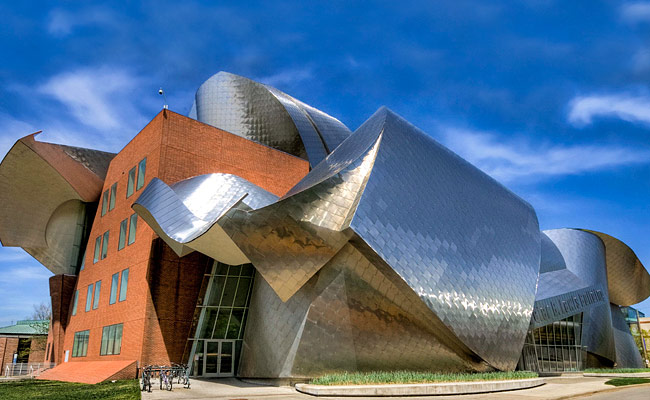 The Peter B. Lewis Building, designed by Frank Gehry, is the home of Case Western Reserve University’s Weatherhead School of Management.
 A new generation of Circle fans
For decades, the 35-plus educational, medical and arts institutions based in University Circle had worked collaboratively on improvements within the district. Despite making several attempts to combat blight in nearby Hough with small-scale housing construction projects, University Circle remained an island of vibrancy surrounded by areas of disinvestment. With $3 billion in new construction under way or planned by University Circle institutions in the early 2000s, the Cleveland Foundation seized a once-in-a-generation opportunity to extend anchor-institution investment into a half-dozen nearby neighborhoods, whose residents are predominantly low-income and working-class African Americans.
In 2003, the foundation’s CEO invited the CEOs of Case Western Reserve University (CWRU), University Hospitals of Cleveland and the Cleveland Clinic Foundation to come to the table and help identify new ways to collaborate on the improvement of Greater University Circle. Agreeing that the future of their institutions and the Circle was inextricably linked to the health of the surrounding communities, the four CEOs formed the core of a planning task force that grew to include public, private and grassroots representatives with a stake in attracting new investment, residents and visitors to the Circle and its immediate environs: Buckeye-Shaker, East Cleveland, Fairfax, Glenville, Little Italy and Hough.
Fueled by the Cleveland Foundation’s commitment of $1.6 million toward planning, the Greater University Circle Initiative, a multipronged strategy to transform the lives and environment of those who live, work and spend leisure time in or near the Circle, was launched in 2006. The deteriorated condition of the Circle’s transit infrastructure was the first project to be tackled. The Regional Transit Authority had set aside the monies to modernize RTA stations at Cedar Hill and at Euclid Avenue and East 120th Street, but had been unable to forge a consensus as to how best to improve the stations’ functioning and appearance.
With the support of a $1.6 million transportation fund raised by the initiative’s leadership group, RTA secured the design and engineering assistance needed to reconcile divergent opinions and move ahead with the projects. The Cedar Glen bus station and the tangled intersection at East 105th Street and Martin Luther King Jr. Drive were also slated for remodeling to relieve congestion. Representing $37 million in capital improvements, each of these projects will help to reduce the physical barriers that have long isolated University Circle from neighboring communities.
The desirability of those neighborhoods received a boost in 2007, when the Circle’s anchor institutions joined with a coalition of sympathetic private and philanthropic funders to unveil Greater Circle Living, a $4 million incentive program to stimulate investment in and rehabilitation of the adjoining neighborhoods’ housing stock. Full-time employees of 35 participating Circle institutions are now eligible to receive a forgivable, no-interest loan toward the purchase of an owner-occupied home in Greater University Circle. Subsidies for rental units and exterior repair are also available. More than 225 individuals, couples and families have taken advantage of these incentives to reside near their workplaces, bringing new life to the area.
Appreciating that home ownership requires a good-paying job, the Greater University Circle Initiative has taken the first steps toward creating a network of Evergreen Cooperatives, environmentally sustainable businesses established to employ residents of adjoining neighborhoods. Based on a Spanish model, the cooperatives give workers a chance to build wealth through an equity stake in the enterprise. Three Evergreen Cooperatives have opened since 2009. An industrial-scale laundry service, a hydroponic greenhouse and a company specializing in the installation of solar panels began operations with the support of a $1.15 million in grants from the Cleveland Foundation. The agreement of the Circle’s anchor institutions to redirect a portion of their combined $3 billion in annual procurement monies to buy goods and services from the Evergreen Cooperatives underpins the feasibility of this potentially revolutionary undertaking.
The initiative’s most visible accomplishment is Uptown, a high-density, mixed-use superblock at the eastern edge of the CWRU campus. The Cleveland Foundation set the redevelopment in motion with a $1 million grant for urban design services and made a series of loans totaling $4 million to support the initial phase of construction of the $150 million project, which has brought new apartments, shops, restaurants and services to the important but formerly lackluster intersection of Mayfield Road and Euclid. The foundation contributed another $1 million to the capital campaign for MOCA Cleveland, a contemporary art center whose faceted, black-mirrored four-story gallery now anchors Uptown.
Buoyed by the initiative’s progress and impact, its leaders agreed in October 2011 to continue the collaboration for at least three more years. Next project: planning for the redevelopment of Upper Chester, a prominent but long-blighted area of Hough that lies between the Cleveland Clinic and the western border of University Circle. CWRU’s decision to locate its new $50 million medical education building on the Cleveland Clinic campus could be transformative for the neighborhood to the north. One possible scenario envisions the redevelopment of the northern stretch of Chester Avenue into a “medical village” comprised of housing and services for medical students and health care professionals anchored by the medical school, which will be constructed at Euclid Avenue and East 93rd Street with the support of a $10 million grant from the Cleveland Foundation.
2003
Championing Advanced Energy
The foundation’s quest to make Greater Cleveland a hub of wind energy research, manufacturing and generation is moving closer to reality.
 The foundation’s vision of creating a wind farm in Lake Erie is moving closer to reality.
 The Great Lakes Science Center’s wind turbine
 A new company that makes and installs solar-panel arrays has been created with foundation support.
 The foundation helped to draft and win passage of a clean energy law for Ohio.
The Cleveland Foundation was the first to envision the rise of an advanced energy industry in northeastern Ohio. In a test of the attractiveness of solar power, the foundation spearheaded the creation of Evergreen Energy Solutions, a worker’s cooperative that designs and installs photovoltaic solar-panel arrays for institutional and commercial customers. Given the region’s manufacturing heritage, the design and production of wind power components seemed an even better bet to the foundation’s new president and CEO, Ronald B. Richard.
Struck by the windy chop of Lake Erie during his first trip to interview for the foundation job in 2003, Richard had barely settled into his new responsibilities before he began to talk about the environmental and economic benefits to be derived from the region’s taking a lead role in clean energy creation. Having gained extensive experience with manufacturing and environmental issues during his previous career in business, he suggested that offshore wind generation might be a means to provide Greater Cleveland with a green, renewable source of electricity, and to reinvigorate its manufacturing base. In the beginning, people were skeptical.
Richard believed that one of the reasons for the region’s economic weakness was missing out on the information technology revolution. He was determined to ensure that Greater Cleveland participated in what he correctly believed would become a big-industry cluster. Today, advanced energy enterprises generate $46 billion in annual revenues and account for 400,000 jobs worldwide.
In 2004, Richard won board approval to take the first step toward gauging the technical and economic feasibility of creating an offshore freshwater wind farm. With foundation funding, Green Energy Ohio installed an anemometer, a wind-measuring device, on the city’s water intake crib off downtown Cleveland so that monthly data on wind speed, direction and temperature could be collected and evaluated. The data were encouraging, as was public fascination with a 135-foot-tall wind turbine that the Great Lakes Science Center erected on the lakefront in 2004 with a $160,000 grant from the foundation. Generating enough energy to power up to 20 homes through a tie-in with Cleveland Public Power, the turbine served as an educational demonstration on the environmental benefits of alternative energy.
Ronn persuaded British Petroleum (formerly Ohio’s Standard Oil Company) to allow him to use designated funds at the foundation to hire a senior fellow for economic and environmental advancement. With the recruitment of energy industry veteran Richard Stuebi to the position of BP fellow in early 2006, Ronn’s aspiration to help Greater Cleveland become a North American hub of wind energy research, manufacturing and generation began to take strategic form.
Stuebi (whose fellowship ended in 2010) recommended that the foundation award a $3.6 million grant in 2007 to help launch the Great Lakes Energy Institute (GLEI) at the School of Engineering at Case Western Reserve University. Focused on advanced energy research, particularly in the fields of renewable energy, energy storage and energy efficiency, the institute was expected to develop new technologies with commercial promise. Ohio’s Third Frontier innovation and development fund also recognized the institute’s potential as an engine of technology transfer, awarding GLEI a $3 million grant in 2009 to fund wind turbine research.
On the manufacturing front, the Cleveland Foundation helped to establish the Great Lakes Wind Network (GLWN), a supply chain advisory group that works to link regional metalworking companies with domestic and international wind turbine manufacturers seeking to source components. With the support of a 2008 foundation grant, GLWN also collaborated with WIRE-NET, a manufacturing advocacy group on Cleveland’s west side, to educate local casting, machining, forging and fabrication firms about the growth potential of serving the wind power industry.
On the generation front, Stuebi worked closely with state legislators on drafting a clean energy policy for Ohio. SB 221, adopted in May 2008, included provisions requiring Ohio utilities to obtain 25 percent of their electricity from advanced energy sources—half of which must be renewable—by 2025. Without this state mandate, a substantial market for advanced energy technologies and businesses could never gain traction here.
The seemingly quixotic dream of erecting a freshwater wind farm in Lake Erie is moving closer to reality. Along with representatives from such stakeholders as Ashtabula, Lake and Lorain Counties, Case Western Reserve University, the City of Cleveland, the Cleveland-Cuyahoga County Port Authority and NorTech (an accelerator of high-growth industry clusters), Stuebi served on the Great Lakes Energy Development Task Force, chartered in 2006 by Cuyahoga County. The task force’s research, largely funded by the Cleveland Foundation, confirmed the feasibility of offshore wind power generation and recommended that a new nonprofit organization be created to spearhead the wind farm’s development.
In 2010, the Lake Erie Energy Development Corporation (LEEDCo) was formed, with Dave Karpinsky, vice president and director of NorTech Energy Enterprises, serving as board chairman. Supported by $700,000 in start-up and operating monies from the Cleveland Foundation, LEEDCo began planning a “proof of concept” project. In 2012, “Icebreaker”—named for a type of turbine foundation support—became one of seven offshore wind power prototype projects to receive U.S. Department of Energy funding. The $4 million federal grant will enable LEEDCo to complete the engineering studies and permitting needed to erect six three-megawatt, American-made wind turbines seven miles off the Cleveland shoreline. Just as important, LEEDCo is now one of six projects eligible to receive a follow-on Department of Energy grant. The three winners of grants of up to $46.7 million apiece will be determined in spring 2014.
In Icebreaker’s case, the additional federal funding would cover about half of the estimated costs of building and installing the six turbines—the next step toward LEEDCo’s ultimate goal of demonstrating the commercial potential of offshore wind generation to private developers and helping regional metalworking companies gain the experience to serve those developers.
2003
Frank H. and Nancy L. Porter Fund
Foresighted Gift of Discretionary Monies

Nancy Beth Lyon gave up her plans to earn a master’s degree in social work in 1943 when she married Frank H. Porter, whom she had known since their Cleveland Heights High School days. But she never abandoned her commitment to helping others. After Frank completed his wartime service in the army, the couple moved to Russell Township on the outskirts of Cuyahoga County, where they brought up four sons and a daughter. With energy to spare, Nancy gave generously of her time and talents to nonprofit agencies that touched thousands of lives.
Committed to connecting as many people as possible to effective health care, educational opportunities and essential human services, she volunteered at the Welfare Federation of Cleveland, served as a board president of the Benjamin Rose Institute on Aging and was a founder and board president of the Centers for Families and Children. Nancy also served on the visiting committee for the Mandel School of Applied Social Sciences at Case Western Reserve University.
Nancy’s volunteerism introduced her to a young Cuyahoga County welfare department employee named Steven A. Minter, a fast-rising public servant destined to become a chief executive of the Cleveland Foundation. Their common interest in helping low-income families escape poverty and their membership in Fairmount Presbyterian Church in Cleveland Heights, where the Porters and the Minters would all serve as elders, cemented Nancy and Steve’s lifelong friendship.
Nancy Porter passed away in 1996 at the age of 75, leaving her husband to carry on their charitable endeavors. Frank Porter, the owner of Central Cadillac, a luxury car dealership started by his father-in-law, had pursued his love of contemporary art and sculpture with a passionate spirit equal to that of his late wife’s. With Nancy’s enthusiastic support Frank had built an extensive art collection, commissioned internationally renowned architect Walter Gropius to design the landmark Tower East in Shaker Heights (the first of several buildings Porter developed in Cleveland’s suburbs), and avidly supported the Cleveland Museum of Art.
As Porter considered how to perpetuate the charitable and cultural interests that had enriched his and Nancy’s lives, he initially thought of setting up a private family foundation. Reflecting on his wife’s admiration and affection for Steve Minter, Porter also investigated the possibility of bequeathing the couple’s estate to the Cleveland Foundation. He ultimately decided that establishing an endowment fund at the foundation would be far simpler and also more beneficial to Greater Cleveland.
In 2003, a year after Frank H. Porter died at the age of 82, the Cleveland Foundation announced the Porters’ bequest, which had an estimated value of between $60 and $70 million. This extraordinary gift was the largest in the foundation’s history at the time. In contrast to national trends in giving to community foundations, which tended toward donations to designated causes, the Frank H. and Nancy L. Porter Fund was an unrestricted endowment. Porter had displayed remarkable foresight in giving the foundation’s board of directors the discretion to make grants from the fund for priority community concerns.
Gratefully considering the bequest a gift from the entire Porter family, the foundation’s directors approved the use of a portion of the endowment as a donor-advised fund so that the Porter children—Frank Jr., George, Frederick, Elizabeth and Steven—can recommend awards in their parents’ names to organizations and causes the couple cared about during their lifetimes.
2003
Fund for Our Economic Future
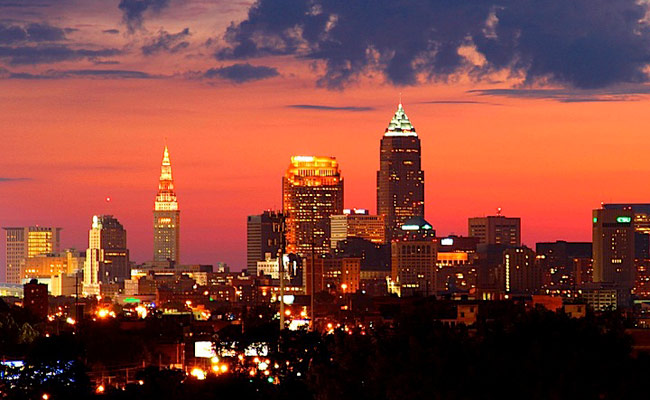
The decades-long decline of northeastern Ohio’s economy had achieved a dimension described by the media as a “quiet crisis” by the turn of the 21st century. Determined to help the region mount an aggressive campaign to staunch the slow but steady loss of jobs, in 2002 the Cleveland Foundation initiated a broad-based discussion with business, political and philanthropic leaders about how to promote business formulation and economic growth. Growing out of these consensus-building conversations was a remarkable commitment made in 2003 by 40 area philanthropies to join forces, pool their resources and launch the Fund for Our Economic Future to stimulate business creation and expansion.
Quickly expanding to 68 members, the fund raised $30 million to be used over three years to support new intermediaries promoting entrepreneurship, fostering new high-growth industry clusters and improving the region’s business attraction and support services. The Cleveland Foundation made a large-scale commitment of nearly $20 million to the fund’s first five years of operation and has remained a significant annual contributor to the largest philanthropic collaboration of its kind in the United States.
2003
Increasing the Community’s Capacity to Relieve Hunger

By the early 2000s, the Cleveland Foodbank was northeastern Ohio’s largest hunger relief organization. It provided nearly 19 million pounds of food to its member agencies annually. But lack of storage at its 100-year-old main warehouse and distribution center downtown required the organization to turn away almost 1.5 million tons of provisions each year.
In 2003, the Cleveland Foundation contributed $1 million toward the $10 million cost of constructing a new 60,000-square-foot facility for the Foodbank near Interstate 90 on the far east side of Cleveland. The new headquarters, which opened in 2004, positioned the organization to expand its services. Unfortunately, the economic downturn dramatically increased demand in neighborhoods the Foodbank had not previously served and did not have the capacity to fulfill. A $300,000 grant from the foundation in 2009 supported the hiring of three additional staff members and the addition of four mobile pantries, enabling the Foodbank to offer hunger relief to an additional 160,000 persons.
2003
John Sherwin Jr.
Board Chairman, 2003–2006
Jack Sherwin is the president of Mid-Continent Ventures Inc. Prior to founding the company in 1985, he held various positions with Diamond Shamrock Corporation, domestically and overseas. Active in the community, Sherwin serves on the board of the Cleveland Clinic Foundation and is a former board member of the Holden Arboretum and John Carroll University, a life trustee of Hawken School, and a trustee emeritus of the Westminster School and the Great Lakes Museum of Science, Environment and Technology. He has had a long involvement with the Cleveland Foundation, helping to establish the Lake-Geauga Fund in 1987 and serving as president of the Sherwick Fund, the nation’s first supporting organization affiliated with a community foundation, which was created by his father in 1969. Sherwin currently serves as an external advisor to the Cleveland Foundation’s audit committee. He holds a bachelor’s degree in business administration from John Carroll University.
2003
Ronald B. Richard
CEO, 2003–Present
Ronald B. Richard’s first day of work at the Cleveland Foundation on July 1, 2003, represented a sort of homecoming. As a child, Ronn had enjoyed spending several summers in Cleveland, visiting with his cousins in suburban Beachwood. Deepening his sentimental attachment to the city, his parents had met as teenagers in the 1940s at Bellefaire, an orphanage operated by Cleveland’s oldest Jewish social service agency. While Ronn’s connection to the community was a bonus, it was the unusual breadth of his professional experiences that figured prominently in his appointment as the foundation’s ninth chief executive.
Ronn’s first career was with the U.S. Foreign Service, which he joined in 1983. Because he had spent a year abroad in Japan during college and spoke fair Japanese, he was assigned to Japanese-language school in Yokohama and then to his first posting in Tokyo. He later worked in the American Consulate General in Osaka-Kobe and went on to serve as a desk officer for North Korean, Greek and Turkish affairs, respectively, at the U.S. Department of State in Washington, D.C.
In 1988, Ronn accepted an invitation to join the Matsushita Electric Industrial Company (Panasonic), the 13th largest corporation in the world at that time. During his 13 years with Panasonic, he filled a variety of senior executive management roles. Prior to joining the foundation, Ronn had directed a venture capital fund established by the CIA to ensure that America’s intelligence community had access to the latest information technologies.
The Cleveland Foundation’s board of directors recognized that Ronn was an unorthodox candidate. Although he had knowledge of the nonprofit sector from his service on the board of trustees of Spelman College and on the board of advisors of Georgetown University’s School of Foreign Service, his previous experience with philanthropy was limited to oversight of Panasonic’s corporate donations program and leadership of a United Way campaign. The Cleveland Foundation board valued the fact that Ronn, with his wealth of expertise in global affairs, business management, sales and marketing, R&D and technology transfer, would bring “fresh eyes” to the challenge of helping Greater Clevelanders test new solutions to enduring urban problems. He also had a proven ability to identify and seize new opportunities. (See a full description of Ronald B. Richard’s credentials.)
Entering his 11th year as the foundation’s president and CEO in the summer of 2003, Ronn Richard had indeed enhanced the institution’s reputation as one of the most daringly innovative community foundations in the U.S. field. During his tenure, the Cleveland Foundation has broken new ground in making an all-in commitment to fixing Cleveland’s public education system, with the goal of eliminating all failing schools within a six-year time span … marshaling federal, state and local resources for a visionary plan to build a high-growth industrial cluster centering on wind energy … and devising a poverty-reduction program with the potential to create hundreds, perhaps someday even thousands of wealth-building jobs for city residents by tapping into the procurement streams of major nonprofit organizations.
Under Ronn’s leadership, the Cleveland Foundation has supported international business attraction efforts, aggressive recruitment of highly skilled immigrants and residencies by artists presenting the best of world culture—all in an effort to inspire Cleveland, whose economy has been battered by global competition, to reinvent itself as a truly global city. In its annual reports and other public forums over the past decade, the foundation has also exerted its moral authority more forthrightly than ever before, taking impassioned stands in support of the right of every child to attend an excellent school, environmental protectionism and equality for the LGBT (lesbian, gay, bisexual and transgender) community. “If we can’t be bold,” Ronn asks rhetorically, “who can?”
If Ronn’s years as a business executive have contributed to his understanding that one of a community foundation’s fundamental roles is to provide high-risk social venture capital, his deep commitment to social justice derives from searing childhood experiences. Born in 1956 in Rockville, Maryland, Ronald Richard grew up “below the Mason-Dixon line,” the fourth of five children in a household headed by secular Jewish liberals.
His father, Daniel, a former Marine with a strong entrepreneurial streak that prompted him to start a series of increasingly significant businesses, instilled in his son an iron-rod sense of right and wrong. His mother, Annette, who while rearing five children earned a bachelor’s degree in history by attending school at night, went on to obtain a master’s degree in international relations and teach Advanced Placement history courses at highly regarded high schools. Ronald inherited her love of reading and learning and her intense interest in history and diplomacy.
Moving up the economic ladder to Potomac, Maryland, the Richards wanted their youngest three children to attend an integrated school. Nearby Travilah Elementary had a student body comprised largely of extremely poor children, black and white, many of whom became Ronald’s good friends. Some of his pals were clearly talented kids, denied a shot at success by America’s inequitable system of public education, which far too often consigned poor and minority students to inferior schools. Later Ronald attended a predominately white junior high, where he had to fight back against anti-Semitic bullying and taunting about his attendance at Travilah. He never forgot his early encounters with racial and ethnic discrimination.
His determination to be a force for social progress and harmony also developed precociously. Spying a magazine cover graphically depicting racial violence in the former Belgian Congo when he was five or six, Ronald told his mother that it wasn’t right for people to hurt one another and informed her that he wanted to do something about it. Annette Richard replied that peacemaking was the responsibility of diplomats. “That’s what I want to be,” Ronald replied.
Lacking sophisticated career counseling, he decided the study of history would be excellent preparation. After graduating from high school, he majored in U.S. history at Washington University in St. Louis. A college romance with a Japanese-American woman led him to spend his senior year studying at the Center for Japanese Studies in Nagoya. By now Ronn appreciated that his chosen career path required a master’s degree in international relations, which he earned from the Johns Hopkins University School of Advanced International Studies.
Ronn passed the extremely competitive foreign service entry exam and a yearlong security clearance check, during which time he worked at the Japan Society in New York. During his Foreign Service introductory course, he met his future wife, Elizabeth (Bess) Rodriguez. They are the parents of two children.
After completing nine months of intensive Japanese-language training, Ronn was assigned to the American embassy in Tokyo as an economic officer. His work to facilitate bilateral trade agreements introduced him to the head of R&D at Matsushita Electric, who many years later persuaded Ronn to leave the diplomatic corps and help the corporation internationalize its top management.
Panasonic paid more than lip service to its motto, “Technology for the Benefit of Mankind.” During his tenures as president of Panasonic’s R&D operations, its home and commercial products sales division, and its mergers and acquisitions arm, Ronn does not recall having many discussions about how to build shareholder value. Strategic planning focused on how to develop or acquire new technologies with the potential to meet emerging societal needs and turn those technologies into products that could be successfully sold in a competitive global marketplace.
Ronn brought well-honed skills at identifying and actualizing beneficial new ideas to his leadership of the Cleveland Foundation. A year before his arrival, the foundation had completed a governance reorganization in which the size of the board of directors was expanded in order to gain a broader base of community perspectives. The board’s role was also restructured. Less board time was to be devoted to reviewing and approving grant requests, and more time was to be spent determining programmatic priorities. Ronn soon perceived that the program staff structure also required revamping if the foundation was to take full advantage of the board’s input.
Ronn collaborated with Robert E. Eckardt, soon to be appointed the foundation’s executive vice president, on the formation of a responsive grantmaking team comprised of the foundation’s program officers and associates. The team would henceforth assume responsibility for evaluating the 3,000-plus grant requests received annually. The reorganization eliminated specific assignments for mid-level program staff so that they could gain experience in multiple fields and replaced quarterly grant awards with rolling approvals. These changes enabled the foundation to carry out its traditional role of supporting community aspirations even more effectively. Meanwhile, the senior program officers were liberated. Now, as Ronn had envisioned, they could focus their time, energies and intellects exclusively on finding creative new solutions to the region’s most intractable problems.
In keeping with their redefined role, the senior program officers were given a new title: program director. Not only were program directors responsible for the design of board-directed strategic initiatives, Ronn expected them to roll up their sleeves and do whatever was necessary to ensure the initiative’s success. Over time, he filled these proactive positions with individuals who had hands-on experience effecting positive change in the priority areas selected by the board: youth development, successful aging, public school improvement, neighborhood and housing revitalization, and economic development.
The Cleveland Foundation had a long record of productive engagement with these pressing issues. In harnessing the undivided attention of senior staff with demonstrable skills as program managers and change-agents, the Richard administration added new muscle to the foundation’s ability to formulate and implement fresh approaches to enduring challenges. Ronn’s receptivity to innovative or novel ideas and high degree of comfort with calculated risk taking empowered the program directors to think big and aim high.
Drawing on his background in international relations and the foundation’s clout as an anchor institution, Ronn personally rallied the government, nonprofit and for-profit leaders whose active involvement was essential to an initiative’s success. He often remained engaged in important new undertakings as a volunteer chairperson. Upon Ronn’s recommendation, the foundation’s board proved willing to step up significantly the provision of start-up and sustaining funds. Once considered historic, multimillion-dollar grants in support of board-directed initiatives or critical demonstration projects became common, and the traditional three- to five-year time frame for special initiatives was extended as long as progress warranted.
With foundation-inspired public-private partnerships achieving measurable progress on a number of important fronts—ranging from the creation of high-performing schools to the acceleration of high-potential business start-ups—Ronn Richard’s leadership and judgment began to attract local and national recognition. Ohio governor Ted Strickland tapped Ronn to oversee the expenditure of federal stimulus funds as the state’s infrastructure czar, a volunteer position he held from January 2009 to November 2010. Earlier in 2010, the bimonthly Nonprofit Times, one of the sector’s leading magazines, included Ronn in its annual list of America’s most influential nonprofit executives.
2003
Support for High-Potential Business Start-ups
In the early 2000s, a number of barriers stood in the way of recapturing the entrepreneurial energy on which Cleveland’s former economic prosperity was based. Aspiring entrepreneurs were hampered by a lack of skills necessary to convert good ideas into successful businesses, a scarcity of early-stage capital and a shortage of networking and support systems. With the help of a $300,000 grant from the Cleveland Foundation, JumpStart was launched in 2003 to provide business development services and seed monies to high-potential start-up firms.
The foundation subsequently invested $2 million in JumpStart’s venture-capital fund and granted $750,000 toward operations in 2010. The more than 120 high-growth companies currently in JumpStart’s investment portfolio or on its list of clients have indisputably boosted the regional economy. Since 2003, they have contributed $200 million in economic impact, attracted $517 million in venture capital and created or retained more than 1,500 jobs.
2004
Betting on “Cool Cleveland”
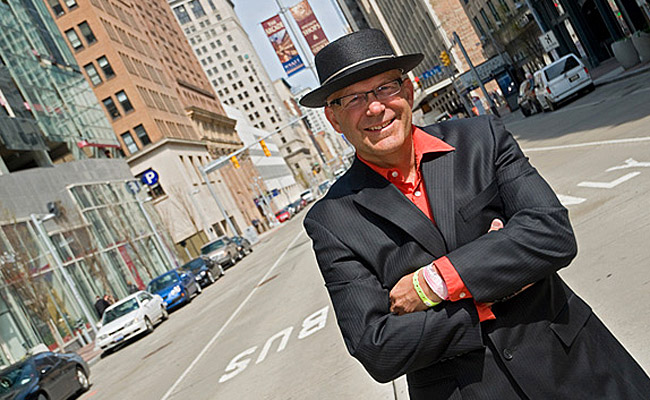
The Cleveland Foundation launched the Civic Innovation Lab in 2003 to test whether providing start-up funding, mentorship, networking opportunities and visibility to individuals with creative ideas for new small businesses should be part of Greater Cleveland’s economic development strategy. In the first “class” of grantees in 2004 was Cool Cleveland, a weekly e-mail newsletter launched in 2002 to cover the people, places and activities deemed “cool” by its founder and publisher, Thomas Mulready. The foundation’s $30,000 grant gave the experimental online publication time to find its voice, develop a successful business plan and secure a devoted audience that appreciated Mulready’s edgy take on the things that make Cleveland great.
2004
Donald and Ruth Weber Goodman
Perpetuating Life-Saving Medical Care

In October 2000, Donald Goodman, a retired dentist, returned to his Pepper Pike home after his morning exercise and abruptly collapsed on the floor. After being rushed to University Hospitals of Cleveland, he was diagnosed with acute myelogenous leukemia, a rare and particularly aggressive form of cancer. Instead of chemotherapy, doctors at UH’s Ireland Cancer Center decided to treat Dr. Goodman with Mylotarg, a drug that had received Federal Drug Administration approval only five months prior. After 30 days of grueling treatment, during which time he received 19 transfusions of whole blood, Donald Goodman was declared cancer free.
While hospitalized, Dr. Goodman had been prohibited from receiving visitors, leaving him with time for reflection. One thing he naturally found himself thinking about was his estate plan. The Goodmans had already planned a gift to the community through the Cleveland Foundation. Indeed, after Dr. Goodman recovered, he and his wife sought an appointment with the foundation’s new CEO, Ronald B. Richard.
Richard’s calendar was booked for a solid month, but he offered to meet with the “dentist from Beachwood” (as Donald had modestly identified himself) after work or on a weekend. Although unwilling to inconvenience the foundation’s CEO, Goodman was so impressed by Richard’s courtesy that he drew up the couple’s bequests to the foundation in advance of his subsequently scheduled workday meeting with Richard. In 2004, the Donald and Ruth Weber Goodman Fund was established at the foundation.
As a result of Dr. Goodman’s hospitalization, the couple knew exactly how they wanted the fund’s income to be used. It was designated for the advancement of medical research and education at a number of favored institutions, including UH, the Ireland Cancer Center (now the Seidman Cancer Center), the Case Western Reserve University (CWRU) School of Medicine and the CWRU School of Dental Medicine, of which Dr. Goodman was a graduate. The support of medical programming on public broadcast stations in northeastern Ohio was also stipulated as an objective.
The bequest to the fund from the estate of Dr. Goodman, who died in 2007, totaled more than $9 million. Ruth Weber Goodman, the daughter of the founder of Cleveland’s Triplex Screw Corporation and Dr. Goodman’s second wife, died in 2008. Her bequests brought the total value of the fund to nearly $70 million, making the Goodmans’ gift the largest in the foundation’s history to date.
2005
Responsive grantmaking team formed to review mounting requests
2005
Senior program officers promoted to program directors
The new title reflects new responsibilities for leading strategic initiatives identified by the board.
2006
Jacqueline F. Woods
Board Chair, 2006–2008
Jacqueline F. Woods is the former president of AT&T Ohio. She serves on the boards of trustees of University Hospitals Case Medical Center, Playhouse Square Foundation, Muskingum University, Kent State University and the Association of Governing Boards of Universities and Colleges. During her decade of service to the Cleveland Foundation, which included a term as board chair, Woods helped to advance the foundation’s work in the areas of economic development, globalization and alternative energy. She holds a master’s degree from the Executive M.B.A. program at Northwestern University and a B.A. in psychology from Muskingum College.
2006
Portfolio of 20 Innovative and Excellent Schools
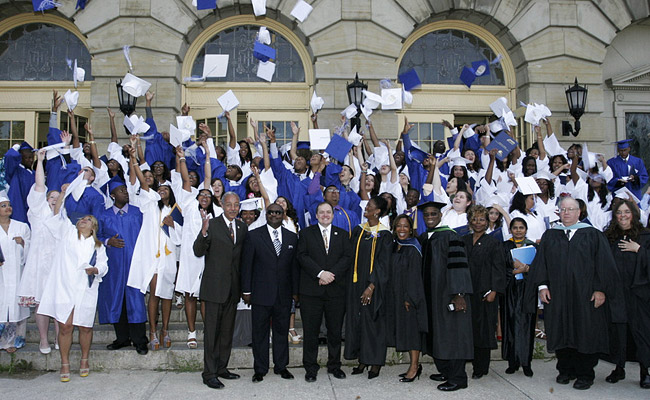
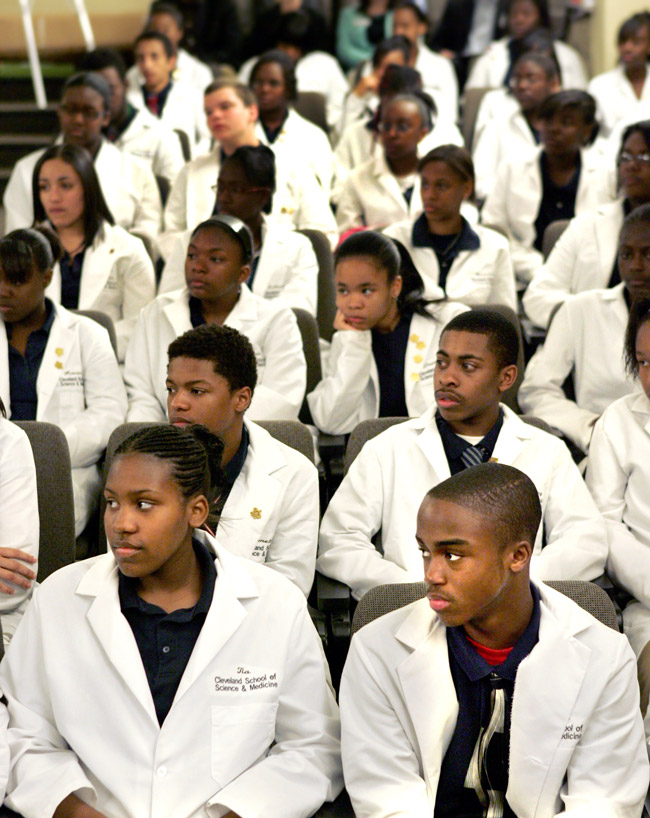
Believing in the talent and promise of urban youth, the Cleveland Foundation sought to demonstrate that public school students could achieve their potential if given an opportunity to learn in high-performance educational settings. In 2006, the foundation partnered with the George Gund Foundation and the Cleveland Municipal School District to create a portfolio of new, innovative and excellent schools. To date, the two foundations have contributed more than $16 million in grants to the initiative.
As a result, there are now 20 portfolio schools in Cleveland: 13 district innovative schools and seven charter schools sponsored by the district. Many of them are built around the STEM (science, technology, engineering and math) disciplines that are widely accepted as a key to success in a knowledge-based, technology-driven global economy. Others are single-gender or residential academies.
Three innovative high schools located in University Circle on the John Hay campus, which reopened in 2006 after extensive renovation, exemplify the range of excellent educational options now available to Cleveland public school students. The School of Science and Medicine boasts a 100 percent graduation rate, with 100 percent of its students accepted into college. Cleveland Early College High School offers high-achieving students an accelerated curriculum that allows them to graduate high school in three years, often armed with college credits. The Cleveland School of Architecture and Design, which features a project-based, college-preparatory curriculum, has earned an Excellent rating by the State of Ohio Department of Education each year since its opening in 2010.
2008
Bridge to Arts Education and Healthcare Careers
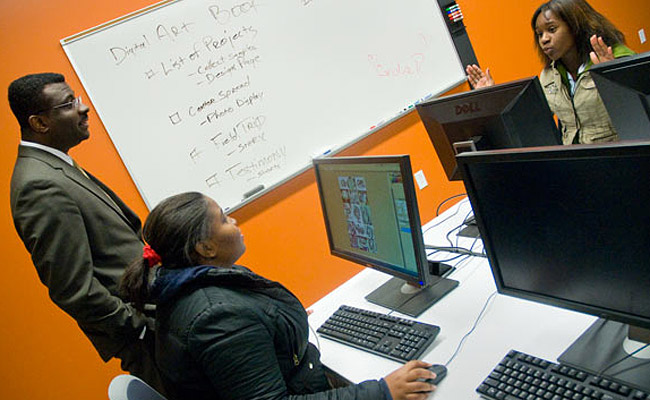

With the support of a $3 million grant awarded by the Cleveland Foundation in 2008, NewBridge Cleveland Center for Arts and Technology opened in MidTown in the fall of 2010. The airy high-tech building houses a vocational program that prepares adults for careers as phlebotomy and pharmacy technicians and after-school arts classes for teens poised on the brink of quitting school. NewBridge is modeled after Pittsburgh’s highly successful Manchester Bidwell training center, which has been in operation since 1968.
The foundation led a collaborative effort to replicate the Manchester Bidwell program here. Cleveland’s leading medical institutions advised on the design of the adult curricula, resulting in a high rate of employment of the 36 adults who graduated in 2011 and 2012.
More than 350 ninth- and 10th-graders selected by 40 high schools from across the county attended free, hands-on classes in ceramics, photography, digital arts, and music recording and production during the 2011–12 academic year. In contrast to usual turnout for afterschool programs, which often fail to attract young men, 55 percent of the attendees were male. The foundation affirmed its belief in NewBridge’s effectiveness with a second grant of $1.5 million in 2011.
2008
Creating Real Jobs for Neighborhood People
To reduce poverty in University Circle’s environs, the foundation has designed and launched three workers’ cooperative businesses that serve the Circle’s anchor institutions.
 Green City Growers Cooperative’s 3.25-acre hydroponic greenhouse in the Central neighborhood opened in 2013.
 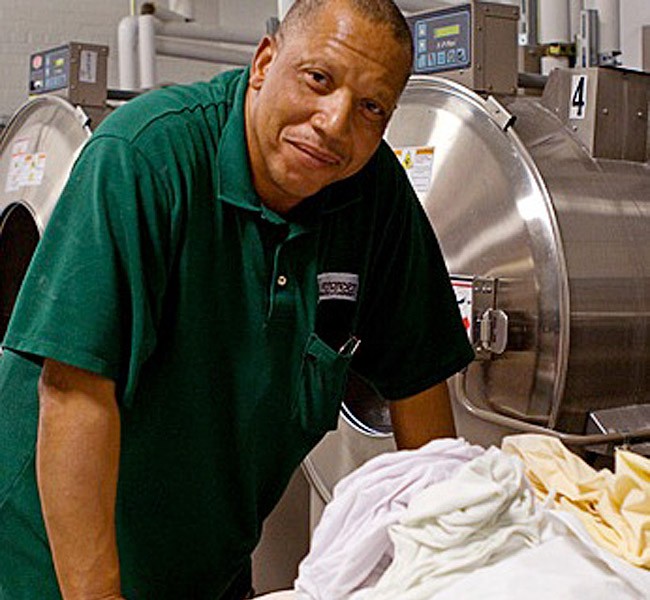 An owner-employee of the Evergreen Laundry
 Evergreen Energy Solution’s photovoltaic panels
 Green City Growers supplies Bibb lettuce, green leaf lettuce, gourmet lettuces and basil to institutional and commercial customers.
In leading the Greater University Circle Initiative, the Cleveland Foundation has set out to achieve nothing less than a dramatic reduction of poverty in the six Cleveland neighborhoods adjoining the Circle, which are home to 43,000 residents whose average household income is below $18,500. In addition to stimulating major physical improvements within the Circle, the initiative has undertaken two neighborhood-rebuilding campaigns, the objectives of which can be summed up in the phrases “Live Local,” “Hire Local,”and “Buy Local.” The first phrase describes an employee housing assistance program. The second and third phrases underpin a business formation plan that taps into the $3 billion the Circle’s anchor institutions spend annually on procurement.
Devised by the foundation in partnership with the anchor institutions, the business formation campaign represents a new paradigm for neighborhood economic development. The partners have committed to creating a network of for-profit businesses that recruit their workforces exclusively from the pool of residents who live in neighborhoods surrounding the Circle. The businesses offer their recruits on-the-job training and award them a living wage and full health benefits.
Jobs alone are not enough to break families out of the cycle of poverty, however. Once the businesses achieve profitability, employees who have worked for a year or longer will also receive an equity stake in the business. Employees’ shares of annual profits are to be distributed into their portable capital accounts. Profits will also underwrite worker training and new business start-ups.
Three employee-owned businesses employing about 90 workers have been launched since 2009: an industrial-scale laundry that washes and irons bed linens, a hydroponic greenhouse that raises lettuces and herbs, and a solar panel installation company that also offers weatherization services. Called Evergreen Cooperatives, they all operate according to the latest “green” principles. In addition to reaping long-term savings from their sustainable business practices, the cooperatives have a good chance of succeeding because University Circle’s largest institutions have contracted with them for goods and services.
The hard-won experience of the Cleveland Foundation’s program director for neighborhoods, housing and community development informed the partnership’s discussion about how to reverse the loss of jobs in Buckeye-Shaker, East Cleveland, Fairfax, Glenville, Little Italy and Hough. As the former director of the City of Cleveland Empowerment Zone, India Pierce Lee appreciated that employment tax credits offered by the federal program had not created a sufficient number of jobs to make a critical difference in the targeted urban neighborhoods. She had also observed the pitfalls of workforce training programs that prepared low-skilled city residents for jobs largely available in distant suburbs. Recognizing the need for an out-of-the-box job creation strategy, the foundation turned to Ted Howard, a national expert on community wealth building based at the University of Maryland.
Howard was retained as a consultant to the foundation in 2007. He helped the Greater University Circle partners formulate the cooperatives strategy and carefully think through each element of a model employee-owned business, right down to calculating the estimated $65,000 that each worker could expect to accumulate in his or her portable capital account at the end of eight years of employment.
To help the model designers visualize the end product, Howard led representatives of Case Western Reserve University, the Cleveland Clinic and University Hospitals of Cleveland (among others) on a study tour to Spain’s Basque region, the location of the Mondragon Cooperative Corporation, an interconnected group of 120 cooperatives with 100,000 employees and $25 billion in sales that has been built over a period of 50 years. Howard also met with national foundations that had never before worked in Cleveland and obtained seed grants from several funders who recognized the undertaking’s value as a “learning lab.”
In recognition of his contributions to the design, financing and rollout of the Evergreen Cooperatives, Howard was subsequently named the foundation’s first Steven A. Minter Fellow for Social Justice. In this capacity he continued to collaborate with the Greater University Circle partners on the refinement of the cooperatives strategy and advise other urban communities interested in replicating the Cleveland model.
The Cleveland Foundation granted $1 million toward the start-up of the first three Evergreen Cooperatives. These seed monies, along with the promised procurement contracts, helped to leverage an additional $35 million in venture and operating capital from a variety of sources, including grants from local and national foundations, long-term, low-interest federal loans, tax credits, state grants and even commercial loans. The foundation has also contributed more than $2.5 million to the development fund of the Evergreen Cooperative Corporation, a not-for-profit holding company whose foundation-led board oversees the existing cooperatives and plans to raise between $50 million and $100 million to capitalize the next generations of start-ups.
One locally rooted, sustainable business at a time, the economies of Greater University Circle neighborhoods will be revitalized. The long-term goal is to create hundreds, if not thousands of new jobs that will pay wages on which families can be raised and help those families achieve the American dream of building wealth.
2008
David Goldberg
Board Chairman, 2008–2011
David Goldberg is a partner in Edgerton Investments, which owns and manages real estate and other investments in Ohio and Texas. He spent the majority of his career with AmTrust Bank, formerly Ohio Savings Bank, where he retired as chairman of the board in 2009. An alumnus of Shaker Heights High School, he graduated from Ohio State University (B.S., 1966) and Case Western Reserve University School of Law (J.D., 1969).
Goldberg is a past chair of Neighborhood Progress Inc. and the Downtown Cleveland Alliance, two organizations that drive economic development. He serves on the boards of University Hospitals, The Diversity Center and the American Jewish Joint Distribution Committee, which directs aid for nonsectarian relief, rescue and humanitarian work, and is a life director of the Jewish Family Service Association of Cleveland. In 2003, along with other members of Cleveland’s Jewish and Palestinian communities, he formed Ishmael & Isaac to help victims of the Israeli and Palestinian conflict.
2008
Gang Violence Prevention
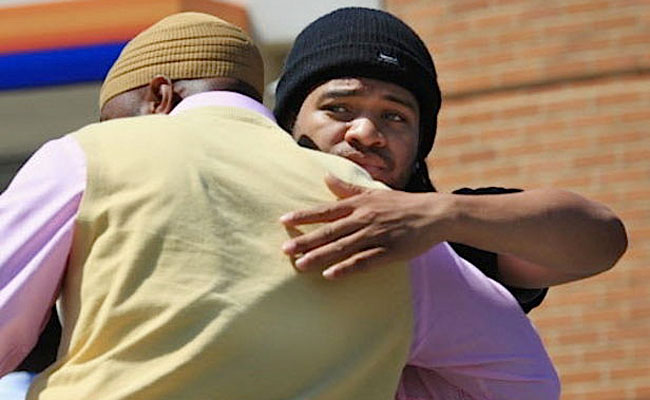
The Cleveland Foundation awarded $1.45 million over five years to fund the Greater Cleveland Peacemakers Alliance, a coalition of the City of Cleveland Community Relations Board and seven community organizations that addresses gang and street violence in the city and its inner-ring suburbs. The alliance, whose members include Amer-I-Can Cleveland, Boys & Girls Club Cleveland and the Guardian Angels, trains outreach workers in conflict resolution, cultural diversity and community engagement.
Peacemakers make themselves known in high-crime neighborhoods, seeking opportunities to mentor street youth and connect them to social services and recreational activities organized by the alliance. They also assist schools with crisis prevention and help police with crowd control. The outreach program contributed to a 37 percent decrease in crimes involving youth and guns committed in Cleveland in 2012.
2008
Gordon Square Arts District

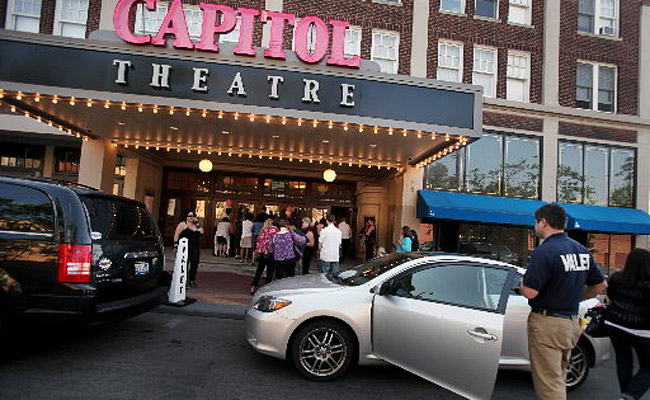
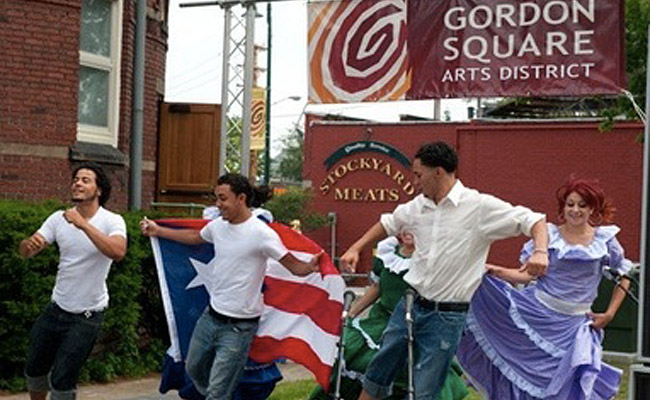
Starting in 1975, with a three-year operating grant to the fledgling Detroit Shoreway Community Development Corporation, the foundation has been a champion of the redevelopment of the Gordon Square commercial district centering on a historic arcade at Detroit Avenue and West 65th Street. The foundation’s initial grant gave Detroit Shoreway organizers the capacity to save the half-vacant Gordon Square Arcade from demolition and apply for a $200,000 Urban Development Action Grant to rehab the grand old building, which once housed the 1,500-seat Capitol movie theater, a hotel, apartments and office spaces.
In the mid-2000s, the community development organization capped its steady progress in revivifying the Detroit Shoreway neighborhood by creating the Gordon Square Arts District, home to new or renovated facilities for the Cleveland Public Theatre, a presenter of experimental drama; the Near West Theatre, a training ground for youth; and the Capitol Theatre, which reopened in 2009 as a venue for first-run and independent movies after rehabilitation supported by a $500,000 foundation grant. The Cleveland Foundation has contributed another $500,000 to the art district’s $30 million capital campaign, which is expected to leverage $500 million in related retail, restaurant and housing development in a 15-block area along Detroit Avenue.
2008
International-Artist Residency Program
 Dancer/choreographer Kapila Palihawadana of Sri Lanka, 2012 artist in residence with the Inlet Dance Theatre, conducts a master dance class at the Beck Center for the Performing Arts.
 Vietnamese lutist Pham Thi Hue was Young Audiences of Northeast Ohio’s artist in residence in 2013.
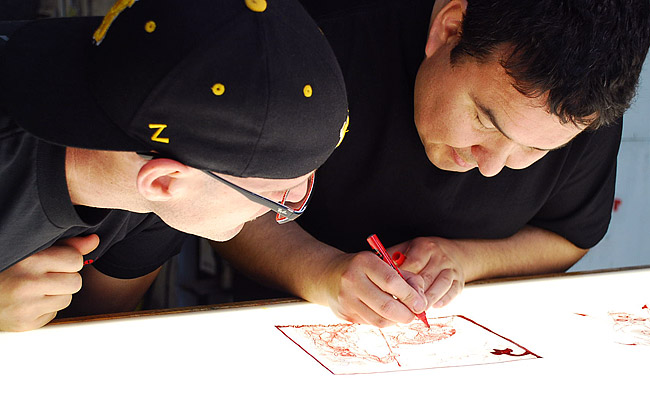 Ivan Lecaros (right), a master printmaker from Chile, puts the final touches on a drawing for a silkscreen print during his 2012 residency at Zygote Press.
Creative Fusion, the Cleveland Foundation’s innovative artist-in-residence program, supports long-term residencies at local arts organizations for accomplished international artists, with a goal of expanding the region’s exposure to world culture. Selected and hosted by cultural institutions throughout Greater Cleveland, the artists hail from cultures not well represented here. As they conduct classes and workshops, create and perform, they provide the benefits of creative exchange with their local counterparts, hands-on learning experiences with students of all ages, and deep engagement with the general public. As of 2012, Creative Fusion had brought 16 visiting artists—from countries ranging from Chile to Uganda—to Cleveland, where they, too, have benefited from experiencing three months in an American heartland city.
2008
The People’s Entrepreneur
Homer C. Wadsworth – Director of the Cleveland Foundation 1974 to 1983
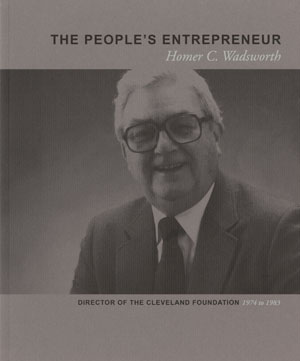
2009
Incentivizing Consumption of Fruits and Vegetables

The Cleveland-Cuyahoga County Food Policy Coalition, representing a spectrum of stakeholders—from hunger relief advocates to urban and rural farmers—came together in 2007 to create a more equitable, healthy and sustainable food system for northeastern Ohioans. In 2009, the coalition received capacity-building grants from the Cleveland and George Gund Foundations. With increased staffing, the coalition was able to reach out to farmers’ markets in Cleveland in an attempt to make fresh fruits and vegetables a household staple in neighborhoods where produce was not readily available, especially to those in the greatest financial need.
In 2010, a pilot program to incentivize produce consumption was launched. Four markets agreed to offer $5 extra to customers who spent at least $5 on fruits, vegetables, seeds and edible plants, using EBT (electronic benefit transfer) cards containing their food assistance benefits. By 2012, 16 farmers’ markets and food stands across Cuyahoga County were participating in the “Produce Perks” program. EBT sales recorded that year at all the markets amounted to more than $26,000—evidence that Produce Perks is producing new business for farmers’ markets and healthier, tastier meals for their new customers.
2009
Linking City Teens to Life-Enriching Programs

MyCom (My Commitment, My Community) may be the most ambitious effort ever undertaken in Cuyahoga County to provide underserved city youths with the kinds of life-enhancing, responsibility-building experiences that middle-class children take for granted: out-of-school enrichment activities, caring adult mentors, summer jobs. The planning for MyCom began in 2007, when some 250 community organizations, government agencies, faith-based groups, and youths came together at the Cleveland Foundation’s invitation to consider how to mitigate adolescents’ exposure to risk and help them harness their potential. The foundation’s $2.5 million in grants to support the launch of MyCom in 2009 leveraged $4.1 million from other funders, including the initiative’s principal partner, Cuyahoga County.
To make the most efficient and effective use of its funding, the partners decided not to create another program, but to connect youngsters to all the appropriate programs already in existence. MyCom’s evolving online and phone-accessible directory points parents and kids to more than 1,900 activities and services such as tutoring and career exploration. In its first year, MyCom’s jobs program found summer work for 3,600 teens. The long-term goal is to secure summer jobs for a greater percentage of the 11,000 first-year applicants and to expand MyCom’s offerings beyond eight pilot neighborhoods: Bellaire-Puritas, Central, Cudell-West Park, Mt. Pleasant, St. Clair-Superior, Slavic Village, northern Parma and southern Shaker Heights.
2009
Vacant Lot Reclamation
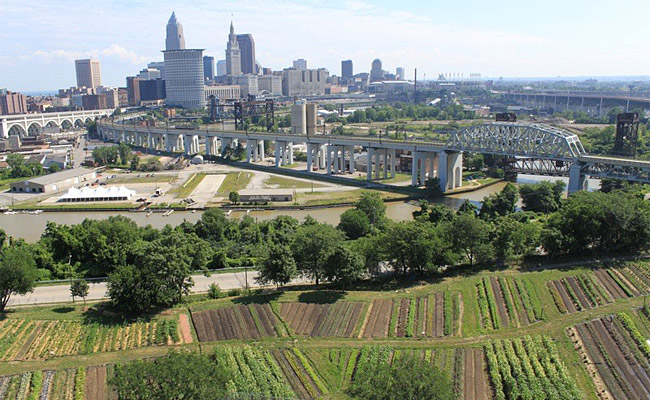
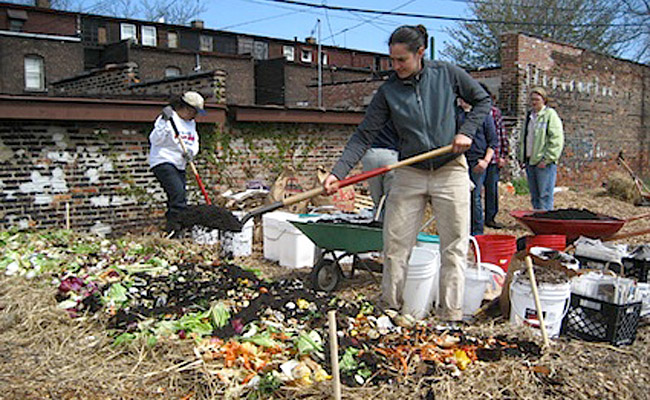
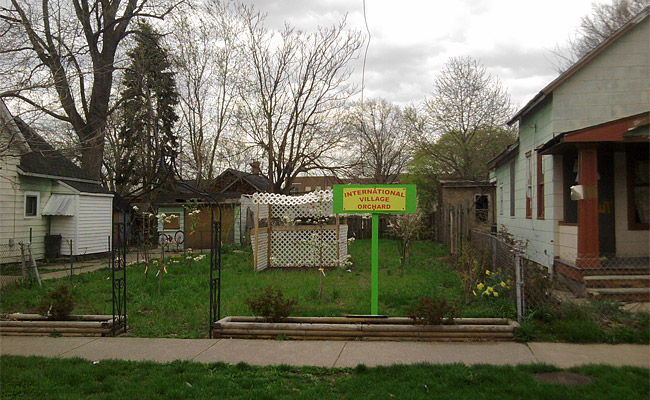
The City of Cleveland has an aggressive program to tear down homes abandoned due to disrepair or foreclosure. As a result, the metropolitan area has an inventory of about 20,000 vacant lots. The financial crisis of 2007–08, which dramatically increased the number of homes in foreclosure, prompted Neighborhood Progress, Inc., a redevelopment intermediary now known as Cleveland Neighborhood Progress, to work with government officials and community development organizations on a solution to the growing problem of empty lots. A $250,000 grant from the Cleveland Foundation underwrote a formal study of strategies for sustainable land reuse in 2009.
Using $500,000 in federal urban redevelopment money, the public-private partnership subsequently piloted a demonstration project to test the feasibility of various reclamation ideas. Fifty-six neighborhood groups, churches, schools and individuals received grants from Neighborhood Progress’s “Re-Imagining a More Sustainable Cleveland” program in the first round in 2010. The successful conversion of weedy lots into community gardens, pocket parks, orchards and spacious side yards convinced the city to raise $1 million for a second round of grants in 2011.
2010
Asian Festival

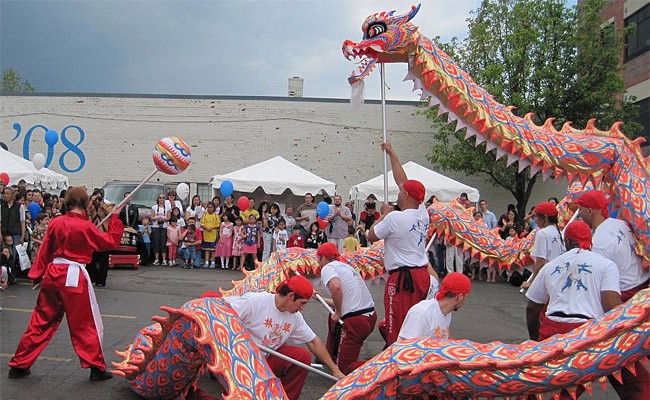
Cleveland’s first annual Asian Festival, mounted in observation of Asian Pacific-American Heritage Month in May 2010, received a $5,000 foundation grant to support the organization of a weekend-long celebration. Approximately 10,000 people crowded into Asia Plaza in the St. Clair-Superior neighborhood to enjoy cultural and martial arts performances, authentic Asian cuisine and ethnic merchandise.
The foundation’s modest investment in testing new ideas and partnerships was rewarded many times over. Greater Clevelanders responded to this opportunity to partake of the city’s rich diversity by swelling festival attendance to more than 30,000 in 2011 and 50,000 in 2012. The St. Clair-Superior Development Organization recognized the festival’s economic benefits for the surrounding neighborhood by presenting the Asian Festival with its 2011 Community Action Group Award.
2010
Increased Public Access to the Cuyahoga River
The Cleveland Rowing Foundation (CRF), formed in 1989 to promote the health, educational and social benefits of rowing, needed to find a permanent headquarters on the Cuyahoga River for its 800 members and the urban schoolchildren it mentored. A vacant commercial site with 1,100 feet of riverfront and two buildings seemed ideal, but the $3.5 million price tag for the seven-acre property was daunting. CRF sought assistance from the Cleveland Foundation, which recognized the challenge as an opportunity to expand public access to the Cuyahoga River.
The foundation connected CRF with the Trust for Public Land (TPL), a conservancy organization. With the support of a $250,000 foundation grant awarded in 2010 on the condition the monies be applied toward the creation of a public green space, CRF and TPL were able to raise the funds needed to purchase the concrete-covered property. Three acres were converted into Rivergate Park, which opened in May 2011 as a recreational resource for kayakers, canoers and rowers. The park also gave CRF room to expand its skills-building program for urban youth.
2010
Training Urban Primary Care Physicians
America faces a shortage of primary care physicians that will only become more severe when aging baby boomers become the frail elderly. The lack of primary care is especially acute in urban neighborhoods. In Greater Cleveland, a pioneering collaboration between the Northeast Ohio Medical University (NEOMED) and Cleveland State University (CSU) is tackling the shortage head-on.
With the support of a $250,000 planning grant from the Cleveland Foundation, the two institutions of higher education began in 2010 to design a unique training program that takes advantage of their combined strengths in urban health, primary care medicine and inter-professional education. The resulting initiative, now known as NEOMED-CSU Partnership for Urban Health, is targeted at economically disadvantaged youth who reside in the region, offering them two paths to becoming a primary care physician. They can complete their undergraduate work at CSU and then qualify for early admission to NEOMED, where they can earn a Doctor of Medicine (M.D.) degree. For students who already have college degrees, there is a post-baccalaureate/M.D. option.
The partner institutions received a second foundation grant of $1.5 million in 2012 to implement the initiative, which accepted its first class of 35 students that fall. In addition to formal coursework, students receive hands-on experience working with a small caseload of patients in a medically underserved neighborhood in Cleveland. Scholarships are awarded to students in exchange for a commitment to practice here for a specified period of time after their residencies. With 63 aspirants now enrolled, the program could significantly reduce the shortage of primary care physicians in Cleveland’s neighborhoods within a few short years.
2011
Charles P. Bolton
Board Chairman, 2011–2013
Charles P. Bolton is chairman of Brittany Stamping, a Cleveland private investment firm that owns four manufacturing companies, and Polychem Corp., a Mentor manufacturer of extruded polypropylene and polyester strapping used in commercial packaging. He is the former director of the Ohio Department of Development’s Office of International Trade and a former member of the Ohio Senate. Bolton is a trustee of the Cleveland Museum of Art, the Musical Arts Association, the Payne Fund and the Kelvin and Eleanor Smith Foundation; an honorary trustee and former chairman of the board of Case Western Reserve University; and a life trustee of Hawken School. He holds a bachelor’s degree in American history from Harvard College and an M.B.A. from the Harvard Business School.
2011
$4 Million Microlending Pool
Responding to the needs of “economically isolated” entrepreneurs, the Cleveland Foundation assembled a working group to examine the issue of small business lending in early 2011. A subsequent study of the microcredit landscape in Cuyahoga County, which the foundation commissioned with the Business of Good Foundation, estimated an unmet need of $38 million in loans under $50,000. The gap primarily affects minorities, immigrants and women, whose businesses may be either too small to interest conventional lenders or deemed not creditworthy.
The first small, but proactive, steps to address this issue, supported by Cleveland Foundation grants, met with positive results that prompted the formation of a public-private partnership consisting of the foundation, the City of Cleveland, Cuyahoga County, the U.S. Small Business Administration, Huntington Bank, the Greater Cleveland Partnership, the Commission on Economic Inclusion and the Business of Good Foundation. The partners contributed $4 million to fund microloans and $600,000 to provide loan recipients with training and technical assistance. The Columbus-based Economic and Community Development Institute (ECDI) was recruited to manage the microlending program.
Even before the program’s July 2012 launch, ECDI had made eight loans to local entrepreneurs totaling $163,000. As of the end of 2013, 30 businesses owned predominately by women or racial or ethnic minorities had received loans totaling $1.3 million. Nearly a third of these enterprises are based within the city of Cleveland.
2011
20,000 New Manufacturing Jobs by 2020
 MAGNET’s Prism program helped Cleveland-based Vitamix keep up with demand for its high-end blenders.
 Sophisticated life support equipment in an air ambulance made by Nextant Aerospace, Ohio’s only aircraft manufacturer and a MAGNET client
 MAGNET incubator graduate, DXY Solutions, makes components and software for mobile devices.
 MAGNET consultants helped Nextant Aerospace of Richmond Heights, Ohio, apply lean principles to its specialty business of remanufacturing corporate jets for an under-$5 million market.
  MAGNET incubator tenant Tom Lix, the founder and CEO of Cleveland Whiskey, which has developed a proprietary process for accelerating the aging of distilled liquors
MAGNET, a longtime foundation grantee previously known as the Cleveland Advanced Manufacturing Program (CAMP), is making an important transition from its former emphasis on helping local manufacturers solve specific problems to its new focus on establishing long-term consulting relationships that will help manufacturing CEOs grow their companies.
With the support of a Cleveland Foundation grant of $400,000 awarded in 2011, MAGNET has begun to develop a comprehensive network of experts and resources to which its clients can be directed for assistance. Called PRISM (Partnership for Regional Innovation Services to Manufacturers), MAGNET’s new program seeks to help companies with annual sales of between $10 million and $500 million create new products and enter new markets, thus propelling double-digit percentage sales growth.
A second foundation grant of $400,000 awarded in early 2013 will enable MAGNET to expand PRISM’s portfolio of clients with an eye to fostering the creation of 20,000 new jobs in northeastern Ohio by 2020.
2011
Recidivism Reduction and Successful Re-entry

To ensure the successful reintegration into society of the 5,000 Greater Clevelanders who are released from Ohio’s prisons each year and reduce recidivism rates in the metropolitan area, the Cleveland Foundation collaborated with Cuyahoga County officials and the Centers for Families and Children on the development of an innovative pilot re-entry program called Transformation Enterprises.
With a $150,000 grant in 2011, the foundation joined with its partners in funding the creation of three small companies—a food preparation business, a home renovation business and a beauty salon—to employ individuals with felony convictions. Although the businesses are managed by nonprofit organizations, they are for-profit ventures whose revenues support job training for their employees.
Aware that 70 percent of all recidivism occurs within the first 12 months of re-entry, Transformation Enterprises facilitates immediate employment and also provides “soft-skills” training and job placement assistance to enable employees to find nonsubsidized work. More than half of the 32 employees who have “graduated” from the renovation business begun in 2012 by Career Development and Placement Services have secured full-time jobs elsewhere.
2012
Assets recover from the impact of the Great Recession
The foundation’s $1.88 billion endowment propels its ranking as one of the top five largest community trusts in America.
2012
First $10 million grant, the largest to date
To commemorate its upcoming centenary, the foundation makes a historic gift in support of Case Western Reserve University’s new medical school.
2012
The Cleveland Plan for Transforming Schools
A blueprint for tripling the number of public students enrolled in high-performing schools within six years, developed with the guidance of the Cleveland and George Gund Foundations, is the most groundbreaking education reform strategy in recent local history.
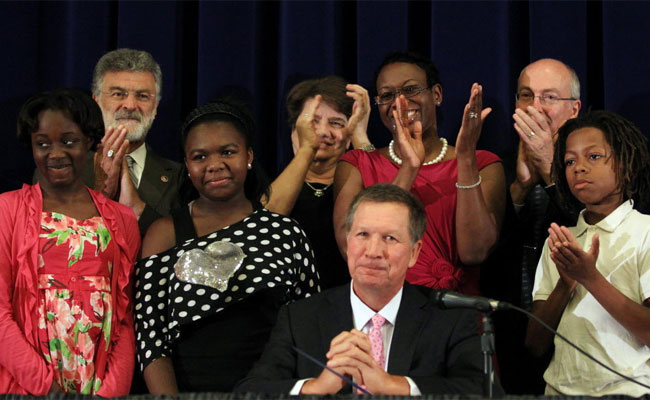 Ohio governor John Kasich at the signing of House Bill 525, legislation enabling education reform, in June 2012
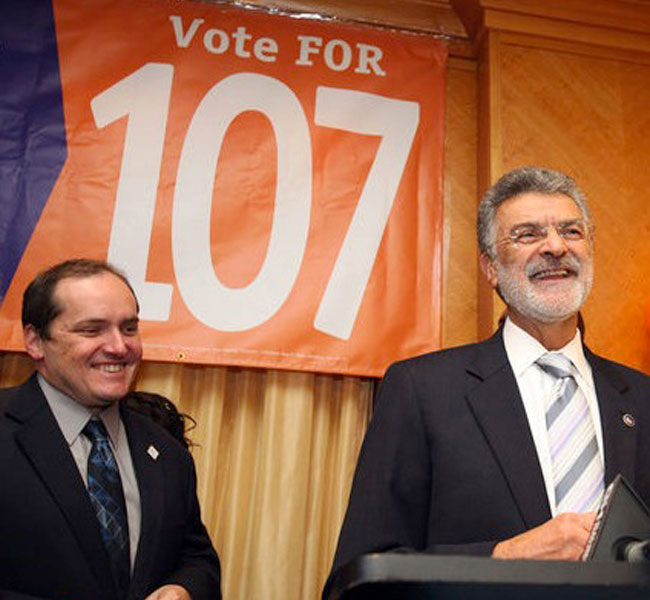 Cleveland schools CEO Eric Gordon and Cleveland mayor Frank Jackson stumping in 2012 for the passage of the first operating levy to be placed on the ballet in 16 years
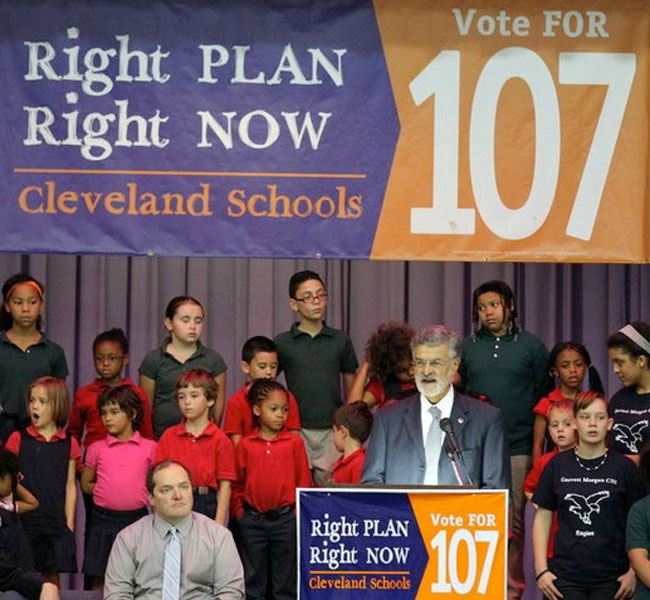 Cleveland voters expressed their hopes for the success of the reform plan by approving the Issue 107 operating levy.
In February 2012, Cleveland mayor Frank Jackson unveiled “Cleveland's Plan for Transforming Schools,” developed by a broad group of stakeholders, including the Cleveland and George Gund Foundations, and strongly endorsed by Cleveland Metropolitan School District (CMSD) CEO Eric Gordon. The plan builds on the success of an initiative launched by the two foundations in 2006 to create a portfolio of excellent schools in Cleveland.
Growing to 20 strong, these charter and CMSD schools—granted operational autonomy in exchange for high levels of accountability—have consistently outperformed their traditional counterparts. “The Cleveland Plan” laid out a blueprint for tripling the number of Cleveland students enrolled in high-performing portfolio schools and eliminating failing CMSD schools within six years.
The plan calls for central administrators to focus on governance and support and relinquish top-down control of individual schools; mandates a performance-based evaluation and compensation system for teachers and principals; eliminates length of service as the primary criterion in layoffs; empowers a panel of business, community and school leaders called the Cleveland Transformation Alliance to ensure the accountability of all the city’s schools; and permits CMSD to intervene quickly to restructure failing schools and share local tax revenues with partnering charter schools. It is, in sum, the most groundbreaking reform strategy in the district’s recent history. In recognition of their contributions and commitment to the plan's creation, the Cleveland and Gund Foundations received the 2013 Ohio Philanthropy Innovation Award from Philanthropy Ohio, a statewide association of private funders.
After extended negotiations in which the two foundations helpfully participated, the Transformation Plan gained the support of the Cleveland Teachers Union and, ultimately, the approval of the Ohio General Assembly. The foundation played a prominent role in winning passage of the enabling legislation, which was signed by Ohio governor John Kasich in June 2012. It also helped to finance the campaign promoting passage of Issue 107, CMSD’s first operating levy in 16 years and the largest to come before northeastern Ohio voters in recent memory. Referring to the enabling provisions of House Bill 525 as a prerequisite, Mayor Jackson noted that the passage in November 2012 of the 15-mill levy moved the school district another step closer to success.
The third step is implementation. Having declared its highest objective to be achieving the educational excellence necessary to develop a knowledgeable and skilled workforce and ensuring that every child in Cleveland has the opportunity to realize his or her full potential in an imaginative and effective school, the Cleveland Foundation committed more than $4 million to help make the Transformation Plan a reality. “Without major public school reform … our city will be left behind, and our children will face a bleak future—a tragic prospect wholly unnecessary,” foundation president and CEO Ronald B. Richard has stated. “We must seize this chance to create a stronger, more globally competitive Cleveland, and a more just society for our community and the nation.”
2012
Welcoming a New Generation of Immigrants

The Global Cleveland initiative has set the objective of attracting 100,000 talented newcomers to the region from around the world in an effort to counter Cuyahoga County’s steady population loss and reclaim the entrepreneurial energy generated by previous waves of immigrants. On February 7, 2012, Global Cleveland opened an international welcome center in the Huntington Bank building near Public Square with the support of a $150,000 foundation grant.
The welcome center will be both an information resource for people considering the possibility of relocating to Greater Cleveland and the headquarters of Global Cleveland, a concept first advanced by the Jewish Federation of Cleveland and widely embraced by the community’s civic and political leadership as the best means of recruiting the highly skilled employees needed to fuel the growth of the region’s high-tech businesses and industries.
2013
Ensuring the Cleveland Orchestra’s Next 100 Years
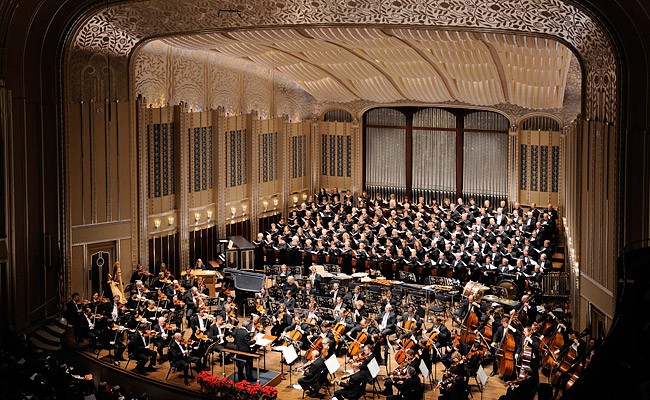
The Cleveland Foundation underscored the importance of securing the future of the Cleveland Orchestra—an international treasure recently ranked as the world’s favorite orchestra by Bachtrack, the international concert reviewer and online listing resource—with a 2013 grant of $10 million, the largest award to an arts organization in the foundation’s history. A leadership gift to the orchestra’s “Sound for the Centennial” campaign leading up to the celebration of the ensemble’s 100th anniversary in 2018, the grant provides support for day-to-day operations and creative programming designed to attract new audiences, especially younger listeners.
2013
James A. Ratner
Board Chairman, 2013–Present
James A. Ratner is an executive vice president and director of Forest City Enterprises, Inc., and chairman and CEO of Forest City Commercial Group, the commercial real estate development and management division of Forest City. The company emphasizes the development of urban retail and mixed-use properties and nonconventional regional and lifestyle centers. Before joining Forest City, Ratner spent five years at the Nasher Company, a privately owned real estate development firm in Dallas, where he was responsible for supervising new development projects.
Ratner holds a bachelor’s degree from Columbia University and an M.B.A. from Harvard University. He serves as emeriti trustee at Case Western Reserve University and is a member of the board of trustees of the Cleveland Museum of Art, Urban Land Institute and PlayhouseSquare Foundation.
2013
Sponsorship of 2014 Gay Games
With its $250,000 grant to the Gay Games, the Cleveland Foundation became the first presenting sponsor in the 31-year history of this international sports competition open to all participants. Gay Games 9 is expected to bring 30,000 athletes and spectators to Cleveland in August 2014.
Greater Cleveland is the smallest metropolitan area to be chosen to host the games, which will present gold medals to the first-place winners of more than 35 sporting competitions. The Cleveland Foundation sponsorship, as well as the welcoming spirit of the City of Cleveland, the City of Akron and each community’s visitors bureau, were decisive factors in Greater Cleveland’s selection. In addition to securing the benefits of the competition’s anticipated $50 million economic impact on the region, the foundation seized the opportunity to express its strong support for the values of equality, social justice and human dignity.
2014
Documenting the Movement’s Global Impact
CommunityFoundationAtlas.org