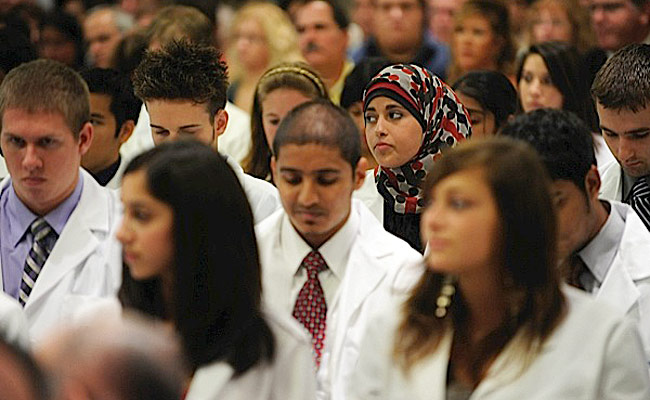
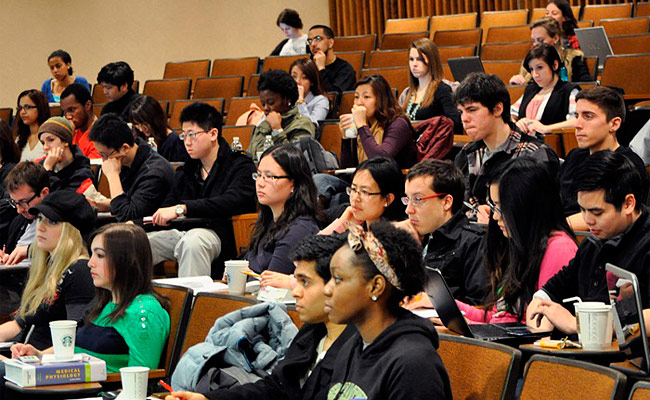
America faces a shortage of primary care physicians that will only become more severe when aging baby boomers become the frail elderly. The lack of primary care is especially acute in urban neighborhoods. In Greater Cleveland, a pioneering collaboration between the Northeast Ohio Medical University (NEOMED) and Cleveland State University (CSU) is tackling the shortage head-on.
With the support of a $250,000 planning grant from the Cleveland Foundation, the two institutions of higher education began in 2010 to design a unique training program that takes advantage of their combined strengths in urban health, primary care medicine and inter-professional education. The resulting initiative, now known as NEOMED-CSU Partnership for Urban Health, is targeted at economically disadvantaged youth who reside in the region, offering them two paths to becoming a primary care physician. They can complete their undergraduate work at CSU and then qualify for early admission to NEOMED, where they can earn a Doctor of Medicine (M.D.) degree. For students who already have college degrees, there is a post-baccalaureate/M.D. option.
The partner institutions received a second foundation grant of $1.5 million in 2012 to implement the initiative, which accepted its first class of 35 students that fall. In addition to formal coursework, students receive hands-on experience working with a small caseload of patients in a medically underserved neighborhood in Cleveland. Scholarships are awarded to students in exchange for a commitment to practice here for a specified period of time after their residencies. With 63 aspirants now enrolled, the program could significantly reduce the shortage of primary care physicians in Cleveland’s neighborhoods within a few short years.